Arizona committee rejects bill restricting compounding of certain weight‑loss drug ingredients after split testimony
Loading...
Summary
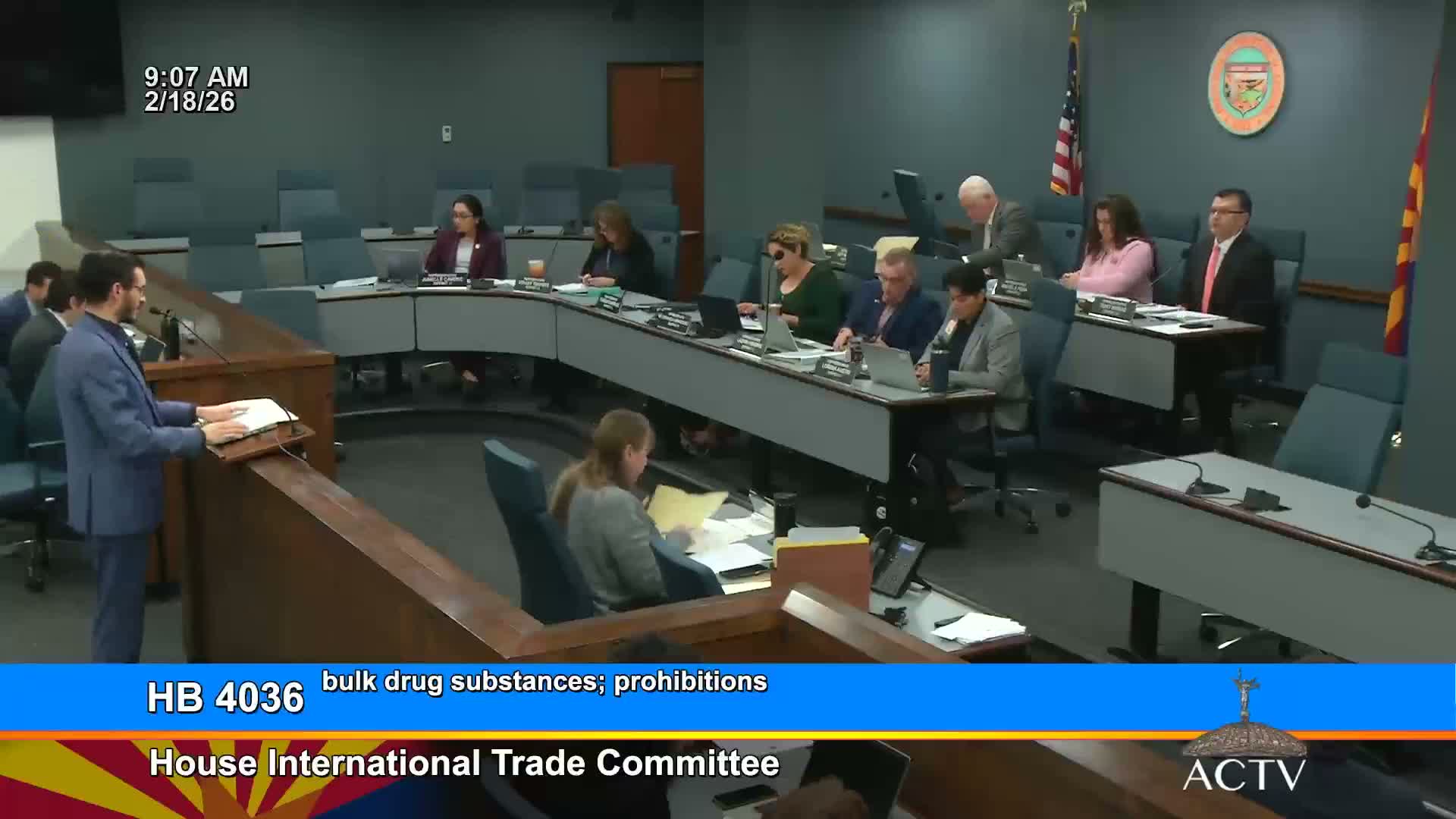
After hours of testimony from drugmakers, patient‑safety advocates, pharmacists and clinicians, the House International Trade Committee voted 5–5 to reject HB 40‑36, which would have restricted compounding using certain bulk GLP‑1 drug substances and required additional testing and inspections.
The Arizona House Committee on International Trade voted down House Bill 40‑36 on a 5–5 tie after a day of contested testimony about safety, access and enforcement.
Sponsor staff explained the bill would make it unlawful to compound with bulk drug substances used as receptor agonists for obesity or weight management (GLP‑1 drugs) unless compounders meet statutory requirements; it would also authorize Board of Pharmacy inspections and penalties. Proponents, including a Novo Nordisk representative, told the committee that the rapid expansion of large‑scale compounding of GLP‑1 ingredients using imported active pharmaceutical ingredients (APIs) has outpaced existing controls and poses patient‑safety risks. "Enough semaglutide... has been imported into the U.S. for use in compounding to create about 2,000,000,000 starting doses," Gabrielle Cosell testified, and she said some tested samples showed high levels of peptide‑related impurities (one injectable product had 86.2% peptide‑related impurities, she said).
Opponents — including the Arizona Pharmacy Association, community compounding pharmacists and clinicians — said the bill would impose manufacturing‑level compliance on community pharmacies, increase costs, delay access for medically necessary individualized medications, and fail to deter illegal sellers who operate outside the regulated system. Garrett Turner of the Arizona Pharmacy Association said HB 4,036 "places significant new burdens on pharmacies that already operate lawfully" and warned it would reduce local access during shortages and for patients with specialized needs.
Clinicians also warned the proposal could create a slippery slope affecting hormone and pediatric compounding; Dr. Angela DeRosa said many patients rely on compounding to receive therapeutically appropriate formulations that are not commercially available. Compounding pharmacists described robust testing practices, certification and routine board inspections, and one pharmacist said his facility sends every batch to an independent third party lab.
The committee debated federal‑state overlap and enforcement challenges: proponents pointed to illegal or misdeclared imports and rapid market growth; opponents said enforcement should target illicit actors, not compliant pharmacies, and noted that some compounding occurs to meet medical necessity and during shortages. After final remarks the committee recorded a 5–5 vote and the bill failed to pass out of committee.
What’s next: The committee did not advance HB 40‑36; sponsors and opponents signaled willingness to continue talks, and members suggested additional technical work and stakeholder negotiations before further action.
Quotes from the hearing: "Enough semaglutide... has been imported into The US for use in compounding to create about 2,000,000,000 starting doses of the compounded drug." — Gabrielle Cosell (support witness) "HB 4,036 places significant new burdens on pharmacies that already operate lawfully." — Garrett Turner (Arizona Pharmacy Association)
Ending: The committee declined to advance HB 40‑36 after an evenly split vote; lawmakers and stakeholders said they expect further negotiations outside the committee.