
Arizona Senate approves renaming of Loop 202 amid family objections and process concerns
Get AI-powered insights, summaries, and transcripts
Subscribe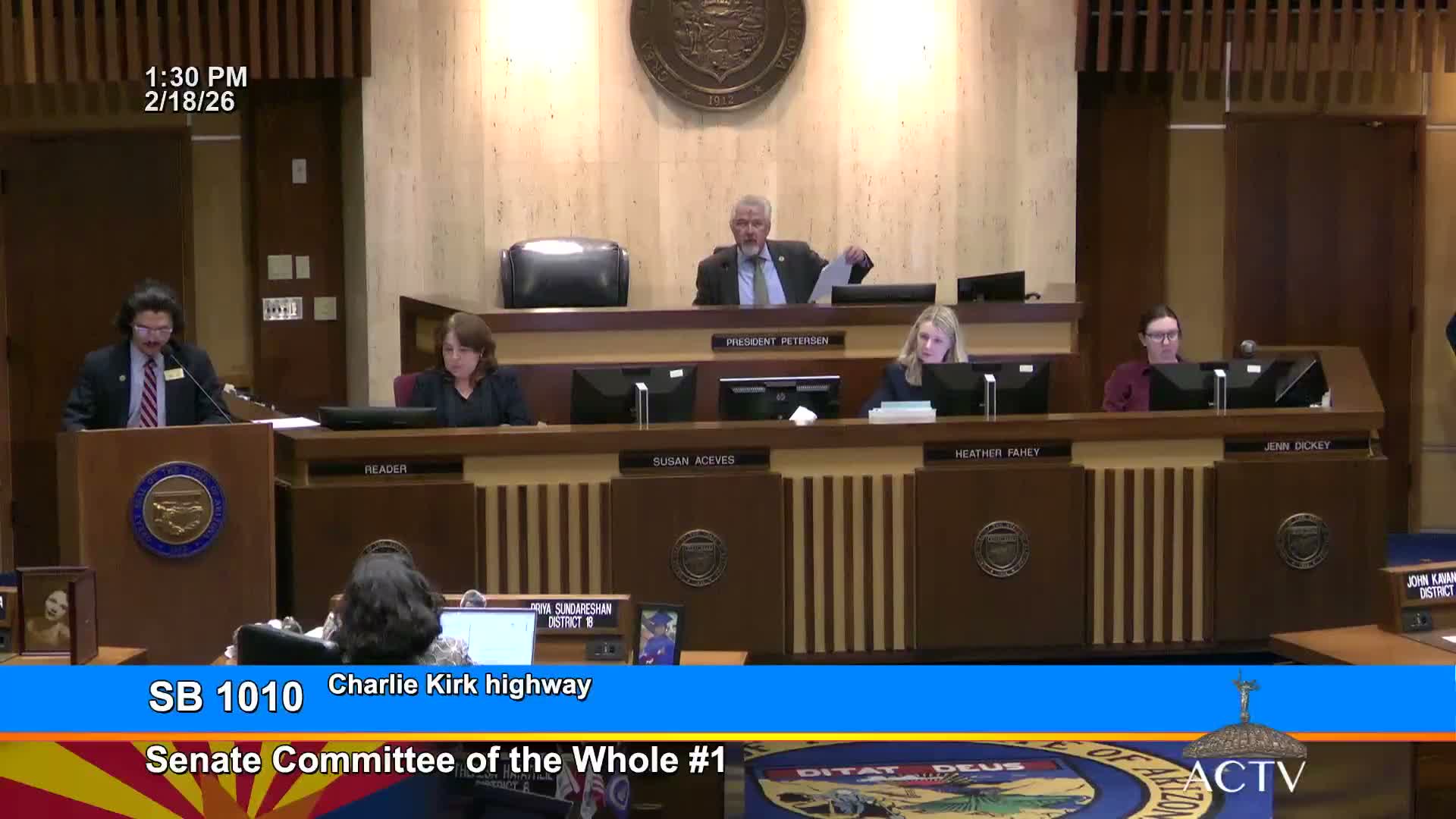
Summary
The Arizona Senate passed SB 1010 on third reading to rename State Route Loop 202 the "Charlie Kirk Loop 202" after adopting an amendment intended to preserve the existing names of underlying segments, drawing objections from the Pastor family and several senators who said the naming bypassed normal review.
The Arizona Senate on third reading approved SB 1010 to rename State Route Loop 202 the "Charlie Kirk Loop 202," passing the bill 16–12 with two not voting after floor debate and an adopted amendment intended to preserve existing segment names.
Senator Mark Peterson (bill sponsor) urged support for a floor amendment that added a legislative-intent clause clarifying that the bill would rename the entire Loop 202 while "the underlying segments retain their name[s] and designations," specifically naming the Red Mountain Freeway, the San Tan Freeway and the Congressman Ed Pastor Freeway. "So his name is, going to remain where it is and it is being protected," Peterson said in explanation of the amendment.
Senator Olivia Alston read a statement from Verma Pastor, widow of Congressman Ed Pastor, saying the Pastor family opposes the bill in its current form and expressing concern that the measure "would remove the mapping and official documents of their names." Alston said the family had not had adequate opportunity to review the amendment offered on the floor and voted no in solidarity with the Pastor family.
Other senators who announced no votes cited process and policy concerns. Senator Repstein read constituent letters opposing the naming, saying in part: "Public infrastructure should honor individuals who brought communities together and advance the common good, not those whose public record is defined by divisive rhetoric and promotion of hatred." Senator Gobleto argued the bill "politicizes a state highway naming process that's supposed to be neutral," and Senator Kuby said the State Board on Geographic and Historic Names has a policy generally not to name features for less than five years after a person's death.
Senator Sears described efforts to find compromise language and said he had proposed an alternative naming that would have acted as a bridge to protect existing memorials; after that approach failed he voted no. Despite those objections, the Senate clerk recorded final passage at 16 ayes, 12 nays and 2 not voting. The secretary was instructed to record the action and transmit the bill to the House.
The floor debate included direct appeals from the Pastor family’s representatives and repeated calls from opponents for adherence to the traditional review process used by the Arizona State Board on Geographic and Historic Names. The sponsor framed the amendment as addressing those concerns by explicitly preserving underlying segment names.
The bill now goes to the Arizona House for consideration; the Senate record shows floor-level amendments and arguments that legislative staff and the House will need to reconcile with the Board’s established naming procedures if the measure advances.