
House advances amendments to HB2104 and HB2105 after assessor testimony; opponents caution on capacity and accuracy
Get AI-powered insights, summaries, and transcripts
Subscribe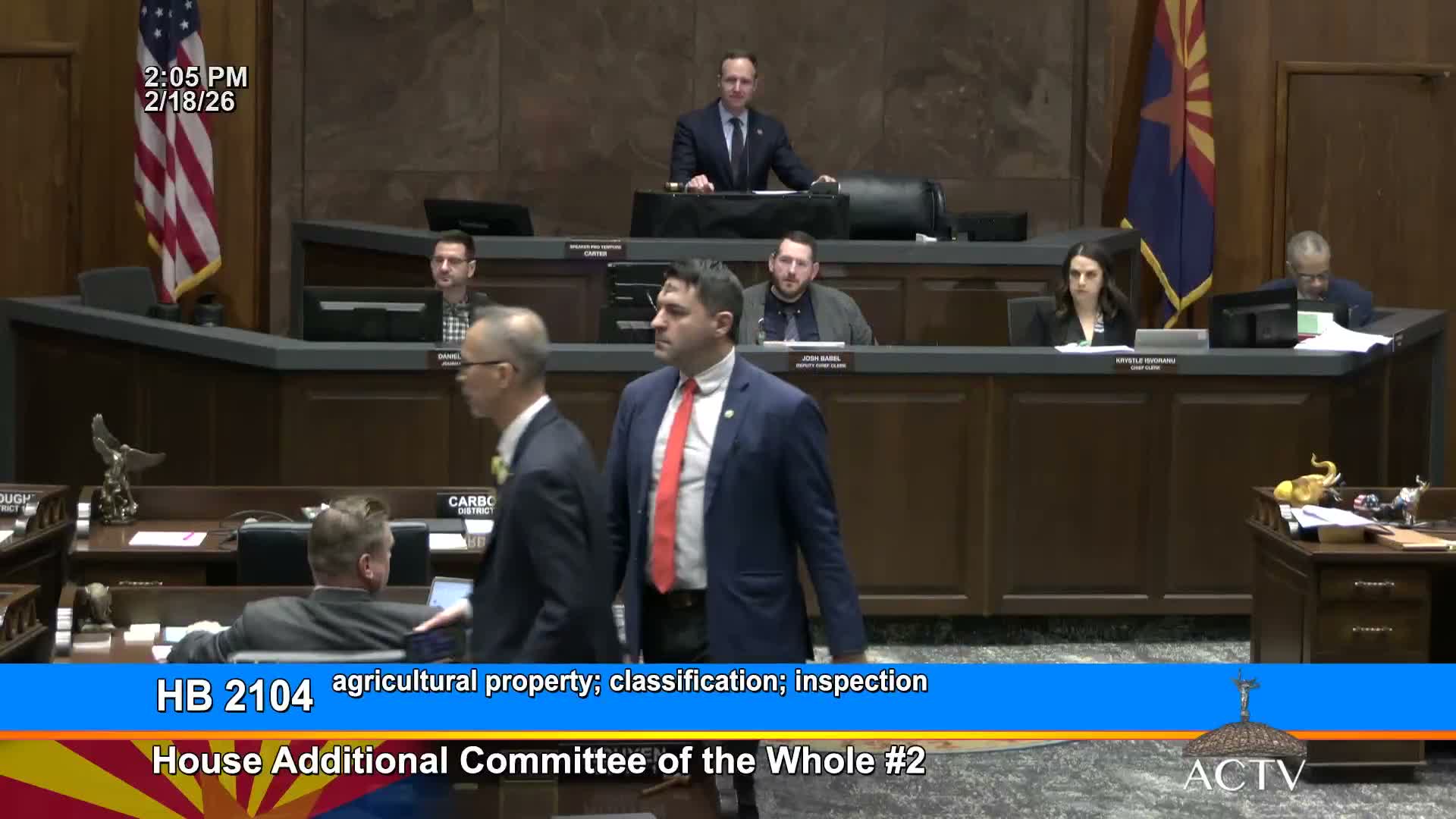
Summary
Representative Carter’s floor amendments to HB2104 and HB2105, adding taxable improvements to triggers for assessor inspections and changing a standardized report from 'shall' to 'may,' were adopted; county assessors warned the changes could hinder statutory duties and require resources.
Representatives moved amendments to two related property‑tax bills—HB2104 and HB2105—after committee testimony from county assessors. Sponsor Representative Carter said the changes respond to assessors’ concerns by adding "taxable improvements" to the list of material changes that can trigger reassessment and by making a previously mandated standardized report discretionary.
Carter told the Committee of the Whole that assessors had requested the changes and that the bills now include flexibility: adding taxable improvements to triggers for inspections and changing a required standardized report to a permissive one so assessors have discretion.
Representative Cruz, speaking against the bills as amended, said HB2104 “restricts the assessor’s ability to carry out that responsibility fully and independently,” citing Title 42 obligations to list, classify and value property annually. Cruz warned the bills could lead to inaccuracies in the certified tax roll, potential litigation, and the need for appropriations to support expanded inspection or reporting workloads.
Representative Cruz and others emphasized that statutory duties for assessors include periodic property inspection and certification of the tax roll; concerns focused on whether the bills would unintentionally limit those duties or impose unfunded requirements, particularly in large counties such as Maricopa.
Sponsors responded that the bills do not change assessors’ fundamental responsibilities but instead clarify notice and inspection triggers to improve taxpayer communication and administrative efficiency. Both measures, as amended, received due‑pass recommendations from the Committee of the Whole.
What happens next: HB2104 and HB2105, as amended, were reported to the House for further processing and will move on the legislative calendar per House rules.