Lifetime Citizen Portal Access — AI Briefings, Alerts & Unlimited Follows
Arizona Senate Education Committee advances a wide package of K‑12 bills on civics, FAFSA outreach, safety and school governance
Loading...
Summary
The Senate Education Committee on Feb. 16 advanced a slate of K‑12 bills, giving 'due pass' recommendations to measures on civics instruction, FAFSA point‑of‑contact requirements, firearms safety awareness, special‑education complaint reporting, district consolidation for receivership, and other education policies. Committee debate highlighted concerns about charter mandates, parental rights, and litigation risk.
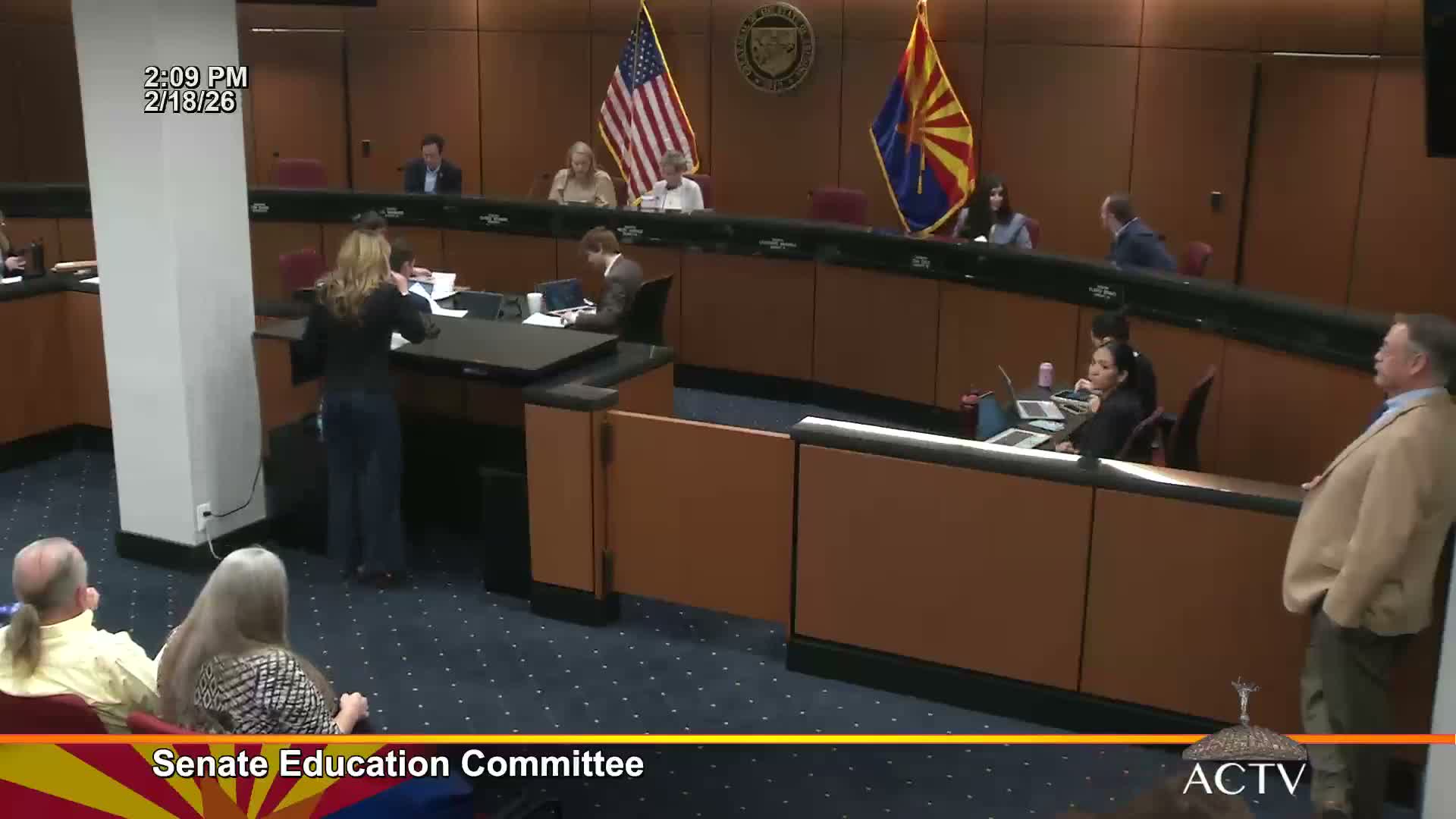
PHOENIX — The Arizona Senate Education Committee advanced a broad package of K‑12 education measures on Feb. 16, moving several bills and constitutional resolutions to the next stage with 'due pass' recommendations after debate over scope, cost and local control.
Among the bills the committee forwarded were SB 15 72, the "Return to Civics Instruction Act," which would require public schools to observe a "Celebrate Freedom Week" and provide instruction on the Declaration of Independence, the Constitution and the Bill of Rights for grades 1–12; SB 17 98, amended to require each high school to designate a FAFSA point of contact and run a FAFSA awareness strategy; SB 14 24, an age‑appropriate firearms safety awareness requirement beginning in 2027–28; and SB 17 54, which would create a parent assistance contact and require ADE to publish redacted special‑education complaint reports.
"We somehow have shifted from teaching civics to teaching social studies that is no longer…so far afield from civics," said Senator Mark Finchem, the sponsor of SB 15 72, arguing the measure would ensure graduates understand government structure and civil‑rights origins.
Supporters of the FAFSA amendment included Megan Gilbertson of the Arizona Board of Regents, who told the committee Arizona high‑school seniors collectively leave more than $100,000,000 in federal grant aid unclaimed each year and urged the designation of school points of contact to raise completion rates. "Completing the FAFSA provides students options to pay for education after high school," Gilbertson said.
Committee members pressed sponsors on two recurring concerns: whether the bills would impose new mandates on charter schools and whether unfunded requirements would shift burdens to school staff. On SB 17 98, senators debated whether charters should be exempted; the sponsor said the intent is to include all public schools to ensure equitable access to information.
Opponents and neutral witnesses frequently warned about procedural or constitutional pitfalls. Witnesses for SB 17 11 — a bill to have the State Board of Education compile vetted prevention‑and‑recognition resources for inappropriate contact — cautioned that Arizona's parental‑review and opt‑in rules mean materials, especially those touching on anatomy or grooming behaviors, must be carefully scoped to avoid forcing classroom instruction without consent.
On SB 16 84, which would allow a student or parent to sue a public school for damages if a student suffers serious physical injury after a prior bullying report and the school negligently failed to act, trial‑lawyer and education‑association witnesses said existing criminal statutes and remedies already apply and that the bill could invite costly litigation and defensive administrative behavior.
Votes at a glance
- SB 15 72 (Return to Civics Instruction Act): Committee voted and gave a due‑pass recommendation (recorded in committee as 3 ayes, 2 nays, 2 not voting). - SB 17 98 (FAFSA point of contact, as amended): Adopted strike‑everything amendment and advanced as amended (5 ayes, 1 no, 1 not voting). - SB 17 11 (SBE resource list for prevention/recognition of inappropriate contact): Moved with a due pass recommendation. - SB 10 04 (attendance exceptions for certain student groups): Adopted amendment and received a due pass recommendation. - SB 15o7 (consolidation for districts in receivership): Advanced as amended (6 ayes, 0 nays, 1 not voting). - SB 14 97 (self‑insurance procurement and data requirements): Advanced as amended with a due pass recommendation. - SB 14 24 (firearms safety awareness instruction): Advanced as amended (4 ayes, 2 nays, 1 not voting). - SB 16 84 (cause of action for bullying causing serious physical injury): Advanced with a due pass recommendation; witnesses urged further work. - SB 17 41 (release time for religious instruction): Advanced with a due pass recommendation after contested testimony about Establishment Clause risks (4 ayes, 2 nays, 1 not voting). - SB 17 54 (special‑education parent assistance and reporting): Advanced with a due pass recommendation. - SCR/SR teacher‑pay and Teachers Academy measures (SCR 10 12, SCR 10 41, SCR 10 51): Advanced in committee; sponsors said the measures mirror prior proposals.
What comes next
Bills that received due‑pass recommendations will move to the full Senate for consideration. Several senators asked sponsors to continue conversations with charter‑school groups, school boards and stakeholder organizations to address concerns about mandates, costs and constitutional limits.
Corrections and sourcing note: this article attributes direct quotes and numerical claims only to named speakers who appear in the committee transcript. Vote tallies, bill numbers and amendment dates are taken from the committee record as read aloud during the hearing.