
Senate Judiciary Committee advances a slate of election, criminal‑justice and family‑law bills
Get AI-powered insights, summaries, and transcripts
Subscribe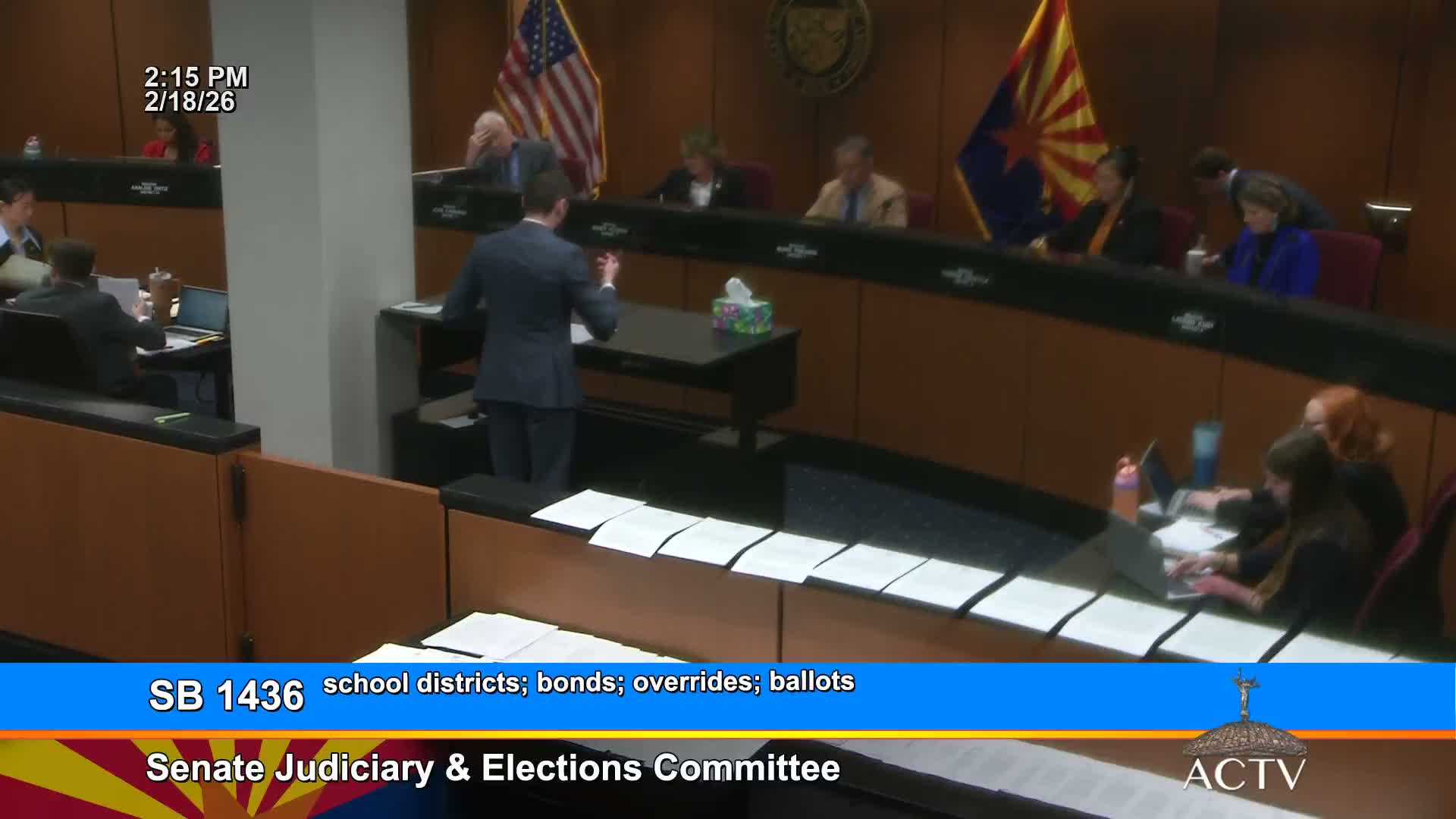
Summary
The Arizona Senate Judiciary and Elections Committee advanced a mix of bills on Feb. 17, 2026 — including measures on election equipment timekeeping, county blight assessments, special‑election‑board conduct, probation reform and a contentious measure criminalizing warnings of imminent arrests — while rejecting others such as a kratom narcotics reclassification.
The Arizona Senate Committee on Judiciary and Elections moved a packed agenda on Feb. 17, 2026, advancing several bills by narrow margins and delaying others for later action.
The committee gave due‑pass recommendations to a number of measures affecting elections, criminal procedure and family law. Notable results included a 4–3 advance for SB 1635 (a bill making it a misdemeanor to intentionally warn a person of an imminent arrest), a unanimous or near‑unanimous advance of county blight and property‑assessment legislation, and a close vote on restrictions involving special election boards and voter‑registration activity.
Why it matters: The measures affect voting administration, local government tools for remediating hazardous properties, criminal penalties, and how courts and probation operate. Several bills drew sharply divergent views from county officials, criminal‑justice reform groups and civil‑liberties organizations, signaling likely floor debate.
Votes at a glance - SB 1436 (school election ballot language): due pass (4–3). The bill would require ballots for certain school bond/override measures to include an estimated change in homeowners’ secondary property tax. - SB 1067 (county blight/abatement assessments): due pass (7–0). County officials testified that allowing abatements to be reflected on property tax statements helps counties recoup public‑safety cleanup costs on ownerless or heirs’ properties. - SB 1568 (election equipment timekeeping): due pass as amended (4–3). The strike‑everything amendment would require internal device clocks to be within 60 seconds of NIST time for event logs and timestamps. - SB 1569 (special election boards and voter registration): due pass (4–3) (vote held briefly then moved). The measure would prohibit paid voter‑registration activity by special election boards acting on behalf of recorders; proponents described incidents at care facilities where SEB members allegedly organized multiple residents to register. - SB 1285 (kratom reclassification as narcotic alkaloids): failed (3–4). Supporters cited a family death and urged repeal of Arizona’s consumer‑protection approach; opponents warned that criminalization would create felony penalties for possession and harm people who use raw kratom. - SB 1635 (criminalizing warnings about imminent arrests): due pass (4–3). The bill drew sharp opposition from the ACLU and community groups who said it is overbroad and chills constitutionally protected speech.
What supporters and opponents said Supporters argued that bills such as SB 1067 and SB 1568 give counties and election officials clearer tools to protect public safety and ensure administrative accuracy. Jacob Embiid of the County Supervisors Association told the committee that having abatement assessments on the tax roll helps counties recover costs for remediating dangerous, ownerless properties.
Opponents cautioned that some proposals were overly broad or risked unintended consequences. The ACLU’s Harrison Redmond said of SB 1635: “This bill is neither narrowly tailored nor does it target violent conduct … It targets speech.” Pamela Hicks, a criminal‑justice attorney, opposed SB 1285’s criminalization approach, warning that adding kratom to narcotics schedules would create felony charges for simple possession.
What’s next Most bills that received due pass recommendations will move to the full Senate for committee of the whole and floor consideration. Several measures were delayed for further amendment or votes on a later date; sponsors and stakeholders indicated willingness to work on clarifying language for bills drawing constitutional concerns.
The committee convened for an extended, sometimes heated, session that included personal testimony, technical staff explanations and multiple roll calls; Chair Rogers said the panel was prepared to work "way into the night" to move through the docket.