House panel advances bill to tighten eligibility checks and open Medicaid contracts to new bidders
Loading...
Summary
A House committee gave House Bill 29‑40 a 4–3 due‑pass recommendation after debate over eligibility verification mandates, a fixed benefit price list and a new 'health benefit purchasing organization' procurement option intended to expand bidders for Access contracts.
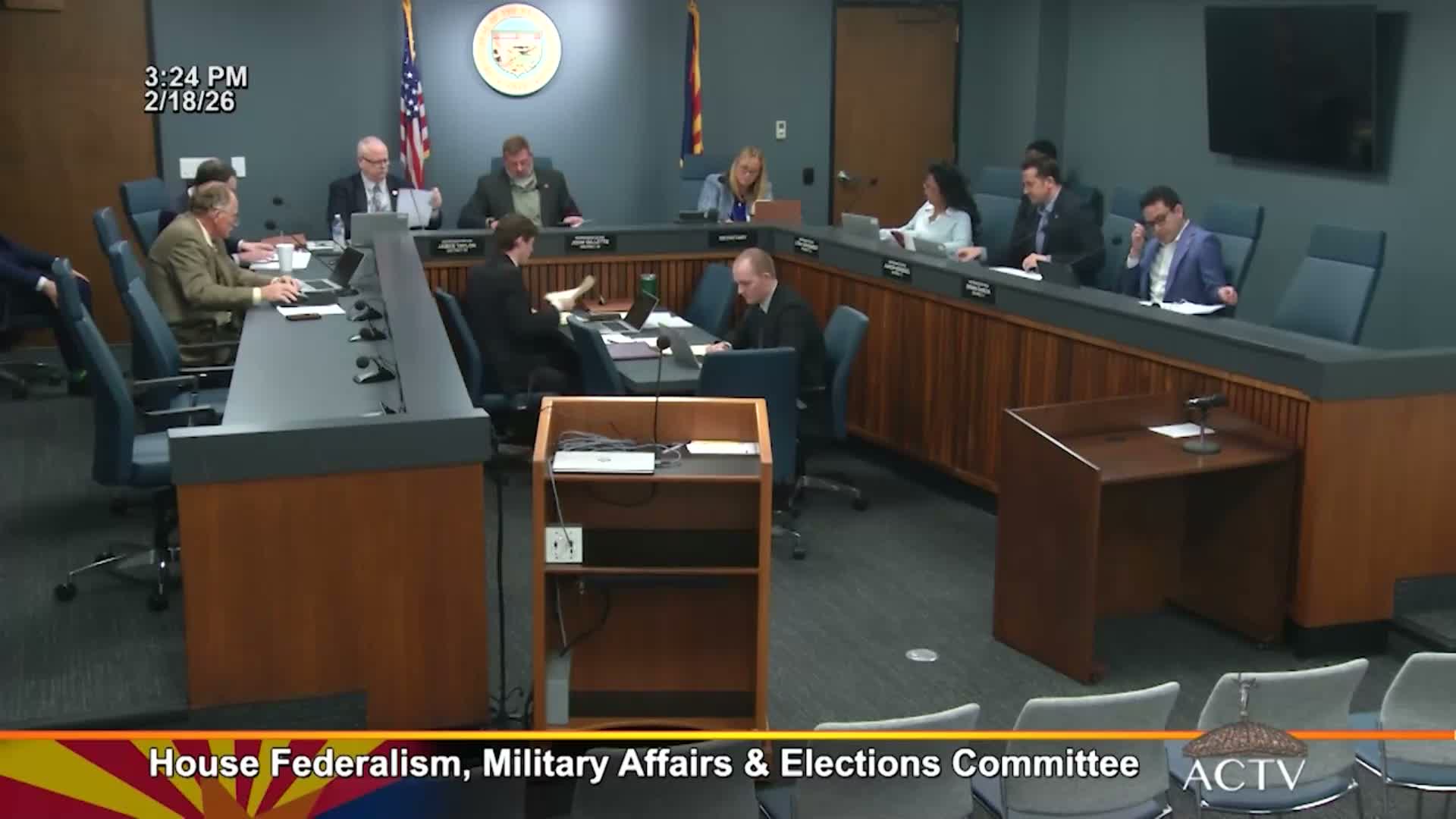
A House committee on Thursday moved House Bill 29‑40 forward after lawmakers and stakeholders sparred over how far the state should go in restructuring eligibility verification and Medicaid contracting. The bill would require expanded database checks for eligibility in programs under the Arizona Health Care Cost Containment System (Access) and the Department of Economic Security, create a ‘‘health benefit purchasing organization’’ procurement option, and establish a fixed benefit price list for certain services.
The bill sponsor framed the measure as an attempt to restore competition, transparency and fiscal discipline to Access by allowing more entities that can prove solvency and meet federal requirements to bid on contracts. The sponsor said the rules engine in the bill would require use of available databases and stop the practice of suspending checks during emergencies such as COVID. The committee gave the bill a due‑pass recommendation on a 4–3 vote.
Damien Carpenter, chief legislative liaison for Access, told the committee the agency is neutral on the bill. "We are neutral on the bill," Carpenter said, and outlined that Access already uses multiple data matches — including a public assistance reporting system, the Do Not Pay list, an Equifax employment check and SAVE for immigration status — but that additional data connections and procurement changes could create administrative and fiscal costs for the agency.
Beth Koehler, representing the Arizona Association of Health Plans, said the measure as drafted could insert a new administrative layer between Access and managed‑care organizations and reduce the MCOs’ flexibility to negotiate rates with providers. "This would take away the ability for the health plans to negotiate reimbursement rates with providers," Koehler said, adding the operational shift could unintentionally increase overall spending in some areas.
Supporters said the fixed‑benefit price list and opening of the bidding process could curb what the sponsor described as "fraud‑driven cost inflation" and give providers steadier reimbursement. Opponents cautioned implementation questions remain, including whether the proposal would conflict with federal Medicaid rules and how new bidders would qualify and be supervised.
Access staff said much of the bill’s eligibility‑verification language overlaps with systems the agency has implemented in the past 18 months, but that other elements — notably changes to the procurement model and the fixed‑benefit price list — would require careful administrative work and potential fiscal analysis.
The committee recorded several members urging more stakeholder work before the bill reaches a floor vote. Still, several Republicans — including Representative Taylor and others who favored the bill — argued the measure starts a process intended to lower costs and increase competition. The measure will be carried to the next committee of referral or leadership for scheduling.
Votes at committee: due‑pass recommendation, 4 ayes, 3 nays.