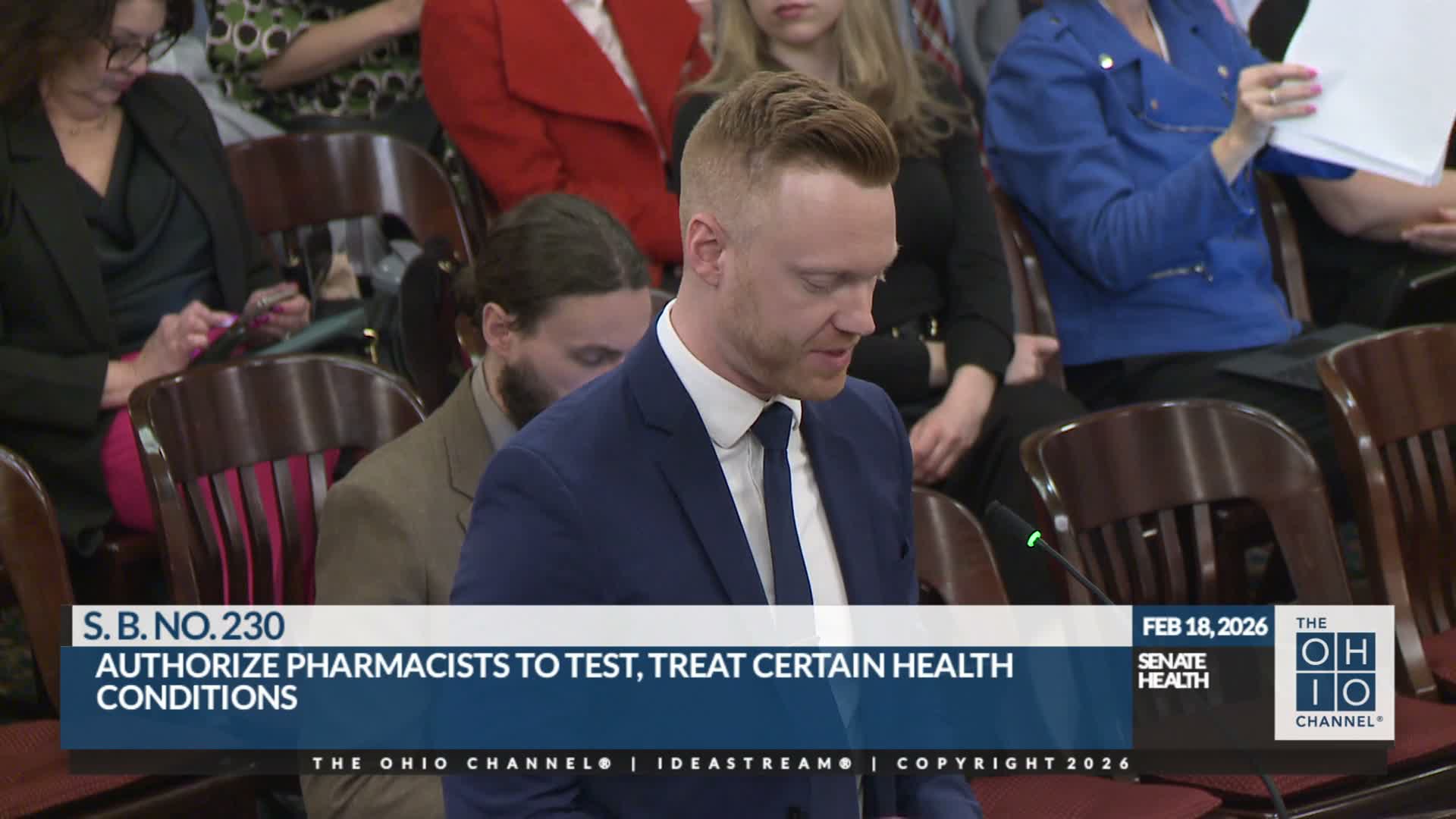
Wide support heard for pharmacist 'test-and-treat' bill to boost rural access to respiratory care
Loading...
Summary
Supporters told the Senate Health Committee that Senate Bill 230 would let pharmacists perform CLIA‑waived tests and initiate treatment for influenza, COVID‑19, RSV and strep under statewide protocols, improving rural access and reducing strain on emergency departments.
Supporters from pharmacy associations, regional chains and university clinics told the Ohio Senate Health Committee that Senate Bill 230 would expand timely access to care by authorizing pharmacists, under statewide protocols set by the Board of Pharmacy, to screen with CLIA‑waived tests and initiate treatment for common respiratory illnesses.
Nick Newman of the Ohio Pharmacists Association said in rural areas “the local pharmacy is one of the most accessible and sometimes the only health care touch point available on a daily basis,” and described situations where patients seek care at pharmacies when clinics are closed. Chris Pesik of Discount Drug Mart recounted a recent case in which a patient arrived at a pharmacy after a positive at‑home flu test and could only be offered symptom management absent the authority to treat.
Michelle Musser of Ohio Northern University’s College of Pharmacy and a mobile‑clinic pharmacist said SB230 would allow her program to expand services, train students on point‑of‑care testing and relieve pressure on local acute‑care facilities. Dan Arndt of the Ohio Society of Health System Pharmacy said the model builds on pharmacists’ existing triage and referral roles and cited a small study of about 15 community pharmacies treating roughly 250 patients in which 35% reported they would otherwise have gone to urgent care or an emergency department.
Committee members asked about training, referral thresholds, the definition of CLIA‑waived tests and whether the Board of Pharmacy should collaborate with the Department of Health in expanding authorized conditions. Proponents said CLIA‑waived tests are simple point‑of‑care tools, that pharmacists are trained to triage and refer when appropriate, and that the Board of Pharmacy would likely consult state health officials when expanding authorized conditions. Committee members also flagged reimbursement questions (including Medicaid) as important to the bill’s practical effect.