Get Full Government Meeting Transcripts, Videos, & Alerts Forever!
Get email alerts on the Construction Contracts topic
No spam. Unsubscribe anytime.
Sen. Blessing’s bill would require contract changes to be clearly marked in public construction agreements
Summary
Senate Bill 262 would force any alterations to industry-standard construction contracts to be shown with strikethroughs, underlines or cross-references and void unmarked changes; it would also allow combined qualifications-and-pricing proposals for projects under $4 million.
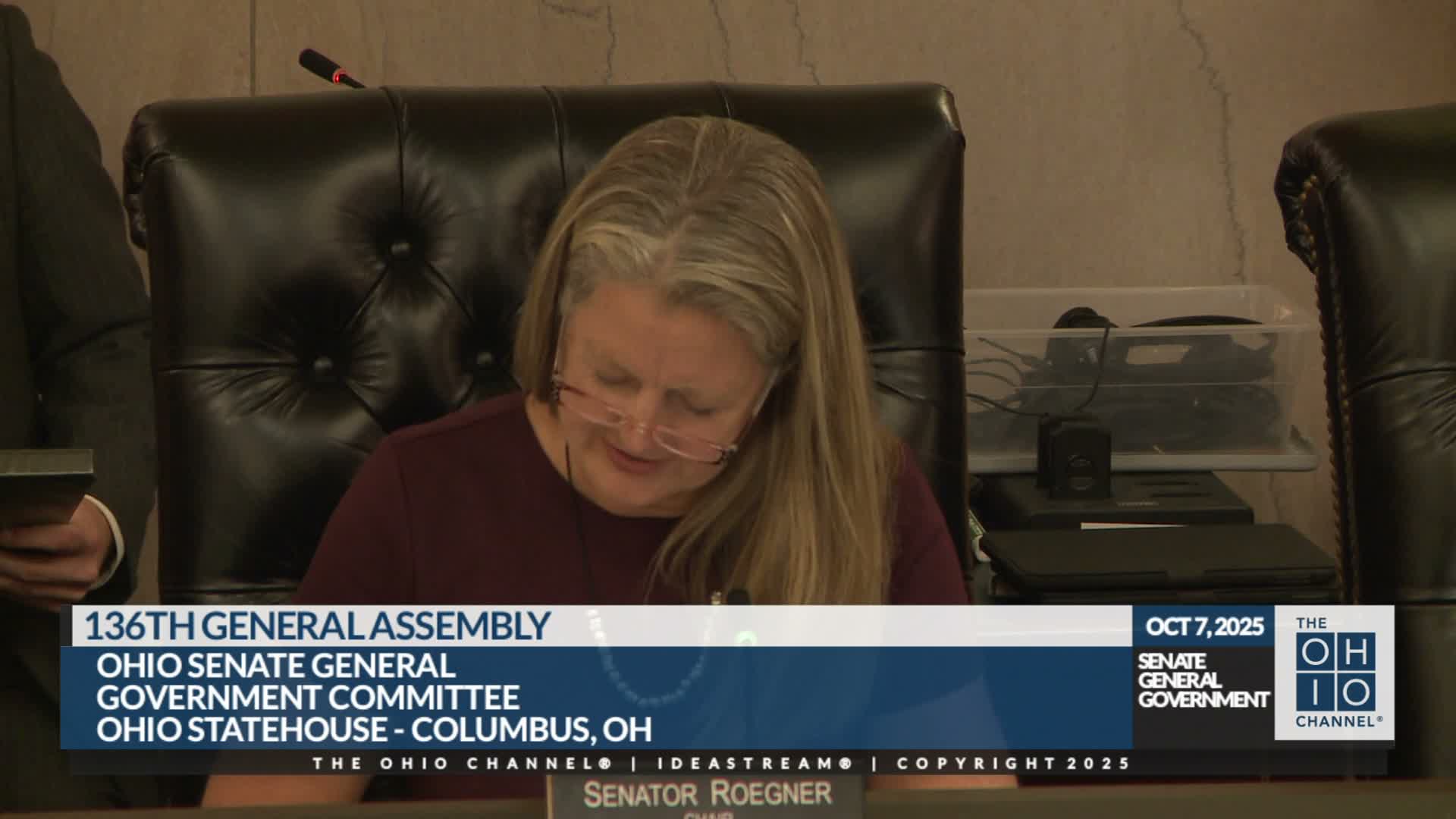
Sen. Blessing introduced Senate Bill 262 at a Senate General Government Committee hearing, saying the measure would strengthen transparency and competitive fairness in Ohio’s public construction procurement by requiring that any modifications to industry-standard contract forms be clearly indicated. "If changes are not adequately displayed, they will be deemed void," Blessing said, arguing that visible edits prevent hidden or ambiguous alterations that can disadvantage contractors and subcontractors.
The bill targets alternative delivery methods such as construction management at risk and design‑build contracts and seeks to harmonize standards across sections of the Revised Code so public owners and bidders face consistent rules. Blessing also said the bill would streamline procedures on smaller projects by allowing public authorities to request qualifications and pricing proposals simultaneously for projects under $4,000,000, a threshold he described as a stakeholder compromise.
Committee members pressed for specifics. Blessing said the proposal would not be retroactive and noted it was drafted with input from industry representatives, legal experts and public authorities. The sponsor cited the American Institute of Architects standard forms as an example of industry standard documents referenced in the bill and said the measure is intended to preserve public owners’ flexibility while improving clarity and reducing disputes.
The committee took no formal action beyond the first hearing and did not vote on the bill.