Get Full Government Meeting Transcripts, Videos, & Alerts Forever!
Get email alerts on the Citizenship Verification topic
No spam. Unsubscribe anytime.
Committee hears extensive pro and con testimony on SB 153, a broad election bill on citizenship checks, drop boxes and petition rules
Summary
Ohio Secretary of State Frank LaRose and proponent groups urged codified citizenship verification, tighter reconciliations for mismatched voter records and a ban on unattended drop boxes; numerous election officials, voting-rights groups and citizen witnesses opposed the bill, warning it would create barriers, increase provisional ballots and strain county boards of elections; no committee vote was taken.
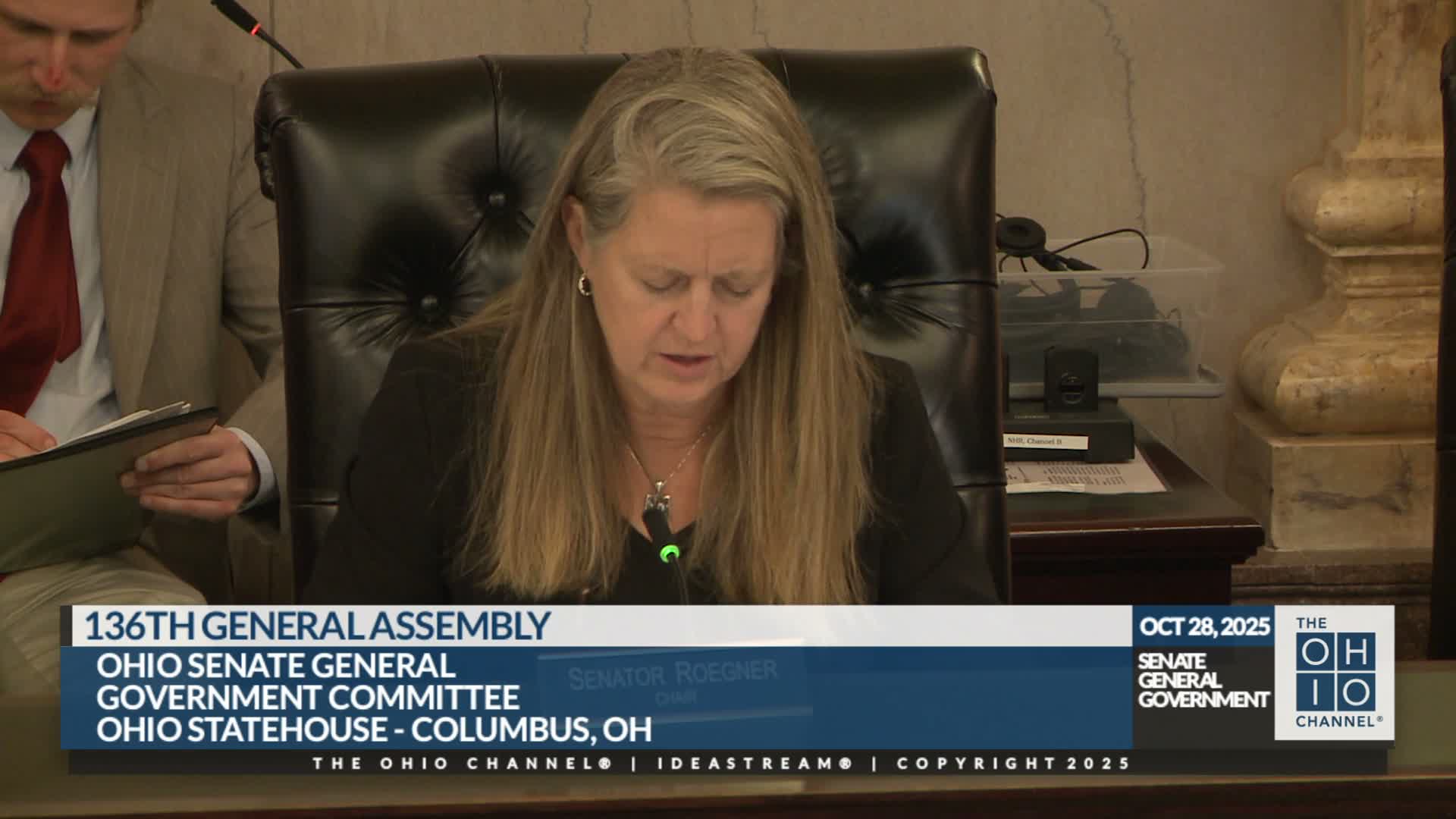
Ohio’s Senate General Government Committee held a fourth hearing on Senate Bill 153, a sweeping elections bill that would require front-end citizenship verification for voter registration, change how mismatched voter records are reconciled, ban unattended drop boxes and tighten petition-circulator rules.
Ohio Secretary of State Frank LaRose, who said he was invited by the bill sponsors to advise on implementation, told the committee the bill addresses three priorities: aligning absentee ballot return rules with perceived federal expectations, closing a ‘‘loophole’’ that lets voters with mismatched registration records continue to request absentee ballots without correcting their records, and codifying ongoing citizenship verifications using federal data sources including the Department of Homeland Security’s SAVE system. LaRose said the U.S. Department of Justice had contacted him and identified a conflict between Ohio law and federal law regarding absentee-mail deadlines, and that legislative action could avoid costly federal litigation.
LaRose described operational details: Ohio’s statewide voter file contains about 7,800,000 registered voters; county boards of elections now verify records against Bureau of Motor Vehicles and Social Security Administration data and, under the substitute bill, would notify voters with mismatched records and require either a returned correction form or casting a provisional ballot at the next election. He said front-end citizenship verification will require time and system upgrades across 88 counties and the secretary of state’s office.
Proponents including Beau Eaton (FGA Action) and Chad Ennis (Honest Elections Project) said the bill protects the integrity of elections and prevents noncitizens from voting. Eaton argued that routine vetting and clear verification standards enhance voter confidence.
Opponents — including League of Women Voters Executive Director Jennifer Miller, Carlos Buford of Black Lives Matter Dayton, county election board member Bob McCallister and student Ian Logan — urged the committee to reject or pause the bill. They warned the proposal would make it harder to vote, particularly for rural residents, seniors, students and people who have changed names; increase provisional ballots; strain underfunded boards of elections with implementation and staffing costs; and chill petition drives through badge and consent-to-jurisdiction requirements.
Jennifer Miller said the bill would harm direct democracy by creating new technical grounds to invalidate petition booklets and intimidate volunteer circulators; she urged more time for election officials to implement prior laws and for lawmakers to consider tighter, narrower fixes if needed. Bob McCallister, a Lawrence County election-board member, said noncitizen voting is ‘‘vanishingly rare’’ and that Ohio already has mechanisms to detect and prosecute irregularities.
No committee vote on SB 153 occurred at the hearing; a substitute bill was distributed to members in advance and made available on committee iPads, and the committee took written testimony from additional groups. Committee members asked detailed operational questions and repeatedly raised concerns about increased provisional voting, staffing and costs; proponents and the secretary of state suggested counties could staff drop-off locations or use drive-through return options rather than unattended boxes.
The hearing closed without a recorded committee vote; committee members were directed to written materials on their iPads for additional testimony.