Get Full Government Meeting Transcripts, Videos, & Alerts Forever!
Get email alerts on the Public Contracting topic
No spam. Unsubscribe anytime.
Bill would require public owners to show redlines on construction contract changes, proponents say it will reduce disputes
Summary
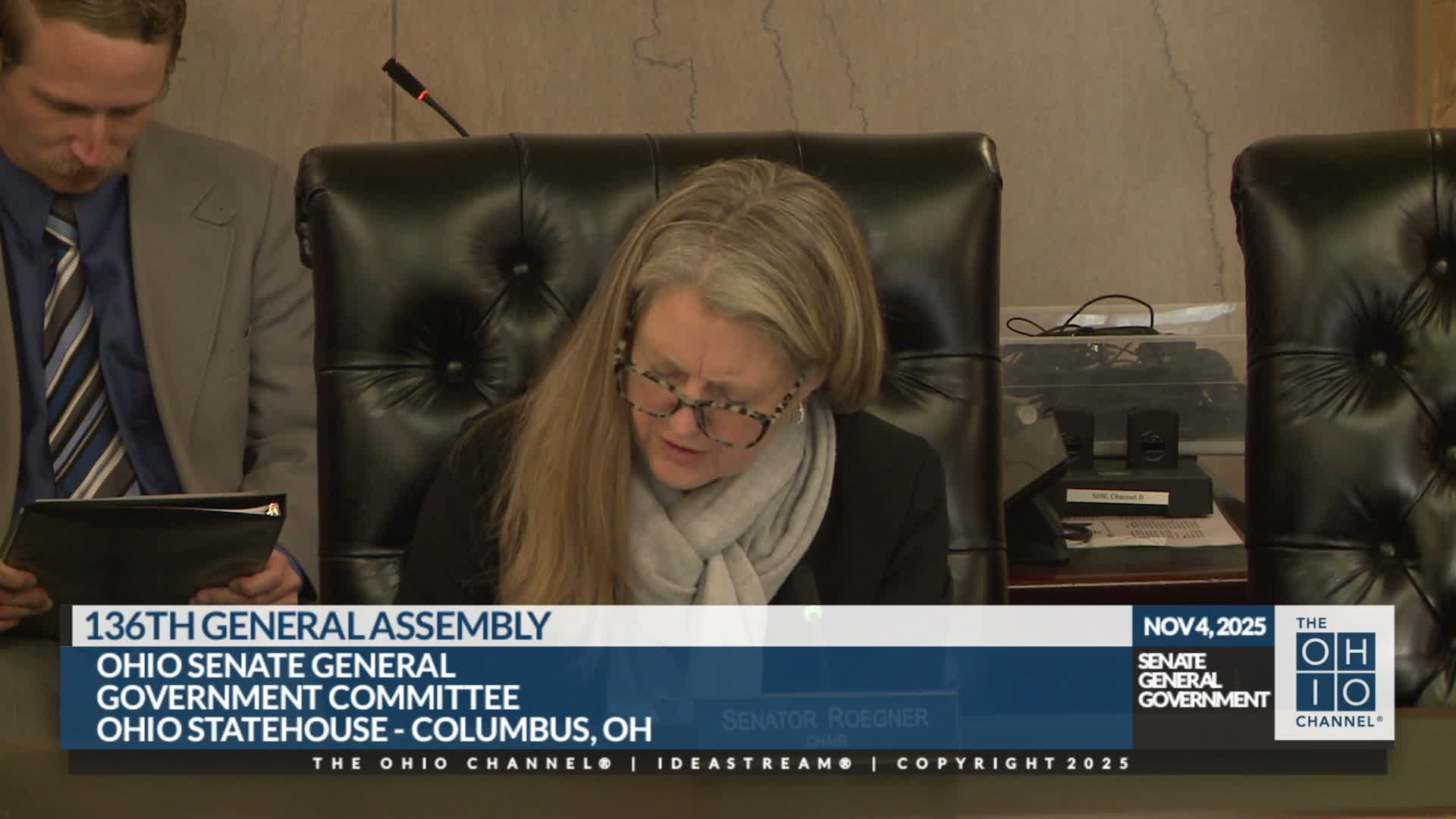
Supporters of SB 262 told the Senate General Government Committee the bill would require public authorities and contractors to clearly identify modifications to standard construction contract forms (AIA, EJCDC, DBIA) by underlines or strikethroughs or cross-references; proponents said the change would reduce disputes and speed projects, citing examples of substantial unmarked edits in bid packages.
Proponents from construction and contracting organizations told the Senate General Government Committee that Senate Bill 262 would increase fairness and clarity in public contracting by requiring public owners and contractors to clearly identify modifications to standard industry construction contract forms. Tim Linville of the Construction Employers Association described the change as "common sense" that would make it obvious when a standard form has been altered so bidders can evaluate risk when preparing bids.
Erin Evanczyk of Hahn Law and Phil Truax of Truax Law said industry-standard forms such as AIA, EJCDC and DBIA produce automatic redline reports when altered and that many contractors rely on that signal. Truax told the committee, "When you start making any changes, it's automatic that it's in red line. You actually have to turn off the track changes feature to stop the red lines from being used." He and other witnesses said some public owners or third-party drafters sometimes provide modified forms without track changes, which can mislead bidders.
Andrea Ashley of the Associated General Contractors of Ohio presented document examples and cited counts from a sample package that she said included 751 insertions and 459 deletions, for a total of 1,288 substantive changes across documents; she told the committee many of those were whole provisions rather than single-word edits. Ashley said the bill would require redline or other clear marking and that if a change is not properly identified, "the provision, not the contract, would be void" and the language would revert to the original standard contract text.
In response to a question from Senator Huffman about penalties for disabling redline or failing to mark changes, witnesses said there is no statutory penalty in the bill but that an unmarked change would revert to the standard language and disputes would be litigated. Supporters argued this reversion creates an incentive for transparency while avoiding a direct administrative penalty. The committee concluded the second hearing on SB 262 without a vote; proponents urged the committee to adopt the measure to reduce disputes and protect taxpayer dollars.