Get Full Government Meeting Transcripts, Videos, & Alerts Forever!
Get email alerts on the Elections topic
No spam. Unsubscribe anytime.
Senate committee adopts substitute for bill requiring citizenship verification for voters
Summary
The Senate General Government Committee adopted a substitute to Senate Bill 153 that tightens acceptable proof‑of‑citizenship, creates a front‑end citizenship check using BMV and SAVE data, and directs referrals to an Election Integrity Unit; implementation is delayed 18 months.
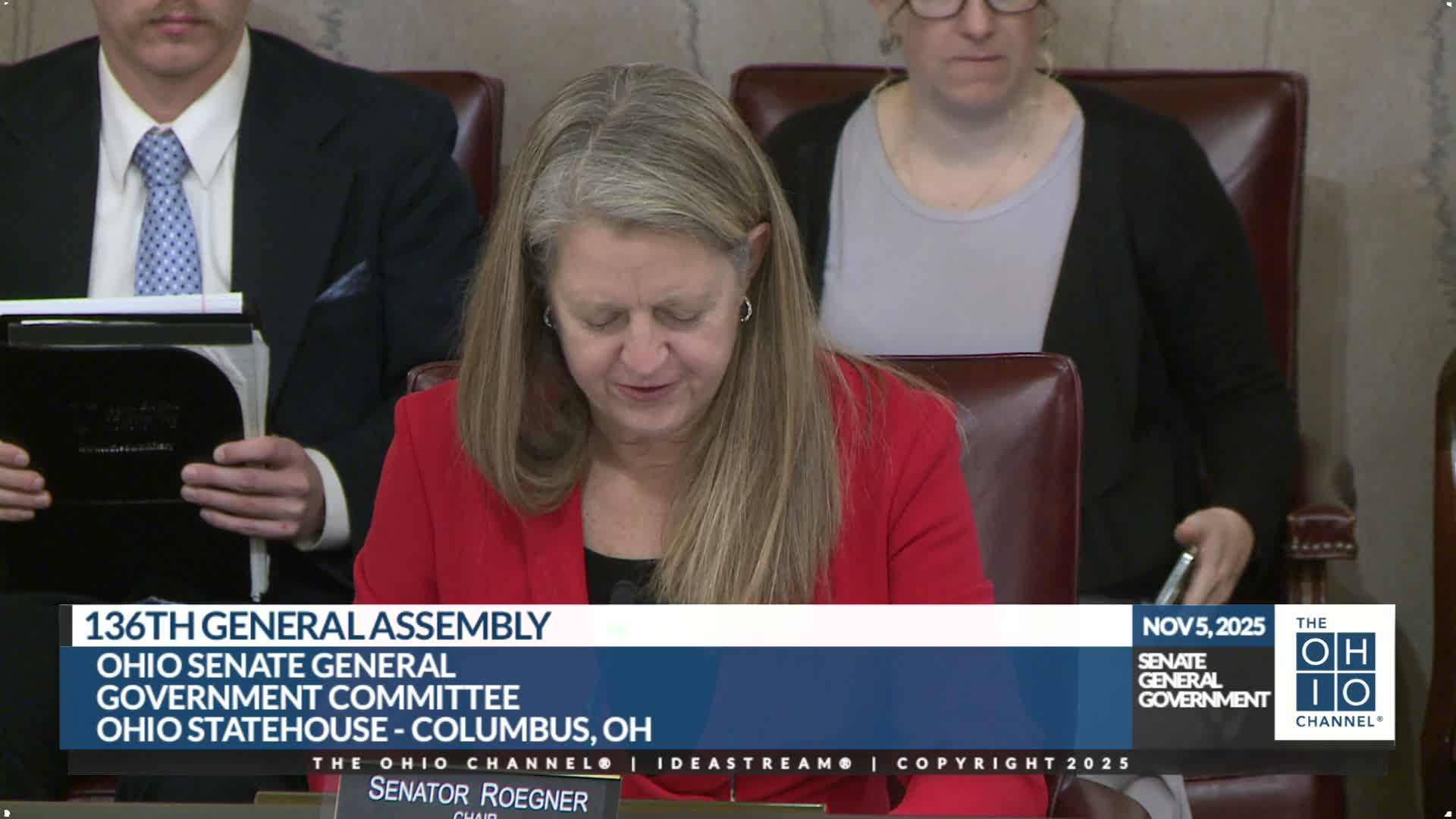
The Senate General Government Committee on Friday adopted a substitute to Senate Bill 153, a measure that would require verification of U.S. citizenship before an elector’s ballot is counted.
Vice Chair Gavarone, who offered the substitute, said the changes align acceptable proof-of-citizenship with Bureau of Motor Vehicles documents, remove expired or out‑of‑state IDs from the list of automatically accepted documents and allow a USCIS I‑797 Notice of Action to serve as proof while replacement citizenship certificates are pending. "This bill creates a front end check of citizenship," Gavarone said, describing the proposal as supplementing current back‑end reviews.
The substitute requires the Secretary of State to consult BMV files and SAVE databases to verify citizenship and to run regular comparisons of database records; it also directs referral of apparent noncitizens to an Election Integrity Unit rather than the Attorney General. Implementation of the front‑end verification process would be delayed 18 months to allow for technical and procedural setup. Under the substitute, when a Secretary of State review confirms a voter’s U.S. citizenship the Board of Elections must record that verification and remove any provisional status; when the Secretary of State cannot determine citizenship, the Board must send a confirmation notice and require a provisional ballot with a four‑day cure period.
The substitute also revises data‑mismatch procedures — address mismatches will no longer automatically trigger provisional status while mismatches of identifying numbers will — and requires monthly reports from the Secretary of State to local Boards about electors who voted in another state or who are reported deceased using SSA and vital‑records information. The measure establishes a formal protest process and instructs election officials to invalidate petitions only upon clear and convincing evidence.
The committee adopted the substitute without objection. The chair said this concluded the fifth hearing on Senate Bill 153. The substitute now reflects the committee’s agreed procedural and technical changes pending further consideration by the full Senate.