
Senator Blessing pitches constitutional amendment to allow land-value taxes in Ohio
Get AI-powered insights, summaries, and transcripts
Subscribe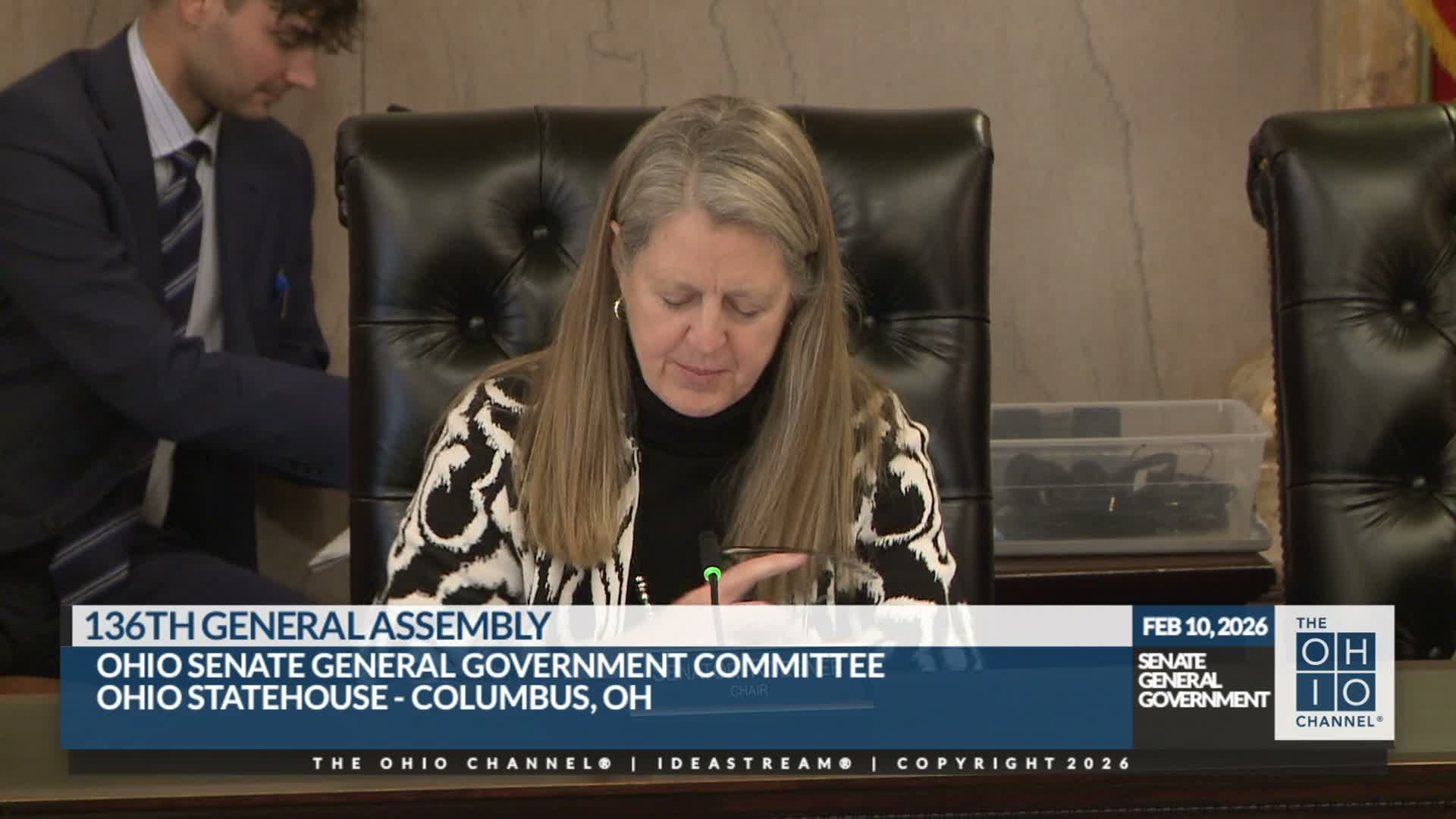
Summary
Senate Joint Resolution 7 would let local elected boards opt to levy taxes only on land value rather than on land and buildings. Sponsor Senator Blessing argued LVTs spur development and lower burdens on renters and dense housing; questions centered on timing and revenue effects. No committee vote was taken.
Senator Blessing, sponsor of Senate Joint Resolution 7, told the Senate General Government Committee he wants to give Ohio communities the option to levy land-value taxes rather than taxing land and structures together. "A land value tax is simply a tax on the land, while a property tax is a tax on land and structures," he said during a lengthy presentation explaining the concept and its incentives.
Blessing said land-value taxes, which he described as "not a mandate, land value taxes in Ohio," would remove a tax penalty on development and encourage denser housing. He offered a simple illustrative example comparing three equal plots (vacant land, single-family home, apartment complex) to show how taxing only land would equalize or reduce per-resident tax burdens on denser development.
The sponsor acknowledged the revenue and distribution effects would emerge over time, not instantly. In response to a question from Senator Timkins — "You said that LVT would bring in more money in the aggregate, but don't you also see that that would have to occur over time and not be instantaneous?" — Blessing agreed the fiscal effects would be gradual and described scenarios in denser cities where increased construction could expand local receipts.
Blessing said the General Assembly could write guardrails and that communities would not be forced to adopt LVTs; elected boards could set rates by majority vote. He also suggested the approach would simplify local levies and valuation disputes because tax bills would be calculated per acre rather than by owner-held improvements.
Supporters' claims in the hearing centered on development incentives and administrative simplicity; the sponsor cited research favoring land-value taxation but urged committee members to "do your own research." The committee concluded the first hearing on SJR 7 after the sponsor's testimony; no vote or committee action was recorded.