Onslow County commissioners amend opioid-settlement spending to add post-overdose response and planning funds
Loading...
Summary
The board approved a FY26 amendment to opioid-settlement spending that reallocates $432,223 for collaborative strategic planning, a post-overdose response team and recovery support services, bringing the year’s authorized spending to about $1.28 million; staff said some line items may not be spent because federal grants cover them.
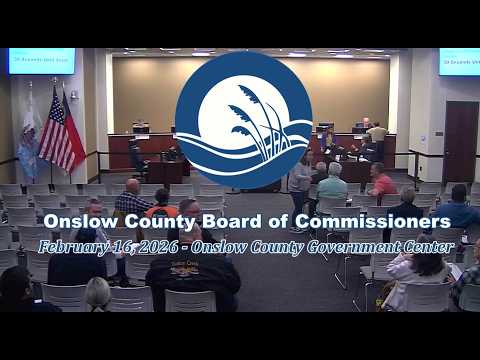
The Onslow County Board of Commissioners on Feb. 16 approved an amendment to the county’s fiscal-year 2026 opioid-settlement spending authorization that adds $432,223 to local programming and planning.
Chrissy Hoover, who presented the amendment, said the county expects opioid-settlement payments over an 18-year period beginning in 2022 and that available settlement funds at the start of FY26 were about $5.2 million as described in the presentation. Hoover said the county had spent $883,263.41 through the end of the prior fiscal year. She said the proposed amendment would add $82,223 to collaborative strategic planning, $300,000 to fund a post-overdose response team (community paramedics) and $50,000 to expand recovery-support services, increasing the FY26 spending authorization to approximately $1,282,223.
Why it matters: County leaders said opioid-settlement funds are intended to support evidence-based strategies — including recovery beds, early intervention and community response — and that careful stewardship is important because many of those services also receive federal grants. Hoover said the county prioritizes using federal grant funds before settlement dollars where possible.
What the board approved: Commissioners voted unanimously to adopt the amendment and authorized the chairman to execute required documents. During discussion, commissioners asked for clarity on which organizations would receive funding and how funds would be allocated. Hoover identified past and current vendors and partners the county has contracted with for recovery-support services and reentry case management and described which county departments manage particular program areas.
Quotations: “This money is being spent wisely and equally distributed across the board,” one commissioner said after Hoover outlined the allocations. Hoover said the post-overdose response funding will support county-employed community paramedics and that prior federal grants had covered some reentry and incarceration-treatment needs.
Outstanding details and limitations: The transcript contains several numeric renderings that were unclear (for example, long-term total settlement receipts were described imprecisely in the record). The amendment as presented increased the FY26 authorization by $432,223 to a stated total of about $1,282,223; the county also noted that some budgeted line items may not be used if federal grants cover those services. The board did not vote to obligate funds beyond the FY26 spending authorization amendment.
Next steps: County staff will proceed with the amended allocations and monitor grant eligibility to avoid supplanting federal funds. Commissioners requested continued reporting on spending and program outcomes.