Get Full Government Meeting Transcripts, Videos, & Alerts Forever!
Get email alerts on the Healthcare Sharing Ministries topic
No spam. Unsubscribe anytime.
Ohio bill would recognize healthcare sharing ministries as non‑insurance organizations
Summary
House Bill 21 would clarify that healthcare sharing ministries are nonprofit, charitable organizations rather than insurance companies, place them under the Ohio attorney general’s oversight instead of the Department of Insurance, and authorize tax and coverage accommodations; proponents said the change preserves choice while committee members pressed for consumer protections and operational details.
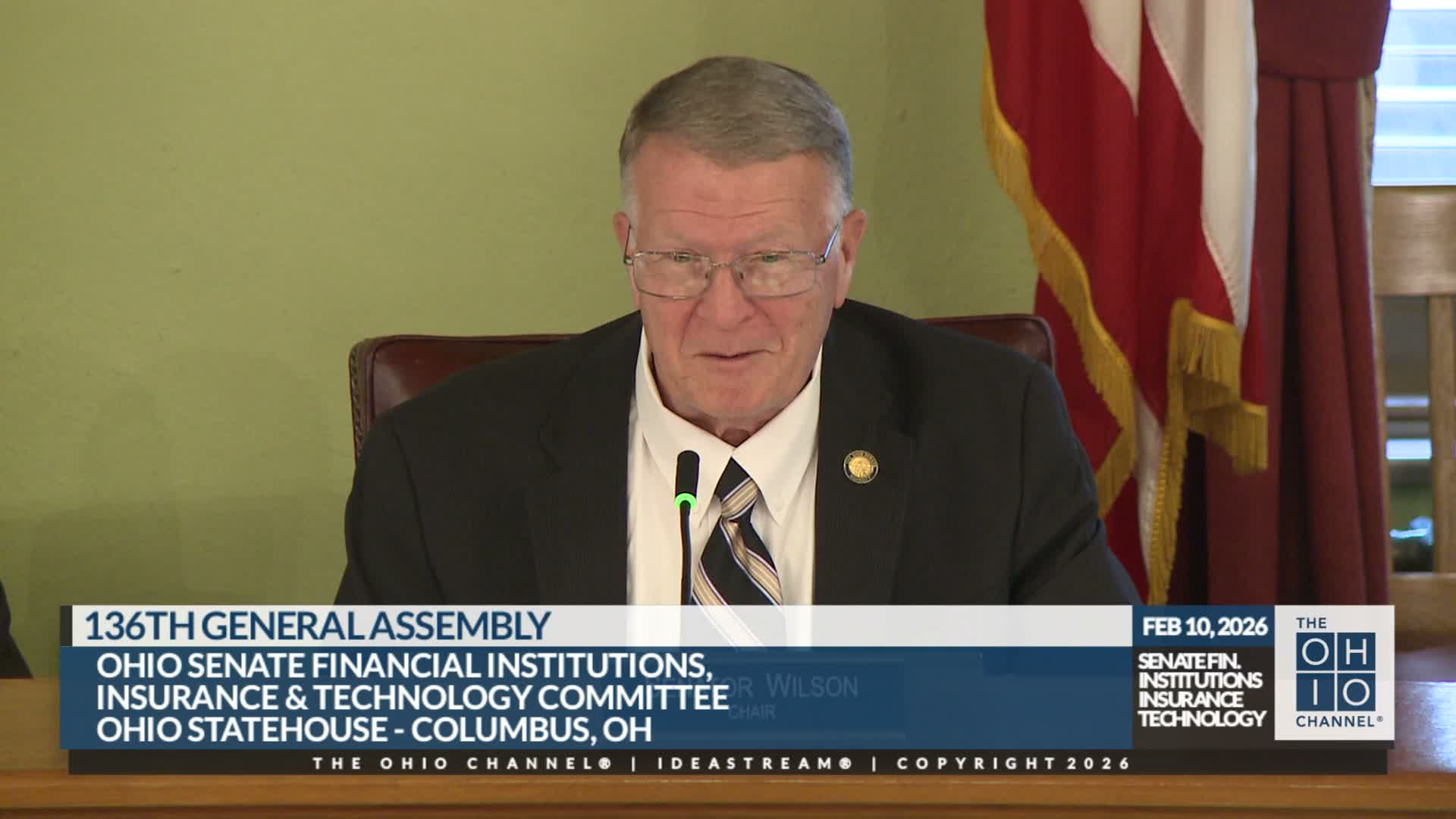
Representative King told the Senate Financial Institutions, Insurance and Technology Committee that House Bill 21, titled the Freedom to Share Act, would update Ohio law to clarify that healthcare sharing ministries are not insurance companies but nonprofit, charitable organizations in which members voluntarily share medical needs.
"This bill clarifies that healthcare sharing ministries are not insurance companies and are exempt from Ohio's insurance code," King said, adding the bill would place qualified ministries under the Ohio attorney general’s oversight, allow participation to satisfy college or university health‑coverage requirements and authorize a personal income tax deduction for members.
Why it matters: King and proponents said the measure preserves a low‑cost option for people who are self‑employed or priced out of traditional insurance, and aligns Ohio with federal practice. King said federally there are about "107 certified healthcare sharing ministries" and that "more than 25,000 individuals" in Ohio participate in such ministries.
Committee members focused on consumer protections and how ministries operate in practice. Vice Chair Lang asked whether the bill would reach nonreligious health‑sharing plans and noted market shifts toward alternative plans. King responded that the bill’s definitions and the federal list of certified ministries were intended to limit scope and that she expected ministries to provide specific plan terms during proponent testimony.
Ranking Member Craig pressed for operational clarity about emergency care and payments, asking whether members pay costs upfront and later seek reimbursement. King said ministries vary widely and declined to generalize, saying: "I would feel more comfortable if the ministries themselves were to answer that specific question." Senator Sandra Liston asked whether the ministries function as a replacement for insurance or a supplement; King said the programs are options that vary by family and plan.
Consumer safeguards in the bill: King pointed to transparency provisions in the substitute language, including a required disclaimer that "it is not insurance and there is no guarantee of payment," an annual audit available upon request and annual reporting of the dollar amount of qualified medical needs shared in the prior year.
What happens next: The committee concluded the first hearing on HB21 and did not take a vote. Chair Wilson said members would have two weeks to review materials and meet again to consider amendments and additional testimony.