UIUC studio presents adaptive‑reuse concepts for Urbana Civic Center
Loading...
Summary
A University of Illinois studio partnered with MTD and the city to propose adaptive‑reuse and hybrid approaches for the Urbana Civic Center that aim to combine transit function with civic programming; students proposed building adjacent new facilities, selective removal of an annex, envelope reconfiguration, and programmatic activation.
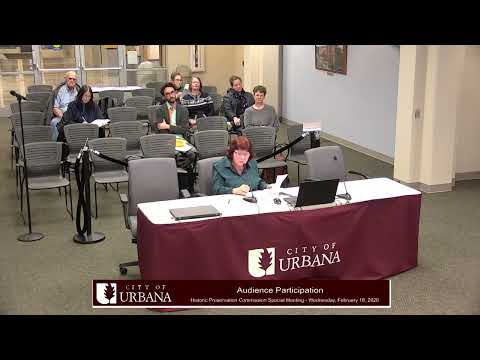
Professor Joseph Altschuler presented Fall 2025 studio work from the University of Illinois that explored how the Urbana Civic Center could be reimagined to support a downtown multimodal transfer center while preserving civic value.
Altschuler described five broad strategies developed by students: construct a new building immediately east of the Civic Center in the city‑owned parking lot while rehabilitating the existing building as a companion structure; selectively remove a portion of the building (for example, a rear annex that contains kitchen facilities) to create bus circulation room while retaining the architecturally significant core; open and reconfigure the building envelope to create covered, open‑air waiting areas; raise or retain and reconfigure the roof to create a protected canopy for boarding; and expand the programmatic uses of the site so a transit center also acts as a civic and cultural hub.
Altschuler said the studio worked closely with city and MTD staff, toured the building in September 2025 with 90 students, and aimed to ‘‘think beyond a bus station’’ to activate the public realm. He told commissioners that while MTD was clear adaptive reuse was not the agency’s stated primary objective, the studio’s work demonstrates opportunities to combine transit function with public amenity. He described student ideas such as using the adjacent city parking lot (identified in materials as Parking Lot 09) for new construction and removing a less significant kitchen annex to improve circulation.
MTD staff and several commissioners reacted positively to the student work; one commissioner requested a PDF of the full student portfolio for the commission’s review. Participants framed the studio as evidence that collaborative, early‑stage public engagement can produce practical design options that bridge preservation and transportation goals.
The presentation concluded without commitment to a particular design; MTD reiterated it has not hired a designer and said it would pursue public procurement and further design only as the NEPA process and grant opportunities advance.