Get Full Government Meeting Transcripts, Videos, & Alerts Forever!
Get email alerts on the Local Budget topic
No spam. Unsubscribe anytime.
Assumption Parish jury votes to reallocate taxes, cut discounts and press for other savings amid $679,611 shortfall
Summary
Facing a projected $679,611 general‑fund deficit for 2026, the Assumption Parish Police Jury approved several cost‑saving measures including ending across‑the‑board rental discounts, reallocating dedicated sales‑tax shares (including a 1.5% transfer under consideration) and directing staff to pursue unpaid fees and new enforcement for unlicensed businesses.
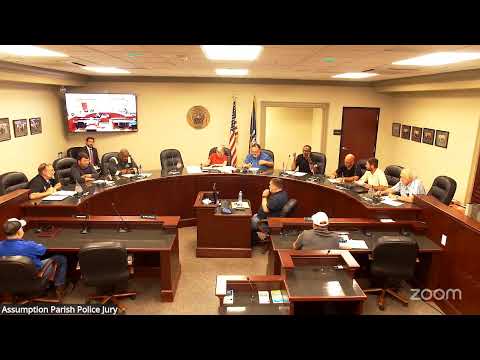
The Assumption Parish Police Jury on Feb. 20 moved to tighten spending and shift revenue sources after finance staff told jurors the 2026 general fund faces a projected shortfall of $679,611.
Unidentified finance staff told the panel the parish’s estimated 2026 ending fund balance and revenue/expenditure projections left a deficit and that simply rededicating a portion of ad valorem (millage) or library fund revenue would not resolve the shortfall. “The net effect is a negative $679,611,” the finance staff member said during the presentation.
Jurors adopted several cost‑saving steps in voice votes. They approved ending across‑the‑board discounts for rentals of the Assumption Parish Community Center and the agricultural complex after staff warned the facilities and utilities were costing roughly $140,000 a year in combined losses and rising monthly utilities. Jurors also approved a motion to allow school board uses to have up to 12 single‑day free events per year (excluding graduation) for new bookings moving forward.
On revenue moves, the jury voted to pursue reallocation of a 1.5% sales‑tax allocation toward the general fund and to seek placement of related propositions before voters as required. Separately, jurors approved reallocating one‑eighth of a 1% sales tax toward inmate needs within the general fund, an item staff estimated could provide about $400,000 annually for inmate‑related expenditures.
Members discussed but did not adopt a measure that jurors pay their own travel expenses for 2026. The body did adopt a temporary freeze on most travel reimbursements for the year, allowing only room costs for certain approved conferences.
The jury also authorized staff outreach to businesses advertising on social media to inform operators of occupational‑license requirements and to encourage compliance, following concerns that businesses operating without licenses shift the tax burden to compliant operators.
The meeting included discussion of other possible savings: raising permitting fees and strictly enforcing after‑the‑fact permits, consolidating parks and recreation operations, eliminating noncritical street lighting where public safety would not be compromised, and pressing the Water Works and sewer district for a map and data to identify unconnected customers who are not paying sewer charges.
The jury directed staff to return with specifics on timing, legal steps (including ballot timing for any proposed tax reallocations), and estimated revenue impacts before final implementation.