Get Full Government Meeting Transcripts, Videos, & Alerts Forever!
Get email alerts on the Veterans topic
No spam. Unsubscribe anytime.
Veteran Services officer: 2025 saw steady outreach, rides and rising claims post‑9/11
Summary
Jay Stewart, Stevens County Veteran Services Officer, told the board his 2025 office activity included 72 VetNAM rides, 236 veteran contacts and 174 claims/forms filed; he outlined benefit categories, county VA expenditure figures presented for 2024, and described service delivery challenges including nursing‑home waiting lists and processing backlogs.
Jay Stewart, the Stevens County Veteran Services Officer, presented the office’s 2025 activity to the board and described steady outreach, transportation support and an increase in complex claims tied to recent federal legislation.
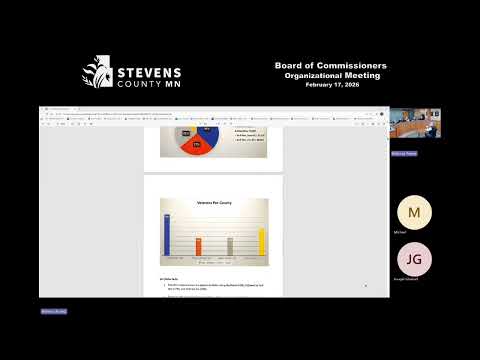
Stewart told commissioners the office provided 72 VetNAM rides to regional VA facilities and local hospitals, documented 236 veteran contacts (phone, email, walk‑ins and appointments), and submitted 174 claims and forms covering disability compensation, pensions, burial benefits, education and vocational rehabilitation, memorial markers and state soldier assistance programs. He said some special‑needs grants provide one‑time awards up to $10,000 for needs such as roofs or furnaces “depending on income and assets.”
“Services focused on improving access to benefits, maintaining consistent engagement, supporting veterans through claims and referrals,” Stewart said. He summarized VA‑reported county expenditures for 2024 as presented to the board, stating a total of $5,200,000 coming into Stevens County through VA compensation, pensions and medical care.
Stewart highlighted how post‑9/11 veterans now make up a large share of pending claims, drawing a direct link to the 2022 PACT Act. He said the VA has seen record volumes—“more than 2,000,000 disability claims last year” as presented—and that post‑9/11 claims account for roughly half the pending caseload nationally. He described common claims as tinnitus, musculoskeletal injuries, hearing loss, back and neck pain, PTSD and migraines, and said about one in four veterans report traumatic brain injury.
Commissioners asked about outreach and whether contacts represent unique individuals. Stewart replied that the contact total counts every interaction, including repeat visits. He described transportation as a regional challenge but praised two drivers who provide scheduled rides and on‑route support for veterans.
Stewart also discussed nursing‑home waitlists in the region—he said one facility had an estimated seven‑month waiting list—and noted community care options have expanded access when VA appointments are difficult to secure.
Next steps: Stewart urged continued outreach and noted the VA releases some data with a one‑year lag; the board did not take formal action on the presentation.