Local conservationist outlines how easements, deals and bonds preserved Missoula’s Rattlesnake
Loading...
Summary
Bruce, a longtime Montana conservationist, traced five decades of private-land conservation and local campaigns that protected the Rattlesnake: conservation-easement law in 1975, negotiated deals with Montana Power Company, the Bugbee Nature Preserve, and municipal bonds to buy Mount Jumbo.
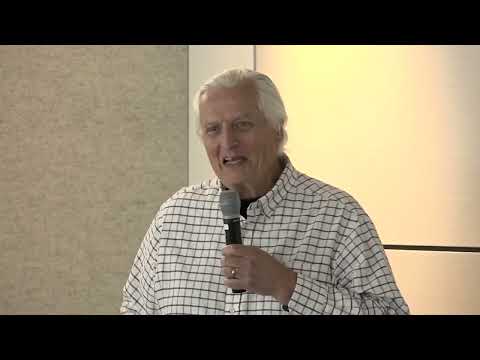
Bruce, a conservationist who has worked in Montana since 1972, told a Rattlesnake Creek Watershed Group audience on Feb. 20 that private-land tools and negotiated deals saved large swaths of habitat around Missoula.
“The legislature enabled conservation easements in 1975 in Montana,” Bruce said, explaining that easements let owners limit development rights while retaining title. He said Montana has conserved “something over 6,000,000 acres” in the roughly 50 years since the law passed, split between easements and public-acquisition projects.
Bruce described the specific local history that sparked action in the Rattlesnake: a late-1970s subdivision boom of vegetation clearing, roads and utilities, and developers eyeing privately owned sections along the creek. He said Montana Power Company once owned about 21,000 acres in the upper Rattlesnake with roughly 12 miles of creek frontage and that local negotiators, including work by Pat Williams, helped move a long-running protection effort toward completion.
One on-the-ground example Bruce recounted was the Bugbee Nature Preserve. He described how his father bought 8–9 acres on the creek to prevent timber clearing; the Nature Conservancy, county government and Montana Fish, Wildlife & Parks joined to assemble funding so the family could pay off a loan and hold the land as a preserve. “And please don’t cut all the trees down,” he recalled being asked to promise.
Bruce also described land-exchange and compensation techniques he used elsewhere: assembling multiple transactions across state and federal agencies, working with private owners and public partners to consolidate parcels (he cited the Oxbow Ranch and transfers that supported the Gates of the Mountains area), and municipal bond issues that allowed the city to buy Mount Jumbo and later Mount Sentinel.
On the statewide pattern, Bruce noted conservation easements are often negotiated owner by owner and better understood as voluntary transactions than as the often-contentious designations that accompany public-land decisions. He praised pragmatic local models like the Blackfoot Challenge, which focuses on the “80/20” rule—finding agreement on most issues and not letting disagreement block practical conservation.
During audience questions, Bruce addressed political debates around conservation. Asked about American Prairie and recent proposals to limit perpetual easements, he said some legislative efforts have tried to change easement permanence but that many such proposals did not advance; he described ongoing uncertainty about grazing-lease decisions and said the outcomes remain to be seen.
Bruce closed by pointing attendees to additional reading and his recently published book on Montana conservation history. The Watershed Group plans to post a recording of the presentation on its (new) website.