Wake County Schools' audit: clean opinion but fund balance slips amid enrollment growth
Loading...
Summary
Auditors delivered an unmodified opinion on Wake County Public School System's annual comprehensive financial report for the year ending June 30, 2025, but staff warned the district used roughly $23.8 million of fund balance in FY25 and faces ongoing cost pressures from enrollment growth and expiring federal COVID relief.
Auditors gave the Wake County Public School System's Annual Comprehensive Financial Report (ACFR) for the fiscal year ended June 30, 2025, an unmodified opinion, and staff reported the district's financial position remains strong even as its general fund balance decreased.
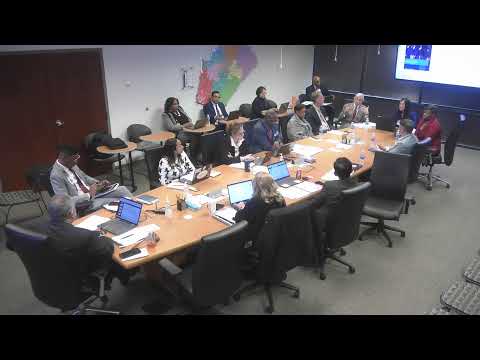
The external auditor, Tyler Beatty, told the Budget & Finance Committee on Feb. 17 that the audit opinion was unmodified, meaning the financial statements and the accompanying notes ‘‘present fairly in all material respects’’ and that auditors did not identify items that required modification of the opinion. "We didn't have anything that came to our attention where we would need to modify the opinion," Beatty said during the presentation.
Why it matters: an unmodified ("clean") opinion indicates auditors were able to verify that the reported figures are materially accurate, but it is not a management evaluation of policy choices. Committee members and staff focused discussion on the district's use of fund balance and budget pressures heading into the 2026 budget cycle.
Key findings and concerns
- Fund balance decline: Staff reported the general fund balance decreased by about $23.8 million in FY25. The district's unassigned fund balance stood at about $37.0 million, roughly 5% of the subsequent year's county appropriation; board policy aims for 6% (about $44.0 million). Staff and auditors warned that repeated reliance on fund balance for recurring costs is unsustainable.
- Federal funding gap: Auditors and staff said federal funding decreased by about $55.0 million as COVID-era Education Stabilization funds (ESSER) expired; that decline contributed to the overall need to use fund balance and to heightened budget pressure.
- Enrollment and cost pressure: Enrollment rose by 1,125 students in FY25. Staff presented per-pupil figures: $13,032 (total operations), $12,552 (operating excluding capital) and $15,628 (combined operating and capital). Committee members pressed staff on how inflation, salary and benefit costs (which account for roughly 80% of the district's budget) drive year-over-year spending increases.
- No audit findings: Charles Coble, chair of the independent audit committee, said the committee's review did not identify corrective actions that needed to be reported to the board. "There were no corrective actions that they identified that were required," Coble said.
Timing and process
Auditors described a delayed federal compliance guidance (an OMB compliance supplement) that slowed the single-audit timetable. The Local Government Commission extended audit filing deadlines to Feb. 12, 2026, and staff reported the ACFR and related submissions were filed with the LGC and the Federal Audit Clearinghouse in January 2026.
Staff emphasized the distinction between the different audit products in the ACFR: the financial-statement audit (the opinion), federal/state compliance testing (single audits), and additional Yellow Book procedures. The auditors stressed that an audit provides "reasonable assurance" that the financial statements are materially correct, but is not an absolute guarantee against undetected misstatements.
Context and next steps
Accounting staff highlighted that Wake County has received consecutive awards for excellence in financial reporting from the Association of School Business Officials International and the Government Finance Officers Association, a record staff said reflects sustained transparency and reporting standards. "This marks our 36 consecutive year that the board has received this award," accounting lead Latrice Farris stated.
Committee members discussed options to stabilize fund balance, including tighter vacancy and expenditure controls, and noted the limits on converting restricted state or federal funds to discretionary uses. Staff said they would continue to brief the board as the 2026 budget is developed.
The committee received the presentation and discussion and adjourned at 3:10 p.m.