Get Full Government Meeting Transcripts, Videos, & Alerts Forever!
Get email alerts on the Local Transportation Policy topic
No spam. Unsubscribe anytime.
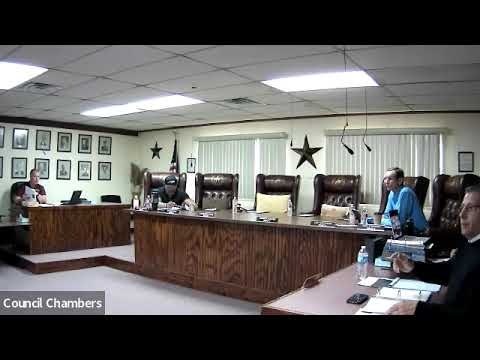
Alpine council workshop weighs ordinance to let golf carts and utility vehicles operate on city streets
Summary
At a special council workshop, speakers reviewed a draft ordinance to permit regulated golf carts and off-highway utility vehicles inside Alpine city limits, debated where such vehicles may travel (intersection crossings vs. driving on Loop/Highway 223), and considered permit fees, inspections and safety equipment requirements.
Alpine council members and staff spent a special workshop reviewing draft language that would let regulated golf carts and certain utility and recreational off-highway vehicles operate inside city limits while striking or limiting references to pocket bikes and other unregulated mini motorbikes. Speaker 1 opened the 4 p.m. session and said the goal was to establish operational rules, penalties and standard ordinance boilerplate including a $500 penalty provision for violations.
Supporters at the table urged the city to adopt state transportation-code definitions rather than write new local definitions. "I actually kinda support the whole project as long as it's regulated," Speaker 3 said, arguing that regulated access could help residents make short trips to groceries and other local errands. Participants agreed to remove or narrow references to "pocket bikes" and "mini motorbikes," noting that state law already limits those devices and that terms vary in statutory definitions.
The group spent substantial time debating where regulated vehicles should be allowed to travel. Speakers repeatedly distinguished between permitting crossings of state-numbered highways at intersections so residents can access destinations and permitting travel along higher-speed roads. "You can put in here they can cross these prohibited roads at an intersection," Speaker 3 said; others warned about safety on Loop Road/Highway 223, which hosts significant truck traffic. Speakers agreed the municipal ordinance would only apply inside city limits and would not extend automatically into the county.
The draft would create a municipal permit process rather than calling it a local "registration," in part to avoid confusion or legal pushback. The packet recommends that owners obtain the state-issued golf-cart license plate (the DMV fee was cited as $14), then obtain a city permit and inspection. Speaker 1 read proposed permit language: on receipt of a completed application and a fee (proposed $50 first year, $25 thereafter), a police department member would inspect the vehicle and the city would issue a permit decal to be fixed to the front driver's-side panel. Permits would run for two years and could be revoked for noncompliance.
Speakers proposed equipment and safety requirements: headlights, tail lamps, reflectors, mirrors, parking brake, a working muffler for utility vehicles and a slow-moving-vehicle emblem. They also discussed hours of operation. The transportation code's daytime/nighttime definitions were cited; some participants suggested extending permitted hours "till midnight" to cover festivals and evening events, while others urged sticking to daytime-only operation because of visibility and safety concerns.
Enforcement would rely on Alpine Police Department inspections and existing state law; participants noted overlapping authorities and potential enforcement complexity where state allowances (for example, limited golf-cart travel to and from a golf course) and the proposed municipal rules intersect. Speakers advised drafting the ordinance under the municipal-authority sections of the transportation code while preserving the two state nonwaivable limits they cited: operation within city boundaries and the 35-mph speed cap.
The workshop did not record any motions or formal votes. Participants asked staff to refine the definitions, clarify where regulated vehicles may cross or travel, and incorporate permit, inspection and equipment language for future public review.