
Defender General flags staffing, investigator pay and training gaps in FY27 request
Get AI-powered insights, summaries, and transcripts
Subscribe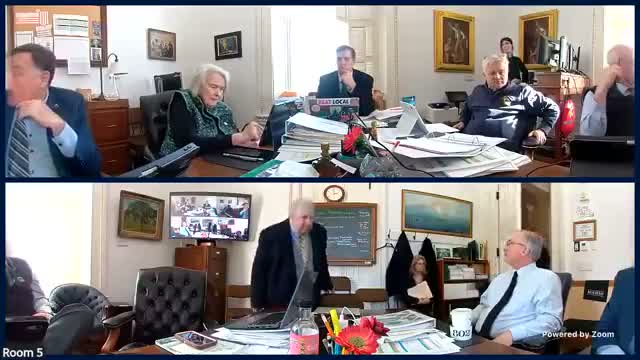
Summary
Defender General Miss Valerio told the Appropriations Committee the FY27 request preserves current service levels but leaves unfunded needs—raising serious‑felony unit pay to $200,000, increasing investigator rates, and restoring training funding into the base were among priorities she urged the committee to consider.
Miss Valerio, the Defender General, presented the public defense FY27 budget to the Senate Appropriations Committee and described two budget sides: primary public defender offices (staff and contracted primary public defenders) and the conflict/assigned counsel side that handles referred conflicts and caseload relief.
Valerio said the governor’s recommended budget continues current service levels and covers a salary and benefit rollout, but she identified specific unfunded or only partially funded needs. She proposed raising serious‑felony unit funding from $150,000 per unit (the original FY2002 appropriation level) to $200,000 to reflect current costs. She also described pressure on third‑party investigator rates—the department increased investigator pay from $40 to $50 an hour in recent years but faces market rates closer to $90–$150 in neighboring jurisdictions; Valerio said she had asked administration to consider boosting investigator pay toward $100 an hour so the state can retain qualified providers.
On staffing, Valerio said Vermont lacks enough lawyers willing to do public defense work; she said the office has not been able to recruit entry‑level attorneys consistently and has been unable to fill a data manager position, which complicates timely data reporting. She described caseload trends since COVID—double‑digit increases in some categories—and county‑level variation, with Chittenden County driving a large share of statewide volume. Valerio highlighted improvements in backlog in calendar year 2025 but cautioned that caseload pressures remain.
Valerio also discussed contracting and cost efficiency: assigned counsel and contract arrangements, she said, save money compared with ad hoc counsel and have reduced the per‑LEC (lawyer‑equivalent case) cost for some case types. She noted the administration included some increases for assigned counsel but did not fully allocate parallel increases to public defense OPS lines and said the recommended vacancy‑savings assumption (about $610,000) was unrealistic for her operations.
Finally, Valerio asked the committee to consider restoring training funding into the base (about $80,000 she said had been one‑time money previously), and she asked for clearer OPS breakout for investigators, experts, transcripts and mileage so the committee can see where those costs are captured. Committee members asked follow‑up questions about investigator contracting, ADS allocations and vacancy savings; Valerio agreed to provide supporting documents and noted the constitutional need for defense to test the state’s evidence when necessary.
No formal votes were recorded during the presentation; committee follow‑up focused on line‑item and OPS clarifications rather than immediate policy changes.