
Vermont DOC details staffing shortfalls and ramps up recruitment, training and wellness efforts
Get AI-powered insights, summaries, and transcripts
Subscribe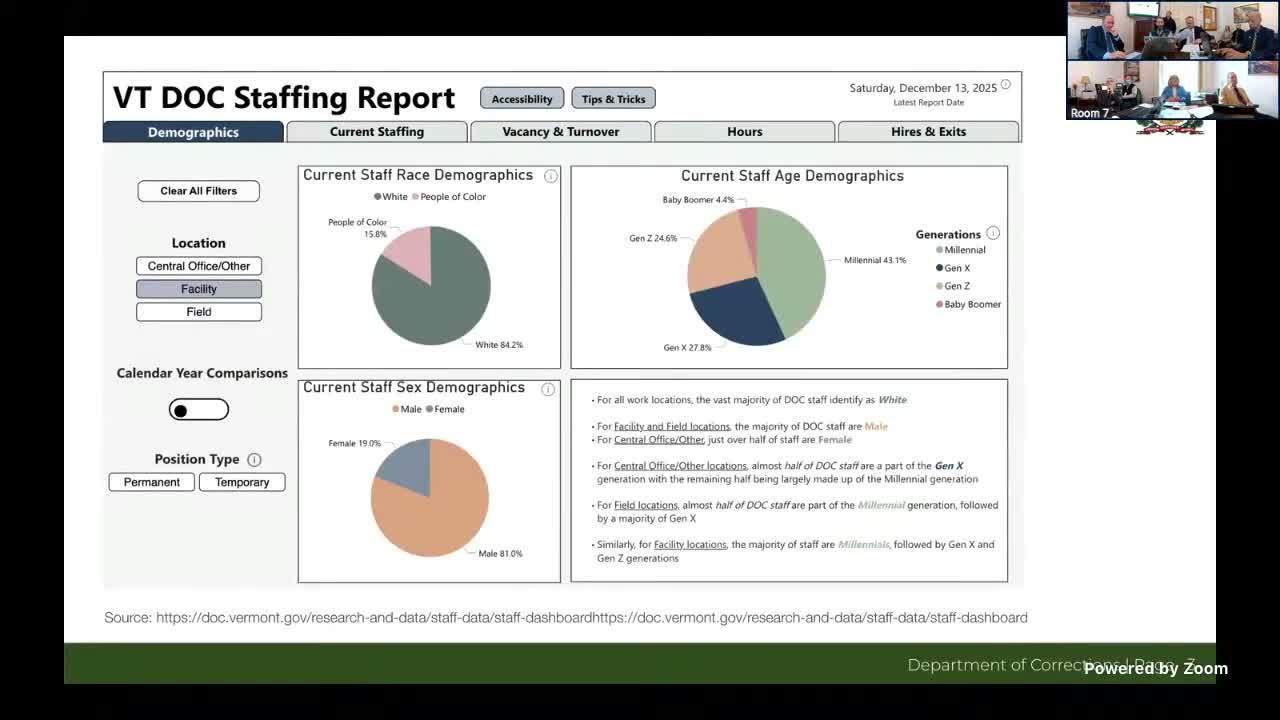
Summary
Interim DOC leaders told the Senate Institutions committee the department faces multi-year staffing shortages that peaked during COVID and described recruitment, retention, training and wellness programs — including education partnerships whose grant support is ending in August.
Interim Commissioner John Muran and department operations leaders told the Senate Institutions committee on Feb. 18 that Vermont’s Department of Corrections continues to cope with multi-year staffing shortages and is rolling out a suite of recruitment, retention and wellness measures to stabilize facilities.
Travis Denton, the department’s chief of operations, said the vacancy trend worsened during the COVID pandemic and that the department “were as high as 30 percent vacancies during the height of COVID.” He told senators that the department’s statewide vacancy rate had improved from those heights but remained meaningful; as of December Denton cited a statewide figure near 12.2 percent and said facility (24/7) posts remain the most acute staffing pressure.
That shortfall affects operations, the DOC said. Denton and committee members described how facility vacancies create coverage gaps that reduce programming and movement inside facilities and require overtime or temporary reassignments. “More staff equals more programming,” Senator Russell Eagles said, adding that having sufficient staff allows people in custody greater access to classrooms and libraries.
The department identified several retention and recruitment approaches. Tanya Barber, deputy director of the Office of Professional Standards and Compliance, said the recruitment and retention team includes an interim supervisor (Steve), three coordinators, a peer-support coordinator and a Community College of Vermont (CCV) liaison. The team uses targeted job boards and partnerships with labor and military organizations, mounts career-fair and community outreach, and supports facility-level “staff experience supervisors” who manage onboarding and early retention efforts.
Barber described training and internal career-path options as key retention tools. The DOC is expanding instructor and trainer roles at the academy so newer staff can gain duties and advancement opportunities early in their careers; Barber said those trainer assignments historically help retain staff past the first year.
Barber also described wellness measures the department uses to support staff, including peer-support teams overseen by a clinician, family support groups, a reward-and-recognition program, and trauma- and stress-management trainings. She said the department is piloting a wellness-specialist concept that would deploy a trained canine to provide emotional support to staff, but that the program remains pending additional approvals and administrative steps.
Education partnerships have been an important recruiting incentive. Barber said a three-year CCV grant providing free college classes to staff and dependents will end in August and that DOC is working with partners such as Springfield College and local institutions to identify alternatives. “We’ve been advocating,” Barber said of efforts to continue staff tuition benefits.
Committee members asked for follow-up data the department said it could provide, including a facility- and rank-level vacancy breakdown, trend data on exit interviews, and updated internship-to-hire conversion numbers. Barber agreed to return those details to the committee and to coordinate with facility and health-services staff as requested.
The committee did not take formal action during the update. DOC leaders said most initiatives are ongoing and pledged to provide additional data and witnesses — such as facility managers and recruitment staff — at future briefings.