Urbana BPAC approves recommendations for Veo bike-share contract, urging hubs, GPS zones, response times and data sharing
Loading...
Summary
The Bicycle & Pedestrian Advisory Commission voted Feb. 17 to send a set of amended recommendations to city staff and the city attorney for negotiation with Veo, including designated parking hubs, GPS-based slow-ride/no-ride zones, tighter response windows for ADA violations and routine data sharing for ridership and deployments.
The City of Urbana Bicycle & Pedestrian Advisory Commission voted Feb. 17 to forward a set of recommendations to city staff and the city attorney for use in negotiating a formal agreement with Veo, the private operator of the green e-bike network that serves Urbana, Champaign and the University of Illinois.
The advisory group said it wants a largely operational agreement that includes designated parking hubs, GPS-based slow-ride and no-ride zones for high-pedestrian areas, clearer response times for reported ADA-blocking devices and routine data sharing on ridership and deployments. "We are an advisory group. We don't have the authority to bird dog or veto or do anything else about that," said Bruce Michaelson, who led the bike-share working group; he pressed the commission to produce a succinct set of recommendations the city can use in negotiations.
City staff and commissioners emphasized that Veo has been operating without a finalized Urbana contract and that an agreement would set enforceable terms. University representative Sarthak Prasad told the commission Veo is relaunching this week and "in the next 2 weeks, they will be at a 100% capacity," increasing the urgency of getting operational rules in place before the fleet fully returns.
Key items the commission asked staff to pursue include: designated neighborhood and downtown hubs so vehicles are returned to predictable locations; GPS/geo-fence controls to create slow-ride and no-ride zones in signature parks, school drop-off areas and the campus core; a maximum practical low-speed policy in sensitive zones (members discussed 15 mph as a possible cap); and data-sharing provisions so city planners receive ridership and deployment reports that can inform hub placement and enforcement.
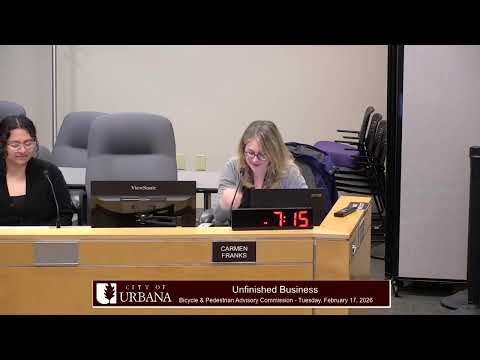
Commissioners debated details — for example, whether to require council approval for any agreement, whether fees should be a blanket annual amount or a per-unit fee, and what the maximum response time should be when a vehicle creates an ADA obstruction. Carmen Franks, the staff liaison, said those legal and financial terms will need review by the city attorney and leadership before a final contract is drafted.
The commission approved the motion to forward the revised recommendations for staff consideration and negotiation. Bruce Michaelson moved the motion and Kev Murphy seconded. The motion passed by voice vote.
Next steps: staff will send the amended recommendations to the city attorney and begin negotiations with Veo, with the expectation that legal terms (fee structure, contract length, response-time metrics and data-sharing language) will be developed in coordination with Champaign and campus stakeholders.