
Committee weighs competing fixes to surprise ambulance billing as sponsors debate reimbursement standard
Get AI-powered insights, summaries, and transcripts
Subscribe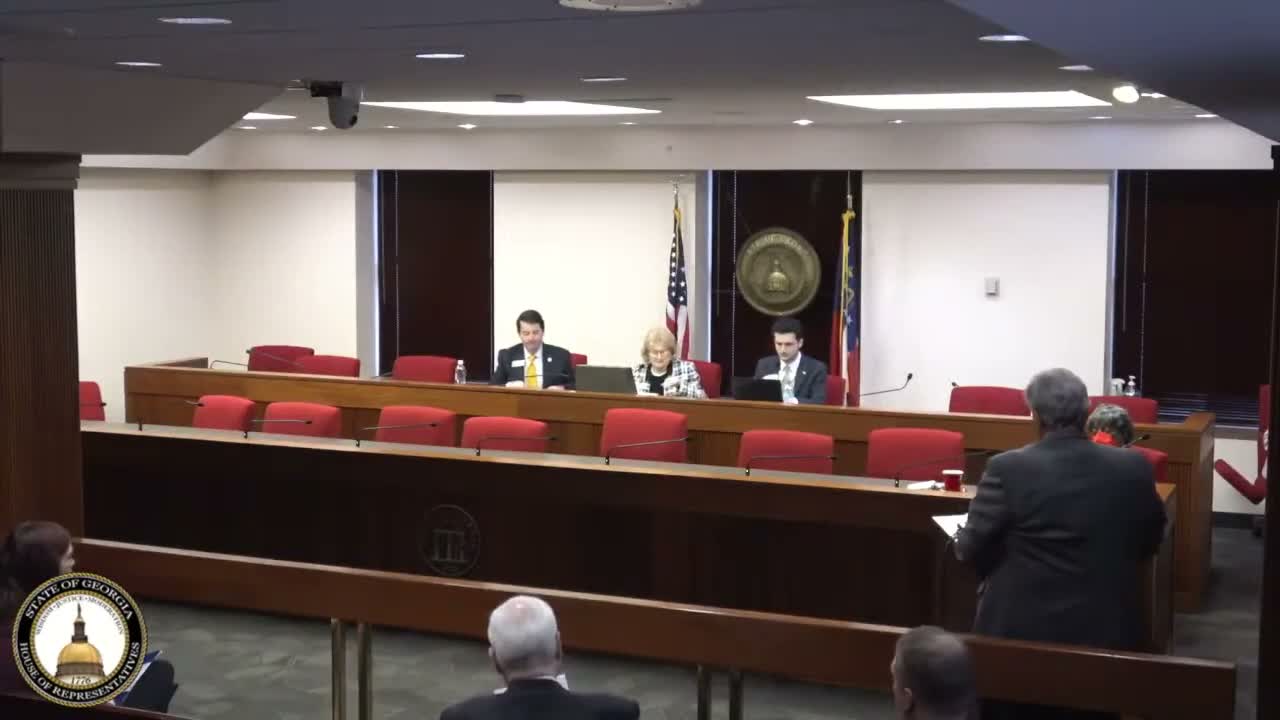
Summary
Chairman Powell presented House Bill 9‑61 to set a statutory reimbursement approach for surprise ambulance billing after recounting a $4,500 private-ambulance bill; EMS groups urged a 325% of Medicare standard while insurer representatives warned a fixed percentage could push providers out of in‑network contracts and raised a 2027 federal subsidy risk for exchange plans.
Chairman Powell told the subcommittee House Bill 9 61 aims to protect patients from surprise ambulance bills while balancing the funding needs of public EMS providers. He opened with a personal anecdote about a private ambulance charging $4,500 for a 10‑mile transport and said the bill in committee text referenced a 300% of Medicare standard as a compromise point.
Why it matters: Members and witnesses described competing tradeoffs. Representative Scott recounted a $1,800 bill for a short transport and said patients should not receive "sticker shock." Chad Black, chairman of the Georgia EMS Association, argued the statute must provide sufficient reimbursement to cover readiness and operational costs and urged a 325% of Medicare standard, noting other states use that level.
Insurers' concern and federal linkage: Jesse Wellington, president of the Georgia Association of Health Plans, cautioned that fixing a numerical percentage in statute could discourage ambulance providers from entering network contracts and reduce negotiated savings. He also flagged a federal change in the 2027 Notice of Benefit and Payment Parameters that, he said, would make state-passed mandates enacted after Dec. 31, 2011, subject to state appropriation to defray the cost for exchange enrollees, potentially shifting costs to the state treasury.
Policy choices and equity questions: Witnesses debated whether a statutory percentage should be the default or whether the lower of a negotiated local contract rate, in-network rate, or statutory percentage should apply in true emergencies to avoid disparate patient bills. Les Schneider urged the committee to examine models used by states that do not specify a percentage and to consider using the lowest applicable rate to protect patients.
Procedure and next steps: The committee treated the measure as a hearing matter. Members said staff will track data and continue negotiations on the numeric standard; a companion Senate measure was noted. No formal votes were taken in subcommittee.