
Governor’s school-aid proposal would boost per-pupil funding and shift $1.4B into a weighted pupil formula
Get AI-powered insights, summaries, and transcripts
Subscribe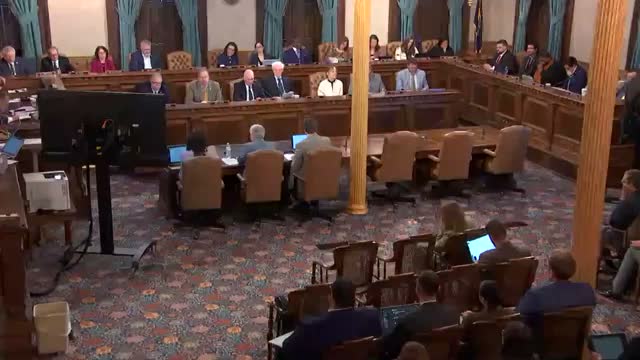
Summary
The governor’s recommendation would raise the foundation allowance 2.5% (from $10,050 to $10,300) and move $1.4 billion from at-risk and ELL lines into a new weighted pupil membership, increasing district flexibility while retaining many targeted literacy investments.
Noel/Noelle Benson, a House Fiscal Agency school-aid analyst, told the House Appropriations Committee the governor’s school-aid proposal raises overall school-aid spending versus the FY26 budget and restructures how at-risk and English-language-learner funding is delivered.
"The governor's proposal includes a 2.5% increase to the per pupil foundation allowance," Benson said, noting the allowance would rise from $10,050 to $10,300, at a cost of about $325 million. The proposal would reduce cyber school foundation allowances to 80% of the foundation ($8,240 per pupil), producing roughly $53 million in savings.
Benson said the largest structural change is a $1.4 billion transfer from the current at-risk and ELL sections into a new weighted pupil membership line modeled on work by the school finance research collaborative. Under that approach, districts would receive higher per-pupil amounts for identified categories; as Benson explained, "a district could receive $12,640 for an economically disadvantaged pupil instead of the standard $10,300." The change is intended to give districts flexibility on how they spend those funds but includes reporting and programmatic requirements that Benson described as reduced relative to the current rules.
The proposal also includes major direct literacy investments: $100 million for high-impact tutoring, $100 million for early literacy curricula, and $50 million over five years for LETRS professional learning on the science of reading, plus $300 million retained for school safety and mental-health investments. Benson said the overall school-aid increase includes both ongoing and one-time components and carries additional funding for preschool slots, before-and-after-school programs, and teacher preparation.
Committee members asked for more data on enrollment and fall-count changes that affected per-pupil estimates; Benson said HFA is still waiting for subsequent count-day data and can provide more detail as counts are finalized.
The committee did not vote on school-aid items during this session; HFA will supply detailed documentation in follow-up materials.