Get Full Government Meeting Transcripts, Videos, & Alerts Forever!
Get email alerts on the State Budget Overview topic
No spam. Unsubscribe anytime.
House Appropriations panel hears HFA breakdown of governor’s budget, $1.8B general-fund gap and proposed tax offsets
Summary
House Fiscal Agency analysts told the House Appropriations Committee the governor’s executive recommendation leaves about a $1.8 billion general-fund need, and proposed a mix of new taxes, a $400 million budget-stabilization withdrawal and reprioritized one-time funds to close it.
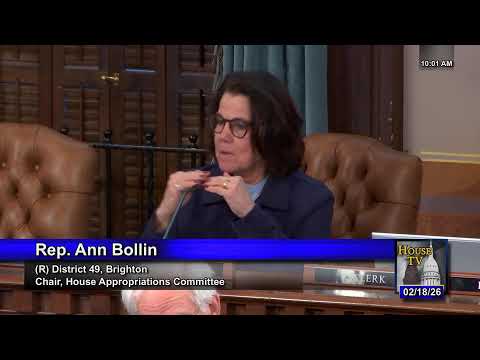
The House Appropriations Committee convened for a briefing from House Fiscal Agency analysts on the governor’s executive budget recommendation, including four supplemental requests and revenue proposals intended to reduce a roughly $1.8 billion general-fund gap.
Mary Anne Cleary of the House Fiscal Agency introduced the presentation and said analysts would provide a fuller document next week. "You have a couple documents in front of you," she told the committee, then handed the main presentation to fiscal staff.
Kevin Khoskra, House Fiscal Agency fiscal analyst, said the package includes four supplementals and large baseline and caseload adjustments that together drive the need for new revenues. "There are 4 supplementals proposed, within the executive recommendation," Khoskra said. He described a FY25 departmental supplemental of about $272 million gross (roughly $270 million general fund) largely driven by timing of hospital/provider tax revenues; an FY26 supplemental that totals about $1.1 billion adjusted gross (with general-fund components primarily in health and human services); a net school-aid fund reduction of about $177 million gross; and a small increase to the Natural Resources Trust Fund.
Khoskra outlined the executive’s revenue and spending approach to close a roughly $1.8 billion gap: new or increased taxes estimated to save about $780 million in general fund, a proposed $400 million withdrawal from the budget stabilization fund (BSF), reprioritization of $250 million in one-time FY26 resources, and additional shifts of school-aid to higher education totaling roughly $200 million. The tax proposals he listed include an increase in the tobacco tax (projected to save about $232 million GF), a new wholesale tax on vaping products (~$95 million), changes to online and sports gaming taxes (~$195.4 million), and a proposed digital advertising tax (~$282 million).
Khoskra also described programmatic drivers of increased costs, citing higher Medicaid caseloads and policy changes tied to HR 1 that shift administrative costs to the state. He said baseline current-services adjustments add about $751.8 million in general-fund costs, including $452.2 million tied to caseload adjustments and other actuarial or utilization changes.
Several members asked for more detail. Representative Rogers asked for an updated estimate of HR 1’s bottom-line impact; Khoskra said HFA could provide more itemized information and noted a $70 million general-fund savings assumption embedded in the caseload numbers related to utilization changes. Representative Green questioned the timing of a $3 million gubernatorial transition supplemental, and staff replied that a work project authorization makes that money available in FY26 regardless of the election timing.
The committee did not take further votes on budget measures during the session; Representative Mueller moved to excuse absent members and the chair granted the request, after which the committee adjourned.
What’s next: HFA staff said a fuller, numbers-heavy document will be provided next week and that the committee will review supplemental detail and follow up questions in subsequent meetings.