
Senate committee defers bill seeking tribal sales reporting to 40‑first day
Get AI-powered insights, summaries, and transcripts
Sign Up Free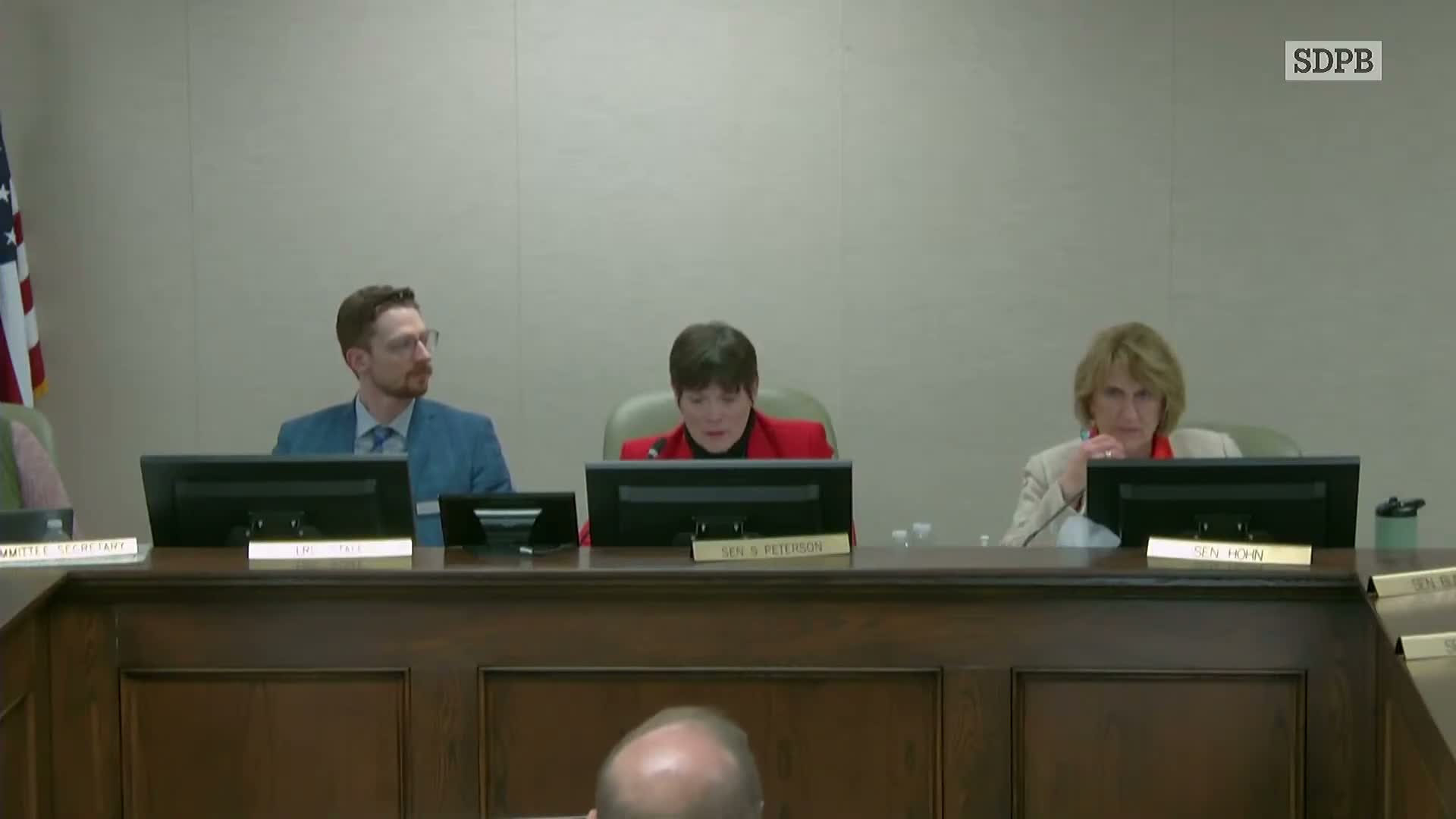
Summary
Senate Taxation Committee deferred Senate Bill 241 to the 40 first day after extended questioning about whether the Department of Revenue can deliver tribal sales breakdowns requested by tribes; DOR said some requested fields are not collected and explained legal limits tied to compacts and nexus.
The South Dakota Senate Taxation Committee voted to defer Senate Bill 241 to the 40 first day after lawmakers and tribal representatives pressed the Department of Revenue for clearer reporting on sales collected in tribal areas.
Sen. Hulse opened committee questioning about whether the bill’s list of counties was comprehensive. Doug Shinkle of the Department of Revenue said the bill names 20 counties out of South Dakota’s 66 and acknowledged the list does not cover all Indian country or every county where reporting might be relevant.
Why it matters: tribal leaders told the committee they need a more detailed breakdown of sales beginning in 2020 to negotiate and verify compact payments and to ensure the state is not collecting tax revenue from areas where collection is not authorized.
Ross Carroll, representing Rosebud and Crow Creek, argued the current lump‑sum, formulaic payments obscure where online and remote sales actually occurred and said that lack of detail “makes it difficult to negotiate.” He warned that some tribes do not have compacts and said, “if the state is collecting taxes on sovereign federal territory, that’s a big violation.”
The Department of Revenue said it shares detailed information during compact negotiations and tries to be responsive to tribal inquiries. Kirsten Jasper, counsel with the Department, explained the practical limits: a remote seller is a legal, fact‑specific concept tied to physical nexus and Wayfair‑era economic thresholds, and retailers must often supply information (employees, accounting relationships, on‑the‑ground presence) before DOR can classify them as remote sellers.
“Determining that requires a lot of information from retailers,” Jasper said, noting the department does not collect every piece of data that tribes requested and that economic nexus can coexist with remote‑seller status.
Committee members debated whether the issue belonged in statute or could be resolved through additional conversations between tribes and DOR. Sen. Crabtree and others said holding the bill for the 40 first day would buy time to work on data definitions without killing the proposal. On roll call the motion to send SB241 to the 40 first day passed, 4‑3, and the bill was deferred.
What’s next: Sponsors and DOR were urged to continue meetings with tribal governments to try to identify the specific data fields that could be produced or alternatives that satisfy tribal needs before the committee reconvenes.