Get Full Government Meeting Transcripts, Videos, & Alerts Forever!
Get email alerts on the Rural Health Transformation topic
No spam. Unsubscribe anytime.
Kentucky to use $213 million federal award to target rural maternal care, EMS, behavioral health and oral health
Summary
Kentucky officials said the state received a $213 million Rural Health Transformation award and outlined five initiatives — maternal health, EMS/trauma response, behavioral health crisis units, oral health, and rural chronic-care hubs — while stressing grant constraints and reporting requirements.
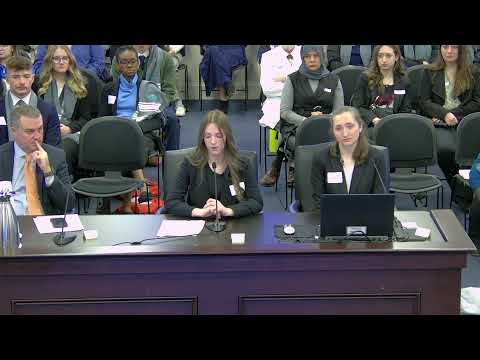
Kentucky has been awarded $213 million to support a five-year Rural Health Transformation program officials told the Senate Committee on Health Services.
Dr. Steven Stack, secretary for the Cabinet for Health and Family Services, said the state received $212,900,000 (rounded to $213,000,000) after applying under HR 1 and negotiating terms with federal officials. "We were given 212,900,000, which we've rounded to 213 here," Stack said.
The award funds five initiatives: maternal health; integrated EMS and trauma response; regional emergency behavioral health stabilization (EMPATH/mobile crisis); oral health expansion; and rural community hubs for chronic-care prevention and innovation. On maternal health, Stack highlighted access to prenatal care as critical, saying as much as 15 percent of Kentucky women who are pregnant "don't get reliable or consistent prenatal care." He said the program aims to support women before, during and after pregnancy to improve outcomes.
Stack described plans to replicate EMPATH-style behavioral health units—emergency evaluation and stabilization units run with behavioral-health expertise—so people in crisis are not treated primarily in general emergency departments. He cited an existing unit at Eastern State Hospital operated in partnership with the University of Kentucky as an example and said the state will pursue regional models.
On oral health, Stack called Kentucky’s status "one of the worst" nationwide, noting shortages of dentists and hygienists in rural areas. He said the program will explore telehealth, hub-and-spoke prevention and screening, and ways to expand access for Medicaid and uninsured patients.
Stack emphasized federal conditions and limits on the funds. CMS expects transformative projects, not status-quo support, and the five-year award requires demonstrable milestones and measurable outcomes. "This is not a rural hospital bailout fund. It absolutely is not," Stack said, adding that the program cannot pay clinician salaries, fund independent research and development, or duplicate billable services. He said the state's application is a 63-page plan and that projects must align with that application or risk repayment.
The cabinet plans to post solicitations for some contracts and said many procurements will be open competitions; for other partnerships it will use established procurement paths. The department has already proposed working with the Foundation for a Healthy Kentucky to help hire staff and move quickly on initial contracts.
Committee members asked how the program will be staffed and sustained across administrations. Stack said each of the five verticals will have a small core state team—director, deputy director and leads for IT and engagement—working with local partners, and he emphasized the role of career program staff in providing continuity during political transitions.
Members also raised accountability questions. Senator Douglas asked how the state will avoid "punishing our health care system" when patients are noncompliant; Stack said accountability will be tied to outcomes and key results (OKRs) the state must report to federal overseers, and that the program will aim to make healthier choices easier and more desirable for individuals rather than relying on punitive measures.
The cabinet has posted materials, including the state's application and notice of award, at ruralhealthplan.ky.gov and encouraged providers and community organizations to sign up for updates and procurement notices.
Next steps include building the project teams, publishing RFPs for competitive procurements and beginning work with local partners; the grant is time-limited and the state will need to show early milestones while planning for sustainability beyond the five-year award.