Lifetime Citizen Portal Access — AI Briefings, Alerts & Unlimited Follows
Creeks division outlines invasive plant removal progress; Arundo and pampas grass targeted
Loading...
Summary
Creeks staff reported follow-up treatments and mapping for Arundo and new efforts targeting pampas grass, described cut-and-daub herbicide methods (glyphosate-based product), safety protocols and homeowner assistance for affected properties.
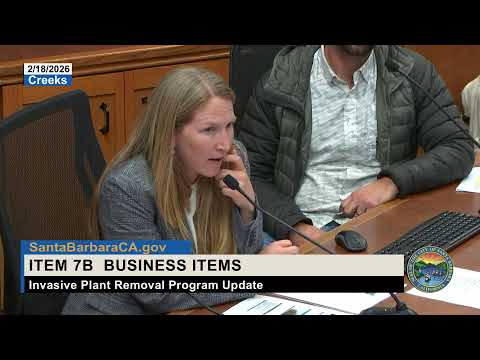
The Creeks Division presented an update on the city's invasive plant removal program, reporting continued work to control Arundo (giant reed) and a renewed effort against pampas grass.
"This program has been around since 2008," said Evan Hobson, Creeks restoration planner, who described the program's focus on high-priority nonnative species in city creeks. Hobson said the program uses a range of treatment methods: mechanical removal, foliar herbicide application, and the cut-and-daub or "cut-and-paint" method, which he described as the preferred approach for balancing effectiveness and habitat protection.
Hobson said a licensed contractor, Enviroscaping, applies herbicide under the city's integrated pest management practices and that the program follows safeguards including posting signage 72 hours before and after treatments, no application when wind speeds exceed 10 mph, avoiding application when rain is forecast within 72 hours, and requiring personal protective equipment for applicators.
When asked about herbicide specifics, Hobson said the program uses a glyphosate-based product (Roundup Custom, now sold as AquaMaster) applied via cut-and-daub to freshly cut stems. "We are applying kind of straight from the bottle," he said, adding that the method minimizes downstream impacts compared with some past herbicide cocktails.
Hobson reviewed recent treatment geography and follow-up plans: early work focused on Sycamore Creek, then Mission Creek and Arroyo Burro; the current fiscal-cycle effort concentrated on Arroyo Burro, Las Positas and other local creeks with monitoring and retreatment planned as plants resprout. He showed that some stands have been reduced to spot-sized resprouts but emphasized follow-up is required for durable control.
The program also treated pampas grass this year, removing small individuals by hand where feasible and using cut-and-daub on larger mounds. Hobson said the city will assist homeowners at no cost in cases where infestations occur on private property and encouraged residents to email the Creeks Division to request help.
Committee members praised the work and asked about Cape Ivy; Hobson said the city manages Cape Ivy primarily in restoration areas and that past university biocontrol trials did not yield long-term control. He said the Creeks Division plans to expand outreach, remapping and homeowner engagement as follow-up treatment windows open.
The committee received the update and had no public comment on item 7B.