Get Full Government Meeting Transcripts, Videos, & Alerts Forever!
Get email alerts on the Community Engagement topic
No spam. Unsubscribe anytime.
Residents propose interfaith coalition; council discusses role and First Amendment limits
Summary
Community volunteers described an interfaith coalition modeled on neighboring cities’ efforts that hosts an annual Thanksgiving service and monthly roundtables; presenters asked only for facilitation and meeting-space support, and councilors discussed constitutional limits and whether to support a city-linked or community-led model.
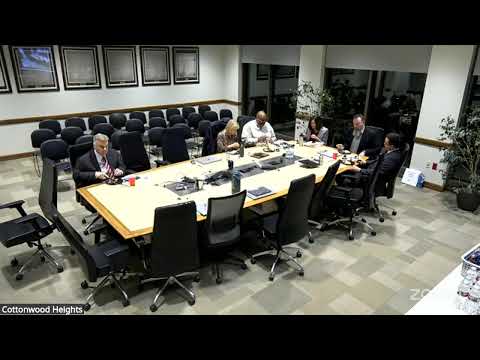
Community volunteers and former Holiday Mayor Rob Dolly presented an informational briefing to the Cottonwood Heights council on Feb. 17 about establishing a locally based interfaith coalition modeled on successful efforts in Holiday and Mill Creek.
Presenters described the group’s aims as community building, service and mutual understanding across faiths. They said similar efforts in neighboring cities run small annual budgets (Holiday’s interfaith activities were described as operating on about $2,000 per year) and focus on events such as a large annual Thanksgiving service, monthly discussion roundtables and service-oriented projects with nonprofits and schools.
Councilors and presenters emphasized that the coalition would be community-led and could operate without formal city sponsorship; presenters requested practical supports such as meeting space or help connecting organizers with local nonprofits. Several council members raised First Amendment and church-state separation questions and suggested approaches to avoid entangling government with religious expression: hosting meetings in community venues, allowing the coalition to incorporate as an independent nonprofit or rely on an existing foundation, and keeping any city funding limited and transparent.
Council members generally welcomed the idea as a community-building tool but asked for clarity about whether the city would provide formal support. Presenters offered to pursue a community coalition that could use rotating venues, and councilors offered to help make connections and advise on logistics without committing city funds.
What’s next: presenters will continue organizing and meeting with interested councilors; potential institutional arrangements include independent nonprofit status or partnership with an existing foundation to preserve constitutional separation and manage small operating costs.