Pleasanton chooses 'maintain' sewer plan; staff to develop rate model and Proposition 218 notice
Loading...
Summary
The City Council directed staff to pursue the 'maintain' implementation scenario for the sewer system management plan, a balanced approach that meets regulatory requirements and stabilizes the system while moderating near‑term rate burdens. Staff says maintain requires roughly $27.4M in additional revenues over four years and $28M in debt issuance; council asked staff to return with rate impacts and a possible workshop.
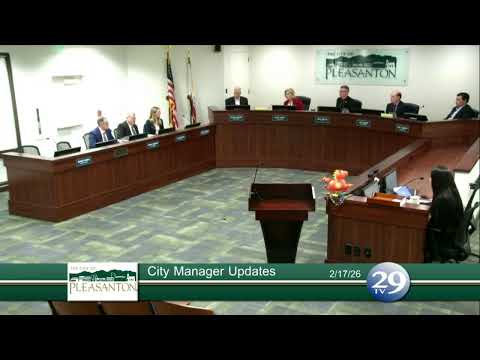
Pleasanton — After a technical presentation and extended council questions, the City Council on Feb. 17 directed staff to pursue the “maintain” implementation alternative for the sewer system management plan (SSMP), the approach staff said balances cost and risk while stabilizing operations over five years.
Su Chin Yang, the city’s public works director, introduced the study and turned the presentation to Nancy of Water Resource Economics (WRE), who summarized the firm’s financial analysis. Nancy said the status‑quo (no rate increases) would deplete reserves and produce operating deficits and that all three modeled alternatives require a mix of rate increases and debt issuance to meet performance targets. “To be able to pay for the SSMP and CIP related to this scenario, the revenue increase over 4 years is $27,400,000 and the city will also have to issue $28,000,000 of debt,” the consultant said.
Staff explained the trade‑offs: the “prioritize” option front‑loads investments and reduces long‑term risk but creates higher near‑term rate impacts and more debt; the “defer” option lowers near‑term costs at the expense of higher long‑term risk and deferred maintenance. Council members asked how debt issuance timing interacts with operating deficits, how reserve targets (35% of operating expenses) were chosen for enterprise funds, and whether staff could present specific rate impacts for multiple scenarios.
Councilmember Nyberg moved to adopt the maintain alternative as staff recommended and emphasized the need to build rate models that allow some headroom for council adjustments; Councilmember Testa seconded. Councilmembers discussed holding an intermediate workshop (a “2.5” meeting) to review proposed rate structures and distributional impacts before undertaking the Proposition 218 public‑notice and adoption stages; staff said that step is possible and would be integrated into the next steps. The motion passed unanimously.
What’s next: Staff will proceed to the next stage — cost‑of‑service and rate design — and return to the Council with rate impacts and a proposed Proposition 218 notice for public review. If adopted, rate changes are expected to take effect in 2027.