
Committee hears privacy and purpose concerns on veterans registry (H.93); agrees to keep bill standalone
Get AI-powered insights, summaries, and transcripts
Sign Up Free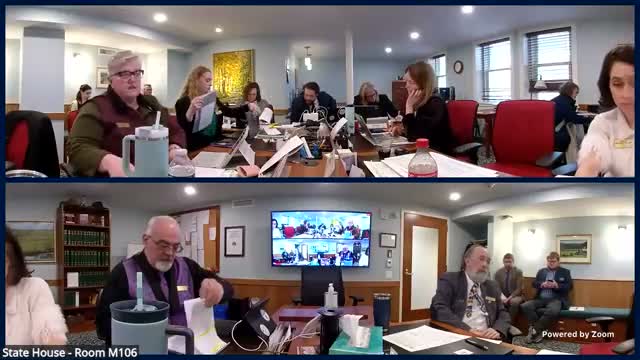
Summary
Testimony from the state’s chief data officer and the Director of Veterans Affairs flagged privacy, scope and cost questions around H.93 (a veterans registry). The committee broadly agreed to keep the proposal as a standalone bill for further refinement before any appropriation.
Lawmakers on the Government Operations & Military Affairs committee took detailed testimony and discussed H.93, a proposal to create and maintain a veterans database for Vermont, and agreed the measure should stay a standalone bill while staff refine scope and privacy protections.
Josiah Raish, the state’s chief data and AI officer in the Agency of Digital Services, told the committee that new registries present two central questions: how to protect the data and whether the dataset could be repurposed beyond its original intent. Raish warned an eligibility-verification registry that includes discharge papers or military ID would be “a high-value target” and require greater protections than a simple opt-in mailing list. He contrasted Pennsylvania’s opt-in mailing-list approach with Oklahoma’s verification-based system and said cost and complexity vary widely by design.
Robert Burke, Director of the Office of Veterans Affairs, described federal data sources and the office’s distribution lists and said existing federal and state resources already provide many veteran-service connections. He emphasized the importance of clarifying the registry’s purpose—whether it would be used mainly for outreach/awareness or for eligibility verification—before determining implementation details and costs.
Committee members raised privacy worries and whether an opt-in mailing list would reach the veterans the state most needs to contact (for example, unhoused veterans or those who do not use digital channels). Several members supported keeping H.93 separate from a larger omnibus military-and-veterans vehicle so the registry can be refined with additional stakeholder input, technical analysis, and security planning.
Why it matters: The registry proposal touches on veterans’ privacy, state data-handling responsibilities, and how the state balances outreach effectiveness against security risk. Creating an improperly scoped registry could expose sensitive information or fail to reach the intended population.
What’s next: The committee checked the box to keep H.93 as a standalone bill and asked staff to refine the scope, cost estimates, and security requirements with input from agency stakeholders and technical staff.