
Committee advances bill requiring KDOC to provide IDs and work records before release to consent calendar
Get AI-powered insights, summaries, and transcripts
Subscribe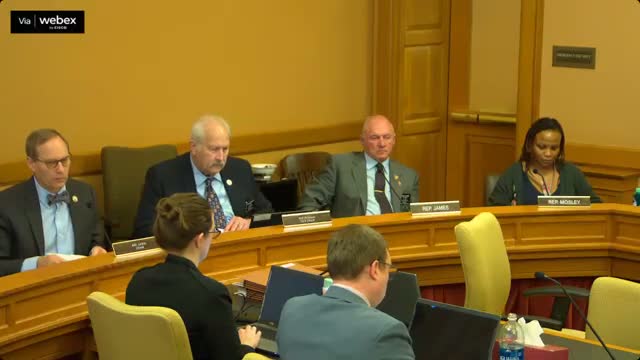
Summary
The Kansas committee advanced HB 2653, which directs the secretary of corrections to ensure inmates have birth certificates, Social Security cards and ID or driver's licenses and to provide vocational and work records before release; supporters said the measure formalizes existing reentry practices and takes effect July 1 if adopted.
The Committee on Corrections and Juvenile Justice moved HB 2653 favorably and placed it on the consent calendar after a hearing in which the Kansas Department of Corrections urged support.
Jason Thompson of the Reviser’s Office told the committee HB 2653 requires the secretary of corrections, within nine months of an inmate’s release, to determine whether the inmate has certain vital records and make reasonable efforts to provide them. The three primary items are a certified birth certificate, a Social Security card (or replacement) and a driver's license or identification card if the person is eligible. The bill also requires provision of vocational training records, work history, educational certificates and a resume when such documentation exists. Thompson said the bill mirrors HB 2228 from the prior session and would take effect July 1 if adopted.
Dr. Chris Fanning, Executive Director of Programs and Risk Reduction for KDOC, testified the department strongly supports HB 2653 because lack of identification and documentation is a barrier to employment, housing and supervision compliance. "For justice-involved individuals, the absence of identification can create immediate barriers to employment, housing, health care access, and supervision compliance," Fanning said, arguing that supplying IDs and records before release helps successful reintegration and can reduce recidivism. Fanning said the bill formalizes practices already underway at KDOC, including driver's license and identification clinics, and does not create a new program or impose a cost on local jurisdictions.
Committee members noted the bill’s history: Representative Schlingen Seapen confirmed HB 2653 is identical to prior HB 2228, which the House passed unanimously (123–0) but which became a vehicle for other language and was later vetoed in the Senate process. After testimony and questions, a committee member moved to favorably pass HB 2653 and place it on the consent calendar; a second was given and the motion passed by voice vote. The committee did not record a roll-call tally in the transcript.
The bill now goes to the committee's consent calendar for scheduling on the House floor; proponents asked members to be prepared as the legislature continues to work the item this week.