Get Full Government Meeting Transcripts, Videos, & Alerts Forever!
Get email alerts on the Illegal Dumping topic
No spam. Unsubscribe anytime.
Morgan County resident urges commissioners to pursue local anti-dumping ordinance
Summary
At the Feb. 18 Morgan County Commission meeting, resident Wendy Barush described repeated illegal dumping on her property and urged the commission to develop a local ordinance after she said state responses had been limited. Commissioners agreed to seek DNR/REAP input and follow up at a future meeting.
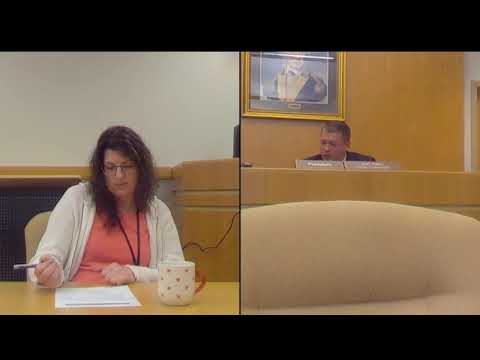
Wendy Barush, who identified herself as a Morgan County resident, told the county commission on Feb. 18 that illegal dumping on her property has been persistent and that she wants the commission's help drafting a local ordinance.
"My name is Wendy Barush and I'm a Morgan County resident, and I'm glad to be here this morning to present to you a problem that I'm looking for your help with," Barush said, describing abandoned vehicles, 55-gallon drums, glass and mixed trash on a bank near her land. Barush said she has contacted local law enforcement, state police and the Department of Natural Resources and that she was told the state would not or could not place cameras at the site; she said she will pursue cameras herself if necessary.
Barush asked whether Morgan County had an ordinance criminalizing dumping on another person's property and suggested stiffer local penalties, telling commissioners, "I'm thinking they should have 5 any person who gets caught on camera dumping any piece of trash on somebody else's property should be fined $5,000." Commissioners and staff corrected and clarified the applicable state statute and penalties during the meeting: an official cited West Virginia Code 22-15A-4 for general littering and noted that criminal penalties increase for larger-scale dumping (speakers at the meeting described a 500-pound threshold that can trigger substantially larger fines and possible jail time under state law).
Commissioners acknowledged enforcement challenges, including the burden of proof and the need to identify offenders on camera. The commission provided Barush phone numbers for the state's REAP cleanup program and agreed to invite a regional DNR/REAP contact (Brad Robertson was named as a possible resource) to a future meeting to discuss process and coordination. County staff said they would research existing code authority and how a local ordinance would interact with state law.
Barush said she would continue to attend commission meetings and work with agencies and the county to pursue a solution. The commission agreed to follow up and scheduled further discussion at an upcoming meeting.
The commission moved on after the public comment period; no formal ordinance was drafted or voted on at this meeting.