
Kansas committee hears opposing views on bill to bar sprinkler mandates for small multifamily dwellings
Get AI-powered insights, summaries, and transcripts
Subscribe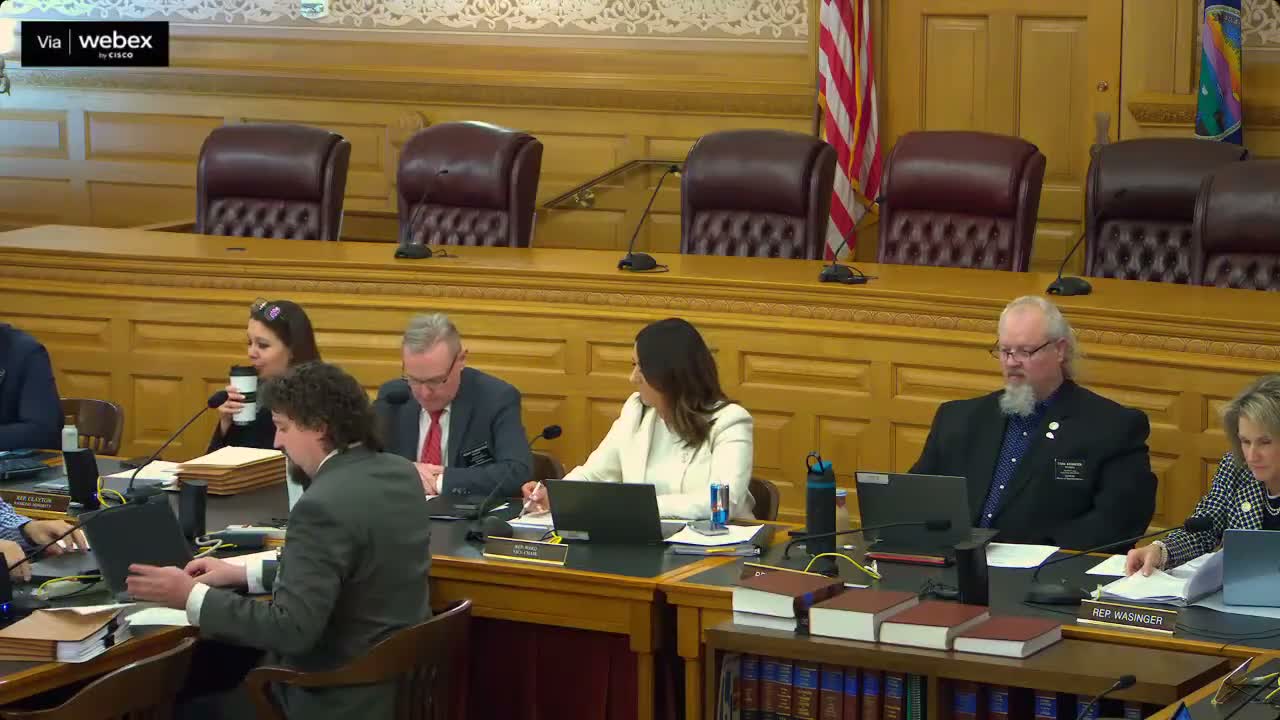
Summary
The Committee on Commerce, Labor and Economic Development heard testimony on HB 2739, which would prohibit requiring fire sprinkler systems in multifamily dwellings of four attached units or fewer by expanding the state definition of residential structure; proponents said it would spur downtown redevelopment, while fire officials warned it reduces life-safety protections.
Members of the Committee on Commerce, Labor and Economic Development on Feb. 20 heard competing testimony on House Bill 27 39, which would prevent municipalities and the state fire marshal from requiring residential fire sprinkler systems in multifamily dwellings of four attached units or fewer.
Reviser Hamilton told the committee the change would expand the statutory definition of residential structure that currently exempts single-family and multifamily dwellings of two attached units or fewer, and would explicitly remove townhouses from the statute's definition of apartment houses. The bill would become effective upon publication in the statute book.
Proponents framed the measure as a narrowly tailored fix to remove a regulatory hurdle for rural downtown redevelopment. Representative Dale Helwig said many 100‑year‑old buildings with stores below and apartments above cannot practically accommodate sprinkler retrofits — which he said can cost as much as purchasing the building — and that a four‑unit threshold would allow more adaptive reuse while leaving other fire‑safety options intact.
"This is a very common sense bill," Helwig said, adding that voluntary sprinkler installation would still be allowed.
Developers and industry witnesses echoed that view. Sean Miller of the Kansas Building Industry Association described projects put on hold after a state fire marshal memo and said changing the statutory apartment definition would resolve conflicts between local practice and the state interpretation. Justin Perjant, who works on adaptive‑reuse projects, said raising the cutoff from two to four units is incremental and often required for project pro formas to work.
Fire‑service witnesses strongly opposed the proposal. Andrew "Butch" Dikemper, Lenexa fire marshal, said he has responded to more than 100 residential fires and "every one of those cases, residential fire sprinklers could have saved those lives." Chad Mayberry of the Kansas State Firefighters Association, who also serves as McPherson fire chief, called the bill a symptom of a larger problem: Kansas is still operating under a 2006 statewide code and needs comprehensive modernization rather than piecemeal statutory changes.
State Fire Marshal Mark Ingholm told the committee the existing statutory definition is obsolete and recommended striking the outdated statute so definitions default to the fire code. He emphasized the differences between mixed occupancies (residences above businesses) — which he said the bill does not cover — and stand‑alone duplexes or fourplexes, and urged careful drafting of any exemptions.
Committee members asked technical questions about variances, retrofit requirements, hardwired smoke detectors for older buildings and the limits of rural water supplies to support sprinkler systems. Witnesses and members agreed the measure raises trade‑offs between active suppression (sprinklers) and passive protections (two‑hour firewalls, means of egress) but noted the bill as written does not require specific compensating measures.
The committee did not take a vote. The chair closed the hearing on HB 2739 and moved on to other business. The hearing record includes written testimony and an announced plan by the fire marshal's office and stakeholders to begin code‑update discussions.