
Committee hears bill to offer up to $100,000 in loan aid to veterinarians serving rural Kansas
Get AI-powered insights, summaries, and transcripts
Subscribe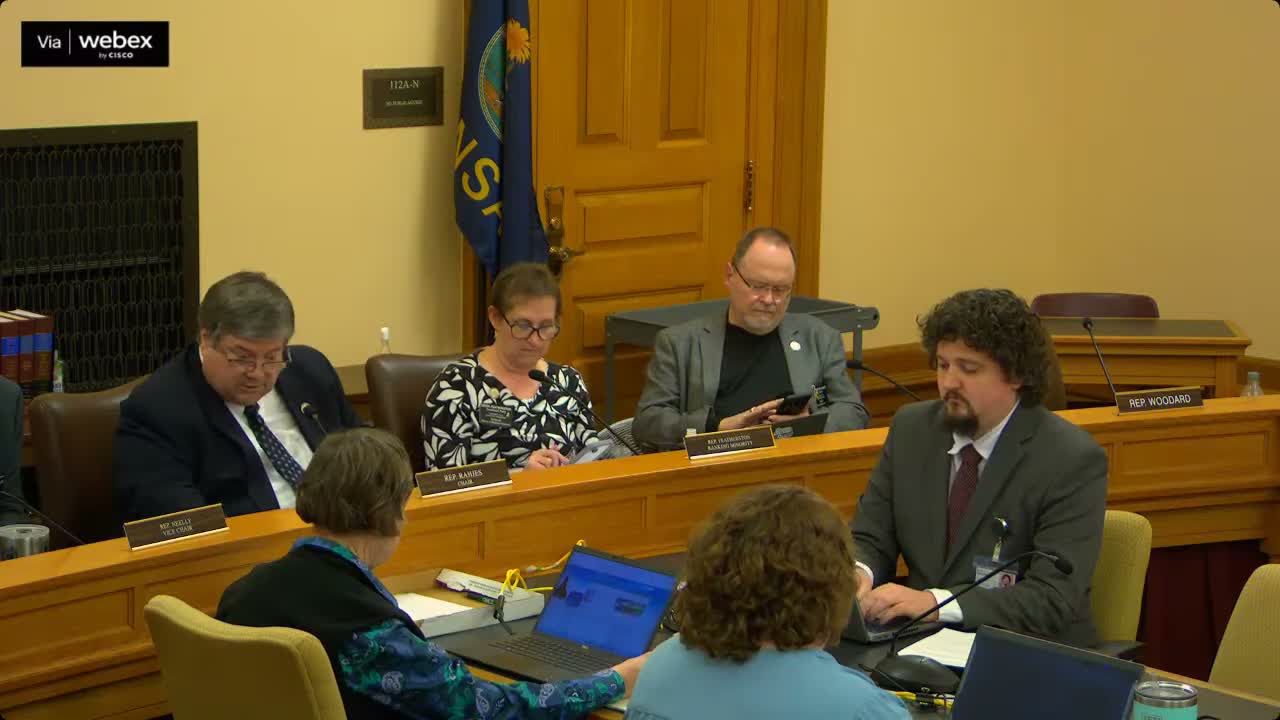
Summary
The Committee on Agriculture and Natural Resources heard testimony on House Bill 25 82, which would create a Department of Agriculture program to provide awards of up to $100,000 to licensed veterinarians who practice in qualifying rural counties or at practices where food-animal cases make up at least half of work. Witnesses praised retention potential but fiscal staff noted the bill contains no funding source.
TOPEKA — The Committee on Agriculture and Natural Resources on Friday opened a hearing on House Bill 25 82, a proposal to create a loan-repayment program intended to boost the number of veterinarians serving food-animal producers in rural Kansas.
Kyle Hamilton, the reviser called to explain the bill, told the committee the proposed Developing Veterinary Medicine in Rural Kansas (DVMRK) program would be administered by the Kansas Department of Agriculture and “would provide awards of up to a $100,000 per individual or the total of the individual's education debt balance, whichever is less.” The bill defines a qualifying rural county as one with a population not exceeding 40,000 or a practice where food-animal patients account for at least 50% of veterinary work when an applicant enters the program. Recipients would be required to practice full time in a qualifying rural community for four continuous years or repay awards, plus interest, subject to prorating for periods of service.
The bill would also establish an advisory committee appointed by the secretary of agriculture to review applications and set program specifics, including how to verify the 50% food-animal practice threshold and what counts as ‘‘engagement in the rural community beyond normal veterinary practice.’’ Hamilton said those details would largely be drawn from the existing Veterinary Training Program for Rural Kansas (VTPRK).
Supporters said the measure would expand pathways for veterinarians who did not attend Kansas State University or who trained out of state but want to return to rural Kansas. Matt Teagarden, representing the Rural Veterinary Workforce Task Force and several industry groups, said the proposal is intended to stand alongside, not replace, current K‑State administration of VTPRK and would focus on practicing veterinarians and recent entrants into practice.
"House Bill 25 82 establishes the Developing Veterinary Medicine in Rural Kansas or DVMRK program," Teagarden said, adding that the advisory committee and stakeholder organizations would help publicize the program and set eligibility verification methods.
Dr. Tracy Gentry, a Kansas-licensed veterinarian speaking for the Kansas Veterinary Medical Association, described the burden of educational debt for many veterinarians and said loan relief can influence where new veterinarians choose to practice. "When I graduated in 2014, I had over $230,000 in debt. Had a program like this been available, I would have greatly benefited from it," she said.
Not all testimony was uniformly optimistic. A long-practicing Kansas veterinarian who testified from a neutral position warned that money alone might not solve rural veterinary shortages and questioned whether allocating taxpayer funds to awards administered by an advisory panel would deliver a strong return on investment. "Anytime you start infusing money into education programs, there's gonna be some benefit," that witness said, but flagged broader issues in admissions, training and incentives.
On the fiscal side, a committee fiscal presenter summarized responses from state agencies: the Kansas Board of Veterinary Examiners said enactment would have a negligible effect on its expenditures and the Kansas Department of Agriculture said the bill would not affect its operations; however, the Division of the Budget noted that "as written, the bill does not provide for the initial capitalization of the fund or any source of regular revenue to the fund." Committee members discussed past appropriations tied to the VTPRK program and cited a current annual total for that program of $650,000 as context for budgeting needs.
Committee members asked how the 50% food-animal threshold would be measured (revenue vs. patient counts) and whether the bill should be narrowed geographically. Supporters said they would borrow verification practices from VTPRK and that the advisory committee would set engagement standards. Several legislators also urged parallel work on expanding Kansas State University enrollment and other long-term workforce strategies.
The committee closed the hearing without taking a vote and said it plans to "work" the bill on Thursday; members were invited to submit amendments prior to that session.
The hearing record shows proponents from industry groups and veterinary associations, neutral testimony from a long-time practitioner who urged caution about relying solely on financial incentives, and a fiscal flag that the bill currently lacks an identified funding source. The committee will continue consideration at a future meeting.