
Conference committee narrows H790 language, shifts $55,000 to Meals on Wheels and sets DCF deadlines
Get AI-powered insights, summaries, and transcripts
Subscribe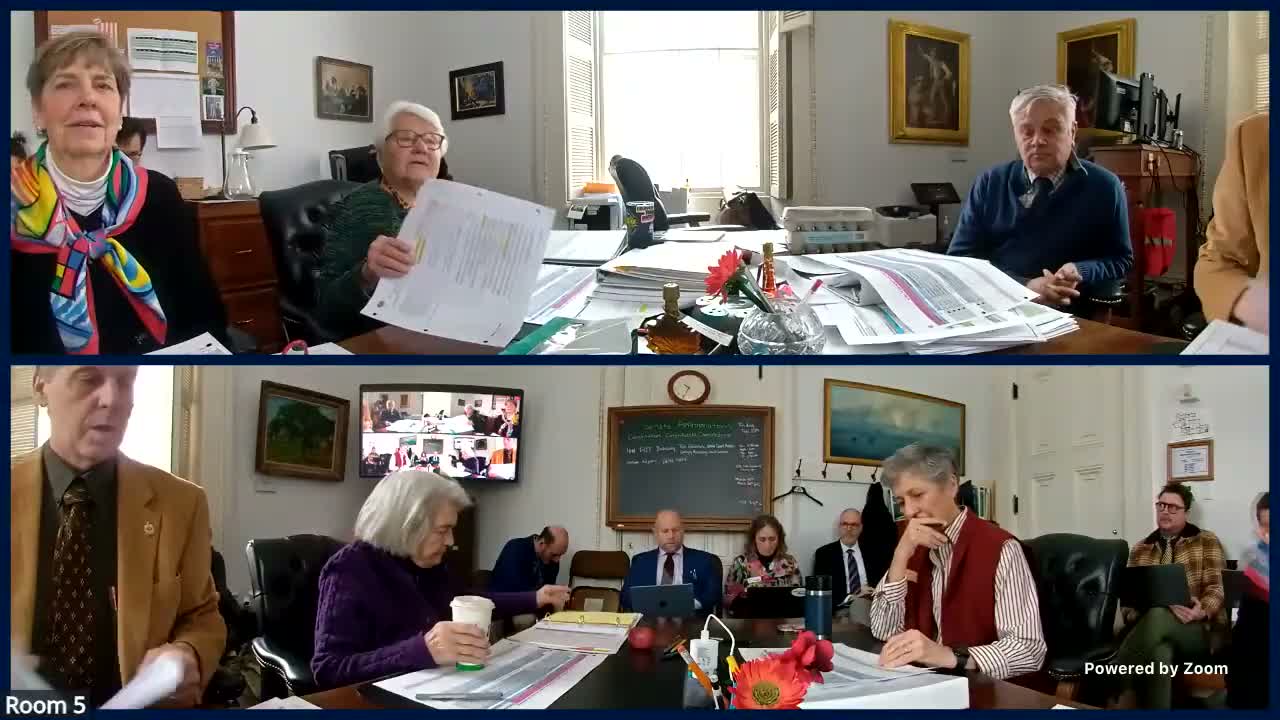
Summary
In its second meeting, the H790 conference committee agreed to move $55,000 to Meals on Wheels, directed the Department for Children and Families to stand up a housing-assistance program with HUD approval and set April–May reporting deadlines, and advanced timelines for developmental-disability payment reforms to finish before adjournment.
The conference committee on H790, the Budget Adjustment Act for FY 2026, met for a second session and agreed to a set of allocation and language changes that affect several social-service programs.
Unidentified Speaker 1 opened the meeting and introduced proposed changes to funding and statutory language. The committee agreed to move the Meals on Wheels line item to $55,000; Unidentified Speaker 3 said they had contacted the director of BCIL and reported a persistent waiting list and repeated, unmet requests for additional funding. "We have a waiting list," Unidentified Speaker 3 said, adding that administrative costs for Meals on Wheels and food shelves are "extremely low" and arguing the programs serve people "who have no place to go." Unidentified Speaker 2 responded, "With your change, I think we're very happy. We can accept that."
The committee also revised housing-assistance language originally in the senate draft. The revised text names the Department for Children and Families (DCF) as the agency responsible for establishing a program to maintain current housing-assistance payments or to prevent termination of existing vouchers, and it adds the phrase "prior written approval from HUD" for any funding intended to prevent termination of assistance. Housing authorities are asked to submit reports on financial need to DCF by April 15; DCF is to set up the program and establish procedures by May 1. The committee requested DCF report back to the Joint Fiscal Committee at its September meeting and to deliver a written report by Jan. 15, 2027. Unidentified Speaker 2 emphasized that DCF will determine what "equitable" distribution means in practice and that the committee may revisit funding in the FY 2027 budget if new information emerges.
Separately, the committee discussed implementation timing for developmental-disability payment reform. Committee members removed some extraneous language, preserved a financial-stabilization target date of Oct. 1, 2027, and moved several convening and submission deadlines earlier so key meetings and reports occur before adjournment. The discussion included a technical correction clarifying whether AHS should advance funds ahead of time or, if necessary, unreserve an amount from the caseload reserve.
Committee members asked that a highlighted version of the senate changes be circulated so participants can clearly see edits; the Joint Fiscal Office (JFO) was identified as the office that will verify numeric line-item details. Members confirmed they would reconvene at 10:30 to finalize remaining language. There was no formal vote recorded during this session.
The most immediate next steps recorded were: provision of a highlighted draft showing senate changes, housing authorities submitting need reports to DCF by April 15, DCF establishing procedures by May 1, and a written committee report due Jan. 15, 2027.