Get Full Government Meeting Transcripts, Videos, & Alerts Forever!
Get email alerts on the Public Comment topic
No spam. Unsubscribe anytime.
Residents press council on citizens' input process, festival parking and AI for code enforcement
Summary
At Citizens Input, residents complained about changes to how public comments are presented and the city's responsiveness; organizers warned dirt piles from a sewer project could block Rotary Park festival parking, and speakers questioned the city's evaluation of AI and camera detection for code enforcement. City staff said alternative parking was secured and that AI demos were for efficiency, not surveillance.
Multiple residents used the Citizens Input period at the Feb. 18 Cape Coral City Council meeting to raise concerns about public‑comment procedures, festival logistics and the city's exploration of artificial intelligence for operations.
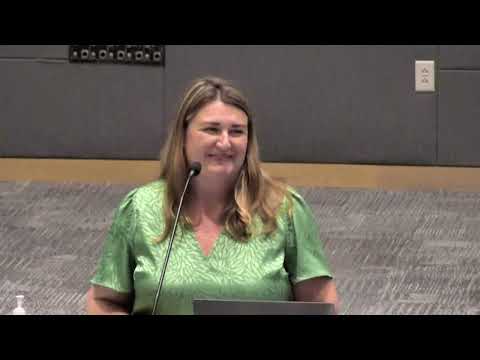
A speaker identifying herself as Lizette criticized the city for failing to respond to resident requests and alleged unequal treatment, saying she felt marginalized and urging transparency and equitable application of rules. Julia Chari, Vice Chair of Take Out the Trash Cape Coral, said changes to how citizens' input is handled—moving the podium near the exit, removing overhead displays and changing how speakers appear on video—are harming the ability of residents to be seen and heard.
Judy Mitchell, president of Cape Coral Friends of Wildlife, said the Sewer project on Skyline and Southwest 51st Terrace had generated piles of dirt placed at a temporary site on Rose Garden Road; she warned that the piles—up to 12 feet high—could remove a large parking area used for the Rotary Park Burrowing Owl Festival (which previously hosted about 3,700 attendees) and requested a timeline for removal. Maureen Bice, assistant to the city manager, said the temporary permissive use agreement for that site is in effect until Feb. 27 and noted staff have arranged alternative parking on nearby vacant lots; she cautioned the agreement could be extended if necessary to complete the work.
A resident (Kyle Amadou) raised questions about the city's reported budgets and asked who directed the city manager to research AI on garbage trucks and cameras. The City Manager (speaker 9) said the city has demoed technology and is evaluating AI to automate tasks that a code officer would otherwise do—identifying damaged roofs, generating lists and saving staff time—and emphasized that the city has not deployed such camera systems and is still sorting funding and policy considerations. The manager said such tools are intended to increase efficiency and reduce costs, not to spy on residents.
Council members responded to the speakers: some defended the council’s practices and noted legal/statutory requirements for citizens’ input, while others asked staff to follow up on the festival parking timeline and to quantify projected cost savings for AI projects as the FY budgeting process approaches.
The council clarified that it is a legislative body and that day‑to‑day direction of staff is the city manager’s responsibility; staff requested time to research and report back on the items raised.