Get Full Government Meeting Transcripts, Videos, & Alerts Forever!
Get email alerts on the Healthcare Procurement topic
No spam. Unsubscribe anytime.
Connecticut Children’s seeks OHS approval for intraoperative CT; OHS asks for pricing and cost‑savings evidence
Summary
Connecticut Children’s Medical Center told the Office of Health Strategy it needs an intraoperative CT scanner to improve precision and reduce reoperations in complex pediatric surgeries; OHS pressed for the full Stryker contract, a fixed price list (which may be filed confidentially), and peer‑reviewed evidence of long‑term cost savings before a decision.
Hartford — Connecticut Children’s Medical Center asked the Office of Health Strategy on June 25 for permission to acquire an intraoperative CT scanner it says will improve safety and accuracy in pediatric spine, hip and pelvic‑fracture surgeries. The application estimates the project cost at $1,619,127.25 and proposes a five‑year bundled arrangement that applies a share of Stryker implant and disposable purchases toward the equipment’s acquisition.
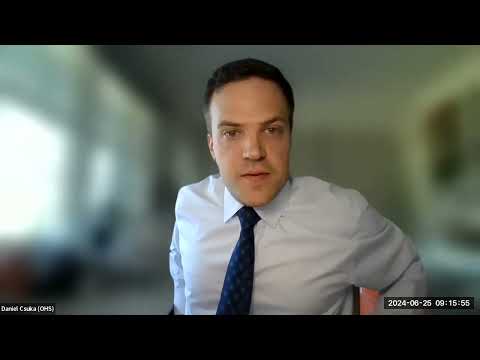
Hearing officer Daniel Chuka opened the remote public hearing and said he would consider administrative exhibits and health‑system data in deciding whether the purchase meets statutory certificate‑of‑need criteria. Benjamin Jensen, counsel for Connecticut Children’s, told OHS that three witnesses would testify about clinical benefits, vendor selection and the contract structure.
Dr. Jonathan Martin, division chief of neurosurgery, and Dr. Mark Lee, division head of orthopedics, described the device as an intraoperative CT that “allows us to make that entire experience safer” and pointed to pediatric‑specific radiation protocols they said reduce dose for children. Dr. Lee told the panel the system the hospital selected is the Arrow/Aero CT sold exclusively by Stryker and said the scanner provides real‑time imaging that can reduce the need for repeat operations and improve implant placement accuracy.
Richard Casella, the hospital’s strategic sourcing manager, described the financial structure as an industry‑standard embedded lease: a percentage of the hospital’s purchases of Stryker implants and disposables would be applied to the scanner’s purchase price over the five‑year term, with an expected option to buy out the device for $1 after payments are applied. Casella said Connecticut Children’s is paying fair market value and is not receiving the scanner as a donation.
OHS questioning focused on the transaction mechanics and the evidence supporting claimed cost savings. Chuka asked whether CCMC had compared Stryker’s negotiated implant and disposable prices with other vendors; witnesses acknowledged they did not perform a cross‑vendor price comparison and agreed that negotiated consumable prices “could be higher than other providers.” OHS also pressed for confirmation that implanted‑product prices would remain fixed for the five‑year term and for clarity about force‑majeure and price‑adjustment provisions in section 3 of the master agreement.
The hearing officer identified specific contract terms in Exhibit H that were incomplete in the record (schedules and price lists) and asked the applicant to submit the full executed documents. Counsel said the hospital would submit the fixed price list confidentially, if necessary. Chuka also asked for evidence supporting claims of long‑term cost savings (for example, peer‑reviewed studies or data showing fewer returns to the operating room) and for detailed surgical‑volume projections extending three years beyond those already supplied (2027–2029), to show the hospital can meet the contract’s minimum purchase thresholds.
OHS questioned the contract’s minimum purchase requirements and shortfall remedies. The agreement in the record references an annual minimum of $1,700,000 in implant and disposable purchases (a semiannual threshold of $850,000), and the panel discussed contract language that would require the hospital to make up shortfalls or negotiate term changes if thresholds are not met. Dr. Lee said, based on past volumes, the hospital typically meets the projected thresholds and estimated that roughly 60–80 high‑complexity spine deformity cases per year would be sufficient to reach the target.
The hospital emphasized clinical need: witnesses argued that pediatric patients lack access to the low‑dose intraoperative protocols available in adult surgery and that the device would reduce radiation exposure and improve outcomes for Medicaid and privately insured patients alike. Jensen said the hospital’s payer mix includes more than 45 percent Medicaid patients and that the hospital plans to make the technology available to all eligible patients.
OHS left the record open and requested four late files: (1) evidence supporting long‑term cost savings from intraoperative CT use; (2) the full executed contract documents, including the fixed price list (with confidential portions allowed under seal); (3) surgical volume projections through 2029; and (4) an analysis showing the deal remains cost‑effective after accounting for potential price increases tied to taxes or interest. Counsel agreed to provide the materials and estimated that three weeks would be acceptable for filing if more time were needed. No members of the public signed up for comment during the hearing.
The record remains open pending OHS review of the late files and the hearing officer’s forthcoming order identifying the items with greater specificity.