Get Full Government Meeting Transcripts, Videos, & Alerts Forever!
Get email alerts on the Emergency Decision Making topic
No spam. Unsubscribe anytime.
Regents weigh executive committee, special meetings and succession plans after summer vacancy warning
Summary
Committee members debated mechanisms to make urgent decisions between full-board meetings—reinstating a narrowly defined executive committee versus relying on 24-hour-notice special meetings or structured virtual emergency sessions—and asked staff to draft two approaches for board consideration.
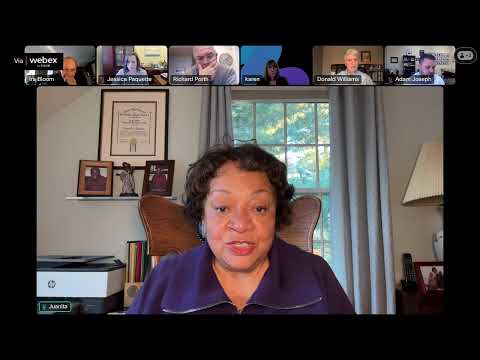
The Governance & Nominations Committee spent significant time debating how the Board of Regents should make urgent decisions between regularly scheduled meetings.
Several regents said the board needs a mechanism to act quickly when immediate decisions are required, but they differed on the right model. "When the board needs to make a decision quickly and before the next full board meeting, how do we do that now?" a member asked. Some members supported a narrowly defined executive committee to act in genuine emergencies; others warned it could become a routine substitute for full-board deliberation.
Regent Don Williams warned against creating a "shadow docket," using a Supreme Court analogy, and urged exploring a special-meeting strategy enabled by electronic meetings so the full board can be convened quickly and those not present still have an opportunity to participate. "There is a slippery slope toward having a shadow docket," Williams said, arguing for clear limits if an executive committee is used.
Karen summarized the legal limits: Connecticut's Freedom of Information rules require at least 24 hours' notice for special meetings and prohibit changing the posted agenda, which constrains how rapidly the full board can be convened in an emergency. "FOI rules... require 24 hours for a special meeting notice. And the agenda can't be changed," she said.
Rather than choose immediately, members asked staff to prepare two short proposals—(1) a formal executive-committee model with narrowly defined emergency powers and clear limitations, and (2) a structured special/virtual meeting protocol that leverages the 24-hour notice rule and electronic meeting capabilities. The committee directed that both options, with pros, cons and proposed language, be presented to the full board in executive session for further decision.
Members reiterated that any mechanism must preserve opportunity for all regents to be heard and must not be used routinely to circumvent full-board deliberations. The committee did not adopt either approach at this meeting and asked staff to return with draft language and process diagrams at a future meeting.