Get Full Government Meeting Transcripts, Videos, & Alerts Forever!
Get email alerts on the Board Vacancies topic
No spam. Unsubscribe anytime.
Regents map approach to fill two vacancies, plan onboarding and composition updates
Summary
The Governance & Nominations Committee discussed filling two regent vacancies—one reserved for a community-college alum and one for a K–12 specialist—agreed to expand a board-composition matrix and schedule a two-day orientation for new members, and asked staff to prepare prioritized candidate outreach to appointing authorities.
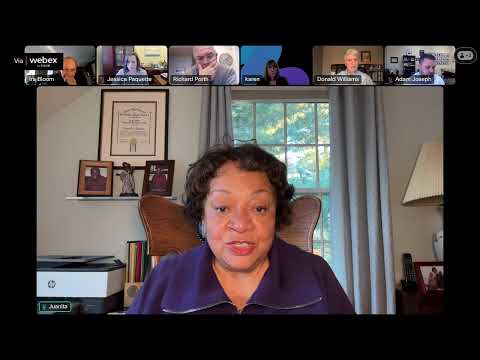
The Governance & Nominations Committee of the Board of Regents for the Connecticut State Colleges and Universities met to discuss how to fill two current board vacancies and to strengthen onboarding for new regents.
Committee secretary Karen summarized that the board has two open seats: one appointment by the Senate majority leader reserved for an alum of the community college system, and a second vacancy created by the resignation of Regent Stewart that is an appointment by the Senate minority leader designated for a K–12 education specialist. "We currently have 2 vacancies on the board of regents," Karen said, noting the statutory designations for those seats.
Chair Juanita James and other regents said they want appointees’ first duty to be to students and the system rather than to the political appointing authority. "I wonder if this is the time to try to address the idea that board members' first priority is to the students and to the system and not to their political appointor," James said. Members asked that language emphasizing duty of care and student-focused commitment be included in orientation materials.
Adam Joseph, vice chancellor for external affairs, said the system office regularly recommends candidates to the governor’s office and legislative appointing authorities and is actively working with at least one appointing authority now. "We do make recommendations," Joseph said. "They don't necessarily have to take our recommendations, but we do recommend potential candidates when given the opportunity."
To make candidate recruiting more strategic, the committee asked staff to expand the existing board-composition matrix by adding columns for town or county of residence and for a candidate’s primary line of work. The committee also agreed to assemble a prioritized list of potential candidates and to ask regents to engage appointing authorities where they have relationships.
On onboarding, members endorsed a "straw man" two-day orientation model from preread materials but discussed offering the content in shorter modules to accommodate schedules. The committee directed staff to issue a doodle poll to schedule a two-day session for new regents and to make orientation materials available in shorter cadences so more members can attend.
The committee asked staff to incorporate clearer, statutory-based confidentiality guidance and a stronger statement of fiduciary duties into the onboarding packet and board handbook. Staff were asked to return with draft orientation schedules and an updated composition chart at the next GNC meeting on Feb. 9.
No formal appointments were made during the meeting; members outlined next steps for outreach and asked staff to circulate minutes and materials promptly so the committee can act on recommendations at upcoming meetings.