Get Full Government Meeting Transcripts, Videos, & Alerts Forever!
Get email alerts on the Faculty Labor And Pay topic
No spam. Unsubscribe anytime.
Faculty, librarians and Charter Oak instructors urge regents to address workloads and pay equity
Summary
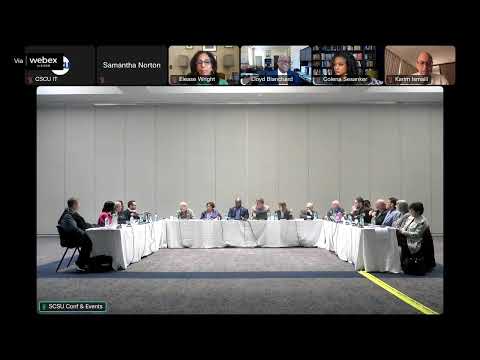
Five faculty and library staff spoke during public comment, urging the Board of Regents to reduce faculty workload, address pay inequities for library faculty, and recognize Charter Oak's role serving adult learners; speakers asked the board to advocate for more resources with the legislature.
Five staff and faculty delivered public comments to the Board of Regents asking for stronger support for faculty working conditions and pay equity across the Connecticut State Colleges and Universities system.
Dr. Liz Keenan, professor in the School of Social Work at Southern Connecticut State University, said faculty are routinely asked to expand programs without consistent resources and asked the board to “commit to decrease faculty workload in the current contract negotiations and increase the budget for pedagogical resources.”
Amy Jansen, an associate and business librarian at Southern, addressed pay equity for library faculty and asked the board to work with the AAUP to “create a more equitable and fair salary structure for library faculty,” arguing that library faculty perform research, teaching and scholarship that should be compensated accordingly.
Professor Joe Fields (mathematics, Southern) urged the regents to advocate with the governor and legislature for more resources and lower workloads, saying demographic enrollment pressures mean institutions must adapt and that Southern’s gains required faculty sacrifice.
Virginia Metaxas and Roland Halstead, instructors at Charter Oak State College, described Charter Oak’s focus on adult learners, the prevalence of Connecticut residents among its student body, and the college’s role in providing flexible pathways. Halstead emphasized that the college serves working adults and that fair compensation for faculty supports student success and local workforce needs.
Board members thanked the speakers for their remarks and noted the points would inform ongoing discussions with the system office; the public comments were heard before routine agenda approvals.