Get Full Government Meeting Transcripts, Videos, & Alerts Forever!
Get email alerts on the Service Gaps topic
No spam. Unsubscribe anytime.
Head Start parent recounts five years homeless as panelists outline service barriers and gaps
Summary
A Head Start parent described five years of housing instability and hotel stays before receiving a voucher; panelists said lack of affordable inventory, sustainability of placements, and safety and immigration barriers for survivors remain major gaps.
Megan Gonzalez, a Head Start parent, told webinar attendees she and her husband and four children experienced homelessness for five years and survived repeated hotel stays and extreme stress before receiving a stable lease through the Head Start on Housing program.
"This is home," Gonzalez said of the apartment they finally obtained, describing the relief her family felt after years of instability and the emotional toll of repeated moves, hotel costs and worries about family separation.
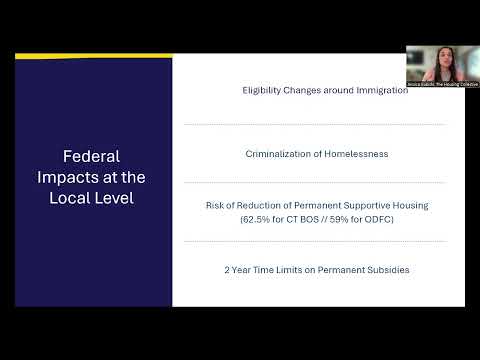
Panelists representing legal aid, homelessness and domestic-violence services said Gonzalez—xperience highlights common barriers they see across Connecticut: scarcity of deeply affordable units (particularly in Fairfield County), long shelter stays because households cannot find affordable exits, and practical barriers survivors face when seeking safe housing including criminal-record screening, eviction history and immigration-related eligibility limits.
Megan (panelist) representing the Connecticut Coalition Against Domestic Violence noted shelters operated above capacity last year and that hoteling funds from COVID/ARPA have been exhausted, increasing pressure on local programs. Jennifer Lopez of Interval House emphasized that safety planning and survivor-centered approaches must accompany housing placements because housing that is not safe does not solve the problem.
Panelists described programs that reduce immediate harm: state and federal rapid rehousing dollars, Head Start on Housing vouchers for eligible families, eviction-prevention funds and legal representation in eviction court. Panelists added that even when vouchers are offered, families often cannot find units in constrained rental markets and that long-term retention requires supports beyond the initial placement.
The panel closed by urging continued cross-sector cooperation, landlord education to reduce stigma, and predictable funding to sustain placement and supports. Organizers provided bilingual survey links and resource contacts at the end of the webinar.
Next steps: panelists said they will continue to coordinate on eviction-prevention programs and supply development efforts and encouraged attendees to engage with local advocacy efforts.