Get Full Government Meeting Transcripts, Videos, & Alerts Forever!
Get email alerts on the Family Homelessness topic
No spam. Unsubscribe anytime.
Connecticut officials and providers outline rising family homelessness and limited housing supply
Summary
State and nonprofit experts said family homelessness has risen in Connecticut, flagged federal policy risks to housing supports, and highlighted prevention tools such as Head Start on Housing, diversion funding and triage spaces while urging more deeply affordable units and sustained funding.
Deputy Commissioner Deb Fliss of the Office of Early Childhood and nonprofit and state housing experts warned that Connecticut is seeing rising family homelessness and strained shelter systems, citing the state'024 Point-in-Time count and local service data.
At the webinar, Fliss said the 2024 Point-in-Time count—taken at the end of January—showed a 13% increase in people experiencing homelessness and that there were 3,410 sheltered and unsheltered persons on the night of the count. Jessica Kubicki, chief initiative officer at the Housing Collective, told attendees she was speaking to HUD definitions of homelessness and described both the literal homelessness category and an imminent risk category that uses shorter eligibility windows for most subpopulations.
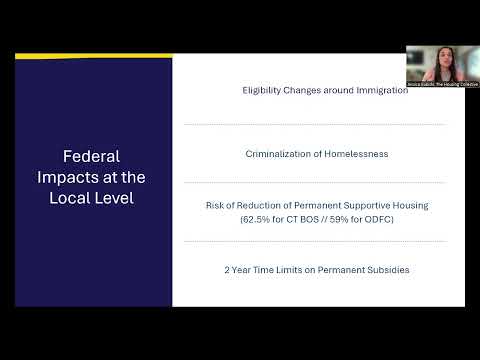
Panelists identified several immediate pressures. Kubicki and others pointed to federal-level risks flagged by housing partners, including possible changes that could limit federally funded housing access for mixed-status households, an observed trend in some municipalities toward criminalization of unsheltered homelessness, and concerns about potential reductions to HUD-funded permanent supportive housing and limits on the length of permanent subsidies. Kubicki also said Connecticut saw a large increase in unsheltered counts in the last year and described demographic shifts—rising parenting-youth households and more children with disabilities among families presenting to the system.
Speakers connected the trend to a persistent affordability gap. Kubicki cited a multi-year rise in rents (a 44.7% figure was cited for 2020–2025 in her remarks) and said many households in the homeless-response system report earned income (she cited an average earned income figure of $15.34 in Fairfield County examples) that does not match market rents. That mismatch helps explain long shelter stays: Kubicki gave county-level averages such as about 158 days average family shelter length of stay and noted that shelters exit roughly 56% of residents to permanent destinations in typical data she presented.
Panelists described what is working and what needs expansion. Effective tools named repeatedly were diversion/flex funding (Kubicki cited an average of about $2,500 per household to prevent shelter entry), triage/overflow spaces to avoid unsheltered nights, targeted programs such as Head Start on Housinga first-in-the-nation program that issues Section 8-style vouchers to Head Start familiesand eviction-prevention funds and legal aid to intervene early in eviction cases. Shontay (Chantae) Hanks at the state Department of Housing said the state has included the Rental Assistance Program in the budget and is pursuing development of new units (the Department cited a target of roughly 6,000 units over the next two years).
Why it matters: panelists said that preventing children and families from entering shelter and reducing time in unstable settings depends on a mix of prevention dollars, housing supply, landlord engagement and trauma-informed supports. They urged policymakers to preserve programs that serve families and to prioritize sustained, predictable funding and supply development rather than one-time emergency dollars.
"Housing is a human right," Kubicki said during the keynote, encapsulating the panel—raming that stable housing is foundational to early childhood outcomes. The webinar closed with organizers pointing attendees to a bilingual survey and to contact information for local resources shared during the event.
Next steps: panelists said they are pursuing supply-side development, eviction-prevention iterations and cross-sector collaboration to scale the programs they identified as effective.