Get Full Government Meeting Transcripts, Videos, & Alerts Forever!
Get email alerts on the Regionalization Study topic
No spam. Unsubscribe anytime.
Study finds curricular gaps and potential savings; voters would decide any PK–12 consolidation
Summary
An independent five‑year regionalization study for the Watchung Hills area finds uneven curricular time and preparation across sending districts, identifies potential administrative savings (about $2.7 million in one scenario) and outlines how a ballot question would proceed if state approval is granted.
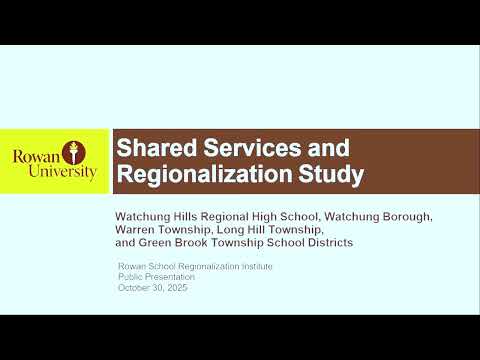
An independent team presenting a five‑year shared‑services and regionalization feasibility study told a packed meeting at Watchung Hills Regional High School that the report is informational only and that any move to expand the current 9–12 regional district to a PK–12 district would be decided by local voters.
The consultants said the analysis examined about $200,000,000 in combined annual spending serving roughly 5,700 students and noted that "65% is the portion of our taxpayer bill that goes to the K–12 education across our system," framing the study around both educational outcomes and taxpayer value. They said the study was funded by a $130,000 grant from a school regionalization efficiency program and that the research team’s findings are independent of local boards.
Why it matters: The study highlights substantial variation among the districts in curriculum, instructional minutes and student preparation entering ninth grade — differences the consultants said can affect what high school teachers can cover in the opening months of the year. Speaker 1 summarized the education findings by saying districts "do not use the same curricular materials" and cited ninth‑grade teachers' reports that students arrive with differing reading stamina and readiness for complex texts.
Key findings and numbers: The consultants reported district differences in early‑grade ELA minutes (examples given by the presenters included roughly 130 minutes per day in one district and about 110–140 in others), variable exposure to science and social studies, uneven gifted‑and‑talented and ESL programming, and a list of 67 actionable recommendations in a 215‑page report. On finance, the presentation included apportionment model scenarios and a cited potential cost‑savings estimate of about $2,700,000 in an "all‑constituent" consolidation configuration.
Governance and next steps: Presenters emphasized the study "is information only" and said it does not force boards to regionalize. They described the statutory path if the commissioner permits a ballot question: a question would be drafted for voters in constituent communities; if a majority in two of three communities approved expansion to PK–12, the regional district would enlarge, an interim board would be appointed and then an elected board would follow. The panel also described transitional rules for teacher contracts under regionalization, including a three‑year window for negotiating successor collective bargaining agreements.
Alternatives and local options: The consultants noted alternatives to full consolidation, including shared special‑services units or a regional curriculum center that would keep districts legally independent but coordinate services and specialist staff across districts.
What’s next: The full report and an executive summary will be posted online; the presenters urged residents to read the findings, discuss priorities locally and hold elected boards accountable before any referendum or formal proposal.