Get Full Government Meeting Transcripts, Videos, & Alerts Forever!
Get email alerts on the Caregiver Modeling topic
No spam. Unsubscribe anytime.
Sen. Cece Marr urges caregivers to model mental health, offers five practical steps
Summary
In a keynote at an Office of Early Childhood webinar, Sen. Cece Marr told caregivers that children learn emotional habits by watching adults and offered five concrete practices — prioritize care, talk openly, apologize and repair, set realistic expectations, and show self-compassion.
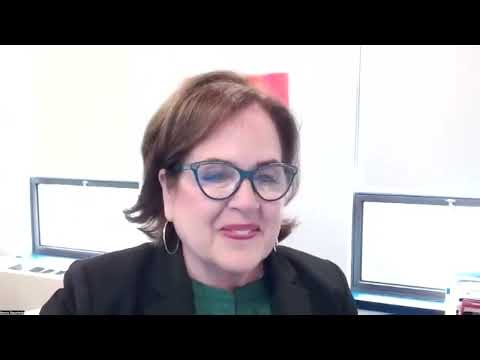
Sen. Cece Marr, chair of the Connecticut Senate Children’s Committee, urged caregivers to model mental-health care for young children and offered five practical steps to begin doing so.
“Every single day, they are watching us. They’re listening to us,” Marr said in a keynote for the Office of Early Childhood webinar “Little Eyes Are Watching and Learning.” She led participants in two deep breaths and asked attendees to consider whether they “practice what you preach.”
Marr framed the issue as behavioral modeling rather than instruction: children do not only learn from what adults say but from habits and coping mechanisms. She said caregivers should prioritize their own mental health, make appointments with a clinician when needed, and let children see that asking for help is acceptable. “We are the mirror,” she said, arguing that parents who apologize and repair relationships teach emotional accountability.
Nut graf: Marr’s message focused on small, repeatable practices meant to normalize mental-health care for families with children 0–5. She offered five steps caregivers can use immediately: (1) prioritize your own mental health, (2) talk openly about feelings, (3) apologize and repair when you make mistakes, (4) set realistic expectations, and (5) practice compassion for yourself.
The speech combined personal testimony and practical advice. Marr described using therapy herself and told a story about learning to acknowledge emotions rather than letting anger accumulate. She stressed that modeling rest and emotional language teaches children that self-care is not a privilege. “Taking care of your mental health is one of the most responsible things you will do as a caregiver,” she said.
Marr closed by urging attendees to begin small: take a breath, name a feeling, or make a short appointment. The keynote was part of a broader webinar in which state agencies described programs and resources for early-childhood mental health and caregiver support.