Get Full Government Meeting Transcripts, Videos, & Alerts Forever!
Get email alerts on the Budget topic
No spam. Unsubscribe anytime.
Speaker urges lawmakers to extend $300M contingency fund and propose $200-per-person energy rebate
Summary
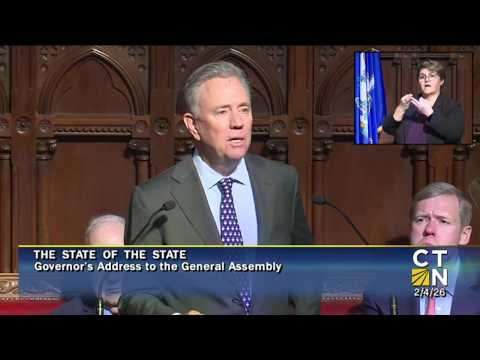
An unidentified speaker addressing the Connecticut General Assembly highlighted seven consecutive balanced budgets and asked lawmakers to extend a $300 million contingency fund; he proposed an energy rebate of $200 per person ($400 per family) and touted a $4 billion rainy-day reserve and pension paydown.
Unidentified Speaker, addressing the General Assembly, asked lawmakers to extend a $300,000,000 contingency fund and proposed an energy rebate of $200 per person or $400 for a family to help households facing higher heating and energy costs. "These are times that try men's souls," the speaker said, framing the proposals as protections against federal cutbacks.
Why it matters: The speaker presented the measures as part of a broader fiscal strategy that includes seven consecutive balanced budgets, a $4,000,000,000 rainy-day fund and more than $10,000,000,000 in pension debt reduction. He credited recent capital-gains revenue tied to large technology stocks for enabling near-term relief while cautioning against tax cuts that could create future deficits.
Details and context: The address thanked the legislature for resources that "protect the most vulnerable" and noted Connecticut was "among the very first states to backstop food support for working families." The speaker said the state still holds "over $300,000,000 to backfill any other unanticipated cuts coming from Washington" and "respectfully ask[ed] all of you to extend that fund through the end of the next fiscal year." He proposed the energy rebate explicitly as "$200 per person or $400 for a family." He also noted prior actions that freed up tax relief and credits, including a bipartisan $400,000,000 middle-class income tax cut.
Revenue and constraints: The speaker attributed the available near-term revenue to strong capital-gains receipts from a small group of high-performing stocks (referred to in the address as the "so called magnificent 7") and warned that large permanent tax cuts could produce future budget stress. He emphasized maintaining a sustainable fiscal posture while using one-time or targeted relief to help residents.
What comes next: The speaker asked the legislature to act on the contingency extension and consider the proposed rebate; he framed the measures as part of the 2027 budget priorities but did not announce specific bill language or a vote schedule.