
Fish and Wildlife asked to narrow fee-making authority as department defends access-area license
Get AI-powered insights, summaries, and transcripts
Subscribe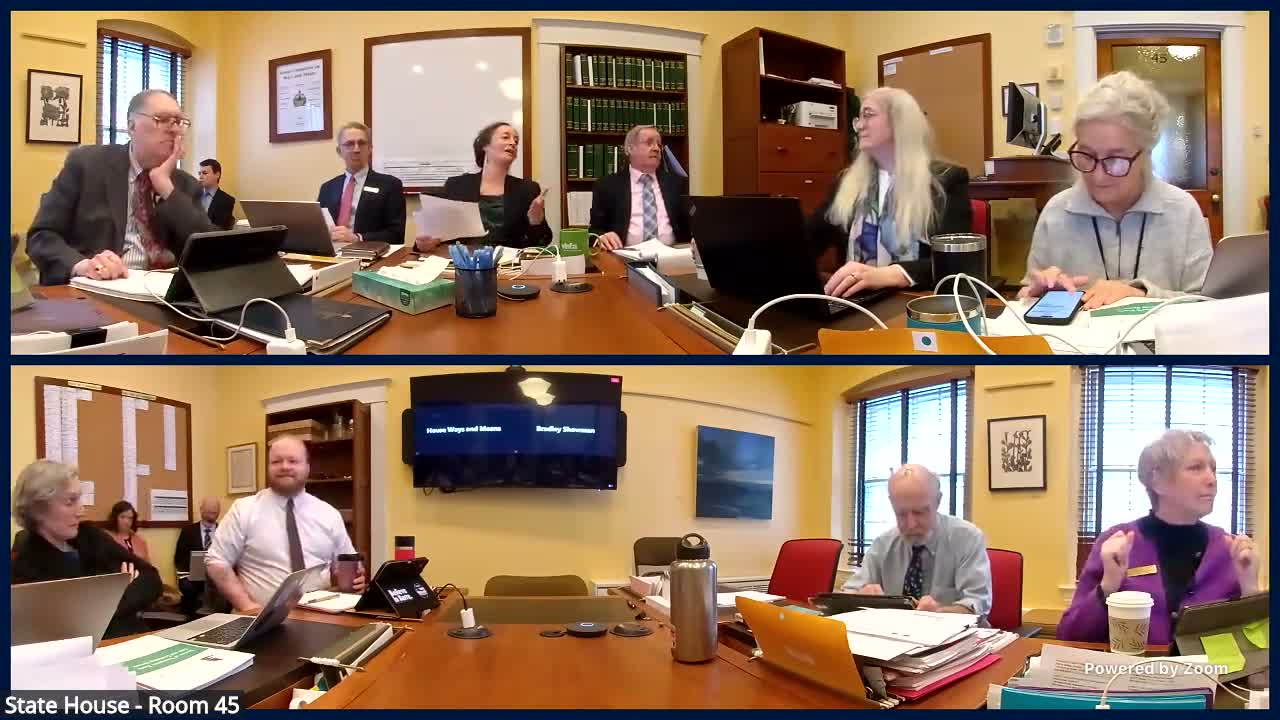
Summary
The Ways & Means Committee heard from Department of Fish and Wildlife officials about their statutory fee authority (41 32) and a proposed access-area license, asked the department to narrow the scope of delegated fee-making power, and requested revised statutory language; no formal votes were recorded.
The Ways & Means Committee heard testimony Feb. 20 from the Vermont Department of Fish and Wildlife about its authority to set fees for use of department lands and a proposal to create an access-area license.
Nina Smith, general counsel for Fish and Wildlife, told the committee that statute 41 32 (Title 10) provides the department a narrow exception to the legislature's fee-making authority and that the department adopted a fee rule, indexed in the appendix to Title 10, covering rentals, camp tuition and a range of permit and license fees.
"41 32 includes broad language that allows the department — it explicitly references the general assembly's authority to create fees and allows this as sort of an exception to that authority," Smith said, describing the statute's history and the department's rulemaking. She said the rule has been in effect since at least 2013 and was amended this year to update camp tuition rates.
Jason Batchelder, Fish and Wildlife commissioner, offered to explain why the department proposed repeal or revision language and to answer committee concerns. He argued the access-area license would address an equity issue: some users (for example, paddlers) do not currently contribute in the same way as anglers or motorboat registrants who fund maintenance through registrations and fees.
"I look at anglers and hunters, and people who are buying motorboat registrations, as sometimes double and triple dipping in paying for the maintenance and use of these access areas," Batchelder said, arguing that an access license would bring other users into a contributing role.
Committee members pressed on limits and intent. The committee chair said the legislature rarely delegates fee authority and that, where it happens, it is typically for narrow administrative duties; the chair said the committee was concerned Fish and Wildlife's new license and fee "stepped away from intent." In response, Smith said she would revisit the statutory language and consider narrowing the scope to fees for department facilities while preserving licensing authority for research and utilities.
Smith described how the department currently uses permit and license categories: license fees are often the $50 minimum established in the rule, permit fees and special-use permits can range from $50 to $10,000, and some licenses may be issued for multi-year terms (for example, 10 years) when infrastructure is involved. She said the agency generates modest rental revenue — roughly $1,500 on average over the past four to five years — and frequently waives fees for partner organizations.
Members asked whether Fish and Wildlife coordinates fee structures with other agencies such as the Agency of Transportation (AOT) or the Department of Motor Vehicles; Smith said Fish and Wildlife usually looks to the Department of Forests, Parks and Recreation for comparators but had not coordinated with DMV/AOT and would explore that option.
The committee voiced two related concerns: that an overly broad delegated fee authority could create competitive advantages among agencies and that any new license or fee should be drafted and debated through normal legislative channels. Smith said she would "take another look" at revising 41 32 to tailor the department's authority more carefully and return with refined language.
The committee did not take a formal vote on statutory changes or the proposed license during the session. Members asked Fish and Wildlife to prepare revised statutory language that narrows fee-making authority to the committee's satisfaction and to provide any additional comparisons with other agencies. The committee planned to reconvene on the item after the legislative floor proceedings.