Get Full Government Meeting Transcripts, Videos, & Alerts Forever!
Get email alerts on the Grants topic
No spam. Unsubscribe anytime.
NJDEP outlines next steps, reporting and documentation for 2025 water-quality grantees
Summary
The New Jersey Department of Environmental Protection told 2025 water-quality restoration grantees they must address grant-manager comments in SAGE, may request early starts or advance payments with justification, will submit biannual progress and financial reports (due Aug. 15 and Feb. 15), and must keep insurance and permitting documents current.
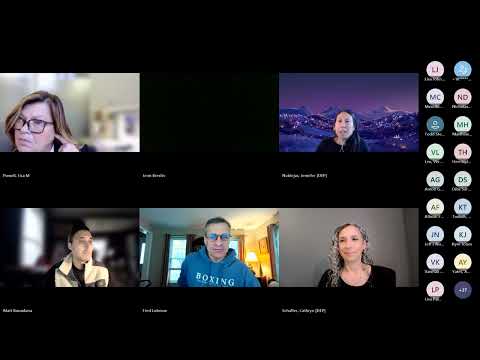
The New Jersey Department of Environmental Protection held an information session for awardees of its 2025 Water Quality Restoration grants, outlining the process for finalizing grant agreements, reporting requirements and documentation needed to receive reimbursements.
Catherine Schaffer, manager of the Bureau of Watershed Management in the Division of Watershed Protection and Restoration, said grant managers will post comments in the SAGE system and grantees should address requested modifications there so DEP can draft grant agreements. "Please note, work can only begin when the grant agreement is fully executed, and it can take 6 to 12 months for a grant to be executed," Schaffer said.
Why it matters: Grantees must follow the SAGE-driven modification and agreement workflow to move from award to execution. DEP staff emphasized that timely responses to modification requests speed the approvals process and that some changes (including no-cost time extensions) can delay execution.
What DEP told grantees
- Modification and SAGE workflow: Jennifer Nublihis, who led the grant-agreement overview, said authorized officials will receive email notifications when modifications are required and must update the Grantee Evaluation Summary and application pages in SAGE. The application text will form the scope of work used in the grant agreement, Nublihis said.
- Early work and advance payments: Nublihis described two options before agreement execution. An early work period allows work to begin before the agreement is signed but carries the risk that reimbursements will not be disbursed until execution. Advance payments (partial upfront disbursements) may be available for organizations that cannot front costs; requests for either option must include a start date and written justification and be emailed to the DEP grant manager.
- Insurance and subcontractors: DEP requires grantee organizations to maintain at least general liability insurance; workers' compensation and automobile insurance depend on budget items. Subcontractors must be listed in Attachment F and provide New Jersey business registration certificates once selected.
- Resolution and executor: Grant agreements include a resolution naming the executor (authorized official) who must be added as a member of the grantee organization and will be the signer of the certification pages.
Progress and financial reporting
Rosemary Brown walked attendees through progress-report expectations and said progress reports now are due biannually and submitted together with the corresponding financial report. "Progress reports are no longer on a quarterly basis. Instead, they're going to be submitted biannually along with the corresponding financial report," Brown said.
Brown added that grant managers will perform an administrative review to confirm submitted work periods match internal tracking, that BMP (best-management practice) completion and plan fields are completed when relevant, and that missing or overlapping work periods will be returned for revision.
Financial documentation and reimbursements
Anne Elizabeth from the fiscal team described documentation required for reimbursements and the reporting calendar. "There are two reports due every year, one for January to June due August 15 and another from July to December due on February 15 of every year," she said.
Elizabeth detailed the backup DEP expects: payroll runs showing employee names, dates, hours and rates; itemized consultant and subcontractor invoices with proof of payment (canceled checks, bank or credit-card statements); receipts for supplies; travel tables with dates, purpose and mileage calculations; and, where applicable, indirect-cost calculations. She said food purchases and permitting fees are not reimbursable unless otherwise specified. For subcontractors, New Jersey business registration certificates are required in Attachment F except where guidance provides an exception for certain individual contractors or nonprofits.
Insurance certificates must remain active for the life of the grant and should list the certificate holder as the State of New Jersey rather than the Department of Environmental Protection or an individual DEP employee, Elizabeth said.
Questions and clarifications
During Q&A, Mark Herman of Montgomery Township asked about requesting an early start for a time-sensitive watershed-management project spanning 13 municipalities. Schaffer said early start periods cannot be dated before Oct. 30, the award date, and identified Amelia Yates as Montgomery Township's grant manager. "Her information is on the screen right now, and she is available to set up a meeting," Schaffer said. Amelia asked Herman to email to coordinate.
Meredith Comey of Monmouth University asked whether listing DEP as a co-applicant would waive a Tidelands license fee; Schaffer said she would check with staff and not give potentially incorrect information, and another participant said fees are more likely to be reduced rather than fully waived.
What happens next
DEP will post the session recording and slides on its website and a YouTube recording. Grant managers will reach out with modifications (likely by email and through SAGE); DEP asked grantees to submit modifications promptly (the presenters requested changes within 30 days where possible) so drafting can proceed.
The session closed with DEP staff encouraging grantees to reach out to their assigned grant manager with questions and to use the posted materials for reference.
Ending: DEP staff said a follow-up information session is likely in January and invited attendees to request deeper dives on topics such as permitting, quality-assurance plans, watershed-based plans, closeout and budget details.