Get Full Government Meeting Transcripts, Videos, & Alerts Forever!
Get email alerts on the Local Impact Food Smallbusiness topic
No spam. Unsubscribe anytime.
Food banks and small businesses say tariffs are already squeezing costs
Summary
At a Seattle press event, Northwest Harvest, a coffee retailer and grocery workers described immediate strains from tariff-driven price uncertainty, saying food banks are seeing more demand and small businesses are pausing expansion because import costs and inputs are rising.
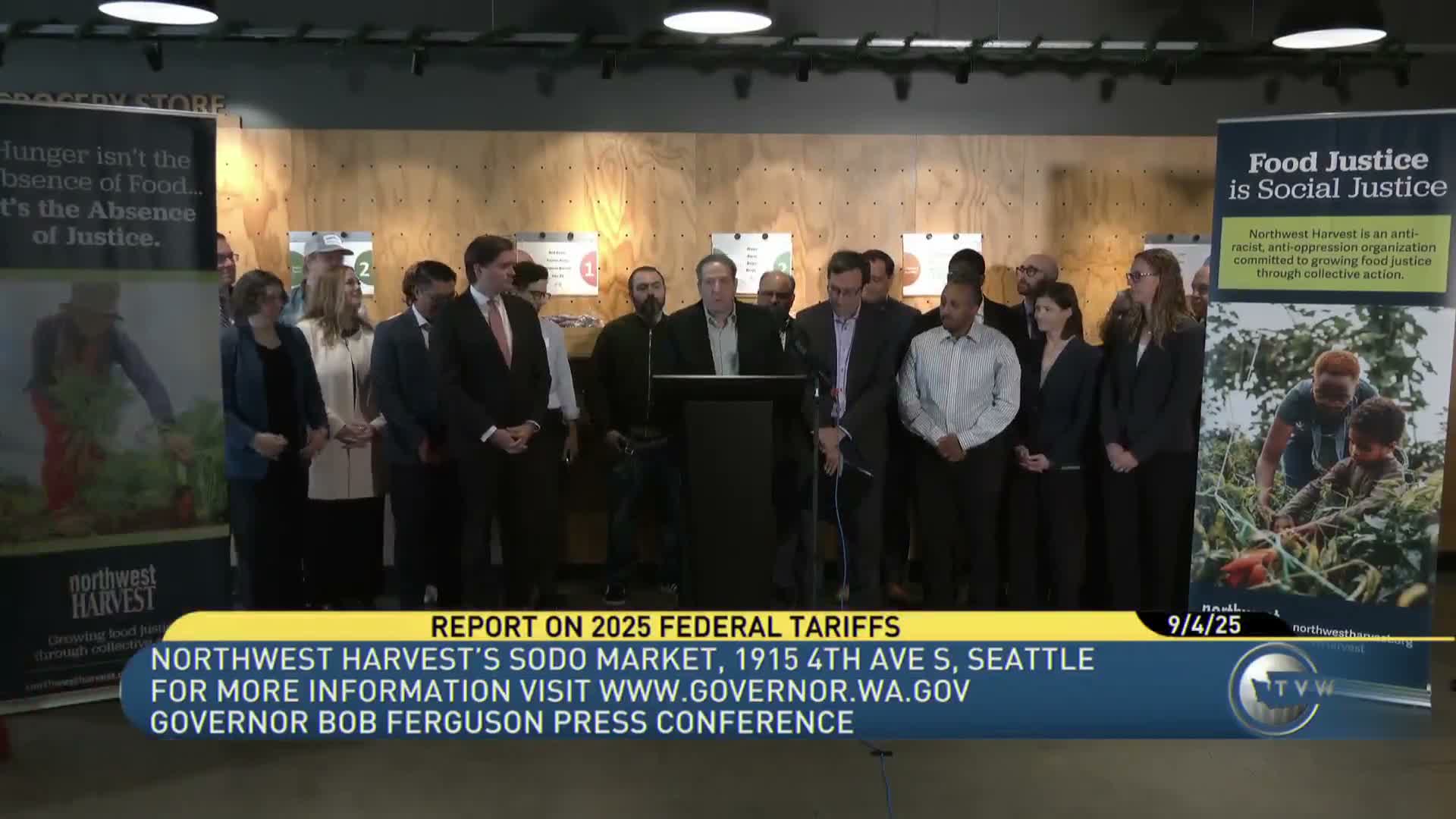
At a press event hosted at Northwest Harvest’s Community Market, nonprofit and small‑business leaders described how tariffs and related supply‑chain uncertainty are already affecting operations and consumers in Washington.
Thomas Reynolds, chief executive of Northwest Harvest, said tariffs function as a ‘‘regressive tax’’ by raising the cost of imported staple foods and therefore hitting low‑income households hardest. He told reporters the nonprofit works with a network of about 400 partner food banks and is seeing higher demand across every county in the state.
Small business owners gave concrete examples. Efren Fazaha, founder and CEO of Boon Boona Coffee, said coffee imports and related inputs now make up roughly 40 percent of his business costs and that price volatility has forced him to pause planned expansion. "When we receive coffee now, we are constantly just worried about what that final price will be," Fazaha said.
A grocery worker, Matt Ludden, said many center‑of‑holiday items come from Canada and warned that tariff‑driven price spikes could push customers to buy less, which could in turn pressure wages and store operations.
Why it matters: The nonprofit and business accounts put human faces on the state’s economic analysis and underline the immediate operational effects that can precede broader macroeconomic projections. Northwest Harvest urged more sourcing from Washington agriculture and continued coordination with regional food organizations.
What officials said in response: State officials present framed these accounts as consistent with OFM projections of higher prices and job risks, and offered OFM and agency follow‑ups for reporters seeking industry‑specific data.
Next steps: Northwest Harvest and state officials said they would continue to coordinate on food sourcing and that OFM staff are available for detailed briefings. Speakers made themselves available for one‑on‑one follow‑ups.